
A concert ends in a few hours, but the relationship between an artist and the people in the room does not have to end with it. Live audiences have already made a meaningful commitment: they chose the event, reserved time, traveled to the venue, and participated in a shared experience. The difficult part is turning that moment into a relationship the artist team can continue responsibly.
Planet.fans is built around that transition. The company describes Planet Live as a system for live audience activation, designed for artist teams, labels, venues, and other entertainment operators. Rather than acting as another page for fans to read, it connects acquisition, event participation, audience organization, targeted content, and follow-up.
Case Snapshot
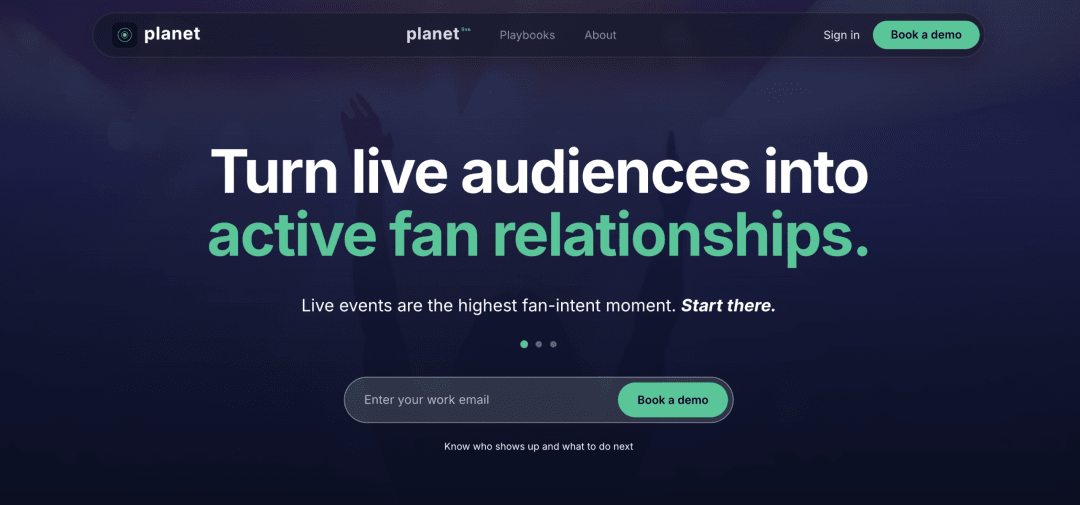
- Website: planet.fans
- Category: live-audience relationship and activation platform
- Primary users: artists, managers, labels, venues, and live entertainment teams
- Fan-facing moments: presales, RSVPs, digital passes, venue check-in, notifications, content drops, and merchandise offers
The Problem Begins with Fragmented Relationships
Social platforms can create reach and conversation, but they do not automatically give an artist team a durable way to recognize people across a tour, release, or venue. Ticketing, social engagement, merchandise, sign-ups, and event attendance may sit in separate systems. A team can therefore attract the same audience repeatedly without developing a clear picture of who participated and what they may value next.
Planet's public positioning starts with live events because they represent a high-intent moment. The goal is not simply to collect another email address. It is to connect an identifiable, permission-based interaction with a specific show, city, response, or interest, then use that context to make later communication more relevant.
Before the Show: Invite Fans into a Direct Journey
The first stage includes fan account creation, gated presales, event RSVPs, and digital-pass downloads. These actions can help an artist team understand who is interested before the doors open. A custom link, social post, email, or venue QR code can lead into the same journey, while a wallet pass provides a fan-facing object that remains accessible on a phone.
This stage works only when the exchange is clear. Fans should know what they receive, which organization is collecting their information, how notifications will work, and how consent can be changed. A valuable presale or event update provides a stronger reason to participate than a generic request to “join our mailing list.”
Inside the Venue: Make Participation Useful
Planet lists event check-in, NFC taps, QR scans, guest-list tools, venue discounts, and geo-fenced notifications among its event functions. Used carefully, these tools can deliver information at the moment it is useful: set times, venue details, a content release, or an offer connected to that show.
Location-aware communication also creates a higher privacy burden. Teams should avoid unnecessary tracking, explain when location is used, define retention periods, and provide alternatives for fans who do not want to enable it. Urgency should improve the event experience rather than pressure people into sharing more data than the activity requires.
After the Show: Give the Next Message a Reason
The post-event stage can include photos, video, audio, posters, merchandise, future dates, or other content tailored to the show a fan attended. Planet describes opens, clicks, RSVPs, and location responses as signals that can update audience tags and support later segmentation.
The key change is conceptual: attending a concert becomes the beginning of a relevant follow-up, not the end of an anonymous transaction. The message should still be proportionate. A fan who downloaded a pass for one performance has not necessarily agreed to every future campaign or unrestricted profiling.
Five Product Pillars Form One Operating System
The website organizes Planet Live into Fan Acquisition, Audience Builder, Drop Creator, Event Manager, and Smart Actions. Each pillar has a distinct role, but the sequence is more important than any individual feature:
- Fan Acquisition creates an entry point through registration, presales, RSVPs, and venue sign-ups.
- Audience Builder groups people by tour, event, location, and interaction.
- Drop Creator prepares personalized content, information, and offers.
- Event Manager supports check-in and real-time venue activity.
- Smart Actions uses previous responses to guide the next appropriate step.
This end-to-end structure is a useful lesson for other fan-focused digital products: explain how a person enters, what value they receive, how information is organized, and what respectful follow-up looks like.
Who the Platform Serves
The direct customer is normally the team responsible for the relationship. Artists and labels may use it around tours, releases, presales, and merchandise. Venues and live-event operators may connect registration, access, communication, and return visits. Sports and entertainment projects can apply a similar lifecycle to stadiums or other in-person experiences.
Fans are the participants whose trust makes the system possible. Their experience must remain understandable even when several organizations are involved. Branding, consent, customer support, and data-controller responsibilities should not become ambiguous between an artist, venue, promoter, sponsor, and technology provider.
What the Published Proof Points Can and Cannot Show
Planet's website presents campaign examples involving Ed Sheeran, Charli XCX, Biffy Clyro, and Mumford & Sons. It reports figures such as a 1:1 album-preorder-to-ticket-purchase ratio in one campaign, a 99% attendance rate for a pop-up, notification click-through rates above 40% for selected drops, and a 22% increase in post-tour merchandise sales in the Biffy Clyro example.
These figures are supplier-published case metrics, not independent audit results. They show how Planet describes the outcomes of particular playbooks; they do not establish a universal benchmark or guarantee. Anyone evaluating the service should ask about campaign definitions, audience selection, comparison periods, consent, attribution, and the circumstances behind each result.
Why the .fans Domain Fits the Product
The address communicates the category before a sales explanation begins. “Planet” is the brand; `.fans` identifies the people and relationships around which the system is organized. For an artist team or venue, the domain reads almost like a concise product statement: this is infrastructure for understanding and serving fans.
It also leaves room to expand from one concert to tours, releases, memberships, merchandise, and other audience programs. That is one reason a fan-first domain identity can support a long-term platform rather than a single campaign page.
Practical Lessons for Live-Event Teams
- Choose one high-value event moment and make the fan exchange explicit.
- Connect preshow, in-venue, and post-show interactions into one understandable journey.
- Use segmentation to improve relevance, not to justify unlimited messaging.
- Label case-study metrics with their source, scope, and measurement method.
- Review consent, location, wallet-pass, retention, and partner responsibilities before launch.
Teams considering a dedicated community address can consult the .fans FAQ and check a name through the registration page. A domain choice does not replace privacy, marketing, consumer-protection, or licensing review.
Conclusion
Planet.fans demonstrates a business-oriented use of `.fans`: the domain is not only a label for fan content but part of a system designed around fan relationships. Its most valuable idea is the continuity between moments. A presale, concert check-in, content drop, and next event can form one respectful journey when the participant understands the value and retains meaningful control. The show creates the opportunity; responsible follow-up determines whether the relationship deserves to continue.