
Sports fandom is not limited to receiving scores. Fans talk through each decision, follow roster moves, remember where they watched important games, collect photos, and build relationships with people who care about the same team. The strongest sports products recognize that the game is both an information event and a social experience.
Fanarchy.fans brings several pieces of that experience together for Major League Baseball followers. Its public website presents live game threads, team communities, a multi-source fan feed, historical game search, a fandom scrapbook, an Apple-platform app, and a Slack integration. The project describes itself as built by fans; it should not be presented as an official MLB website.
Case Snapshot
- Website: fanarchy.fans
- Category: baseball information and fan community platform
- Audience: MLB supporters who follow teams, games, media, and community discussion
- Public features: live game threads, team feeds, historical game search, fan conversation, scrapbook, notifications, Slack app, and Apple-platform app
From a Viewing Session to a Community Journey
A conventional sports flow is short: a person checks a game, reads a recap, and leaves. Fanarchy proposes a longer path: game information leads to discussion, discussion leads to a team community, and repeated participation becomes a personal record of fandom.
This is the difference between a traffic product and a relationship product. The value is not only the number of times someone opens a score page. It is the continuity across a season: the same team, familiar contributors, saved moments, and a growing record of the games that mattered to the user.
Live Game Threads Create a Shared Second Screen
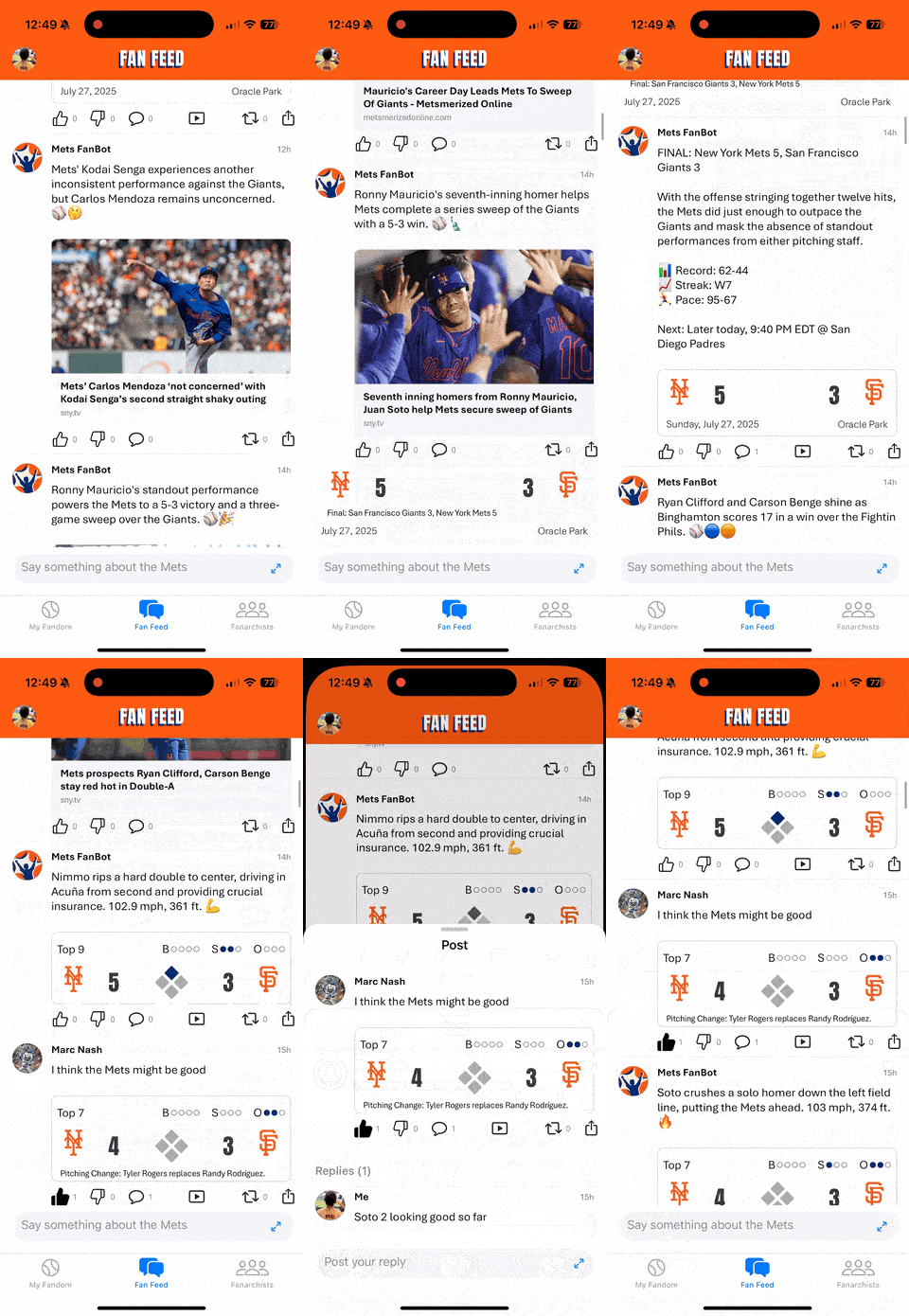
Fanarchy combines scores and play-by-play with a discussion space for people watching the same matchup. A pitching change, defensive play, or late rally can move immediately from data into conversation. Users do not need to search for an unrelated thread on another social platform while the game continues.
A live thread also creates moderation demands. Fast conversation can include harassment, spoilers, misinformation, personal attacks, or rights-sensitive media. Community guidelines, reporting tools, moderator coverage, and clear enforcement are essential parts of the experience, especially during emotional moments.
Team Communities Give Conversation a Long-Term Home
Every MLB team is presented with its own community. That organization matches the fan's mental model: people usually begin with the club they follow, then move into news, injuries, roster changes, debates, celebrations, and game-specific conversation.
Team spaces help relationships survive the gap between games. They can also prevent a national feed from burying smaller conversations. Good navigation should make the boundary between platform-produced information, linked reporting, automated summaries, and member commentary visible so readers can judge each item appropriately.
The Fan Feed Reduces Information Hunting
The website says its fan feed combines news, roster moves, injuries, highlights, podcasts, media reactions, and fan commentary. Organizing these formats around one team can save the user from moving among score apps, social networks, podcast platforms, and news sites.
Aggregation brings responsibility. Headlines and excerpts need attribution, links should lead to the original publisher, timestamps must remain visible, and licensed media cannot be assumed merely because it is relevant to a team. AI-generated summaries should identify their sources and provide a correction route.
A Fandom Scrapbook Turns Memory into a Feature
The scrapbook is Fanarchy's most distinctive layer. Users can log games, save moments, track their personal fan record, and build a history of the team through the events they experienced. The site also describes scanning a photo library to identify attended games using when and where photos were taken.
That feature transforms public sports history into personal history. A score tells everyone what happened; a scrapbook reminds one fan where they were and why the game mattered. Because photos and location metadata are sensitive, the app should request narrow permissions, explain whether processing happens on the device or a server, and allow people to review, correct, export, and delete inferred records.
Historical Search Makes the Archive Conversational
The public game-search page accepts remembered details such as teams, a season, a stadium, or a distinctive event. This is a practical response to how fans recall sports. People may remember a rain delay or a late home run more clearly than the exact date.
Natural-language search lowers the barrier to entering a large historical archive. Results should still distinguish exact matches from inferred ones and show the evidence used to select a game. A confident interface should not hide uncertainty when several games fit the same memory.
The Platform Extends Beyond One App
Fanarchy's FAQ describes availability on iPhone, iPad, Mac, and Slack, with web-based game search also available. The Slack integration uses a game-search command to return scores, status, and links inside a workspace. This gives existing groups a lightweight path into the product without requiring every conversation to move.
Each platform creates its own permission and notification considerations. Workspace administrators should understand requested Slack scopes, while mobile users should be able to configure quiet hours, spoiler delays, and alert categories without losing basic functionality.
Why the .fans Domain Reinforces Belonging
“Fanarchy” signals a fan-led personality, and `.fans` makes the intended community explicit. The address does more than describe an audience segment; it supports the platform's message that fandom is something people participate in and preserve.
This is a natural fit for the progression from following to belonging. The product can host information, but the domain reminds visitors that the information is organized around people who care. Similar projects can explore other community uses for .fans without implying endorsement from a league, team, player, or broadcaster.
Five Lessons for Sports Community Products
- Build around the fan's subject. Team-based organization is more intuitive than source-based navigation.
- Connect live data with conversation. A game becomes more meaningful when people can react together.
- Preserve personal history. Saved attendance and memories create value after the final score.
- Carry the experience into existing groups. Web, mobile, and workspace integrations meet fans where they already talk.
- Treat trust as a feature. Moderation, attribution, permissions, spoiler controls, and deletion options need visible design.
Practical Boundaries
Fanarchy's site makes promotional claims about speed, signal quality, and breadth. These describe the company's positioning and should not be treated as independently verified comparisons. Coverage status, source availability, app features, and platform support may also change.
Builders planning a sports community should separate official data from member opinion, license the feeds and media they use, disclose automated summaries, and publish clear privacy and community policies. The .fans identity guide, .fans FAQ, and registration page can support naming decisions, while rights and data obligations require separate review.
Conclusion
Fanarchy.fans shows how a sports platform can move beyond the daily score. Live threads make games social, team communities make conversation continuous, aggregation reduces friction, search opens the archive, and the scrapbook turns fandom into personal history. The larger lesson is that belonging is created through repeated, well-governed participation. A memorable domain invites fans in; the product earns their return through usefulness, trust, and a place for their own story.