
A social profile captures one version of a creator at a particular moment. A personal website can preserve a much wider body of work. Icedtea.fans, a Chinese-language site presented as “Bing Cha's Little Tavern,” combines creator updates, fan-made works, livestream resources, travel and hotel notes, motorsport galleries, and practical personal posts under one address.
The mix is the point. Instead of forcing every interest into one feed, the site uses categories and archives to let visitors choose a path. Posts visible during the September 2026 review included entries from August, July, June, and April 2026, providing a clear signal that the website remained in active use.
Case Snapshot
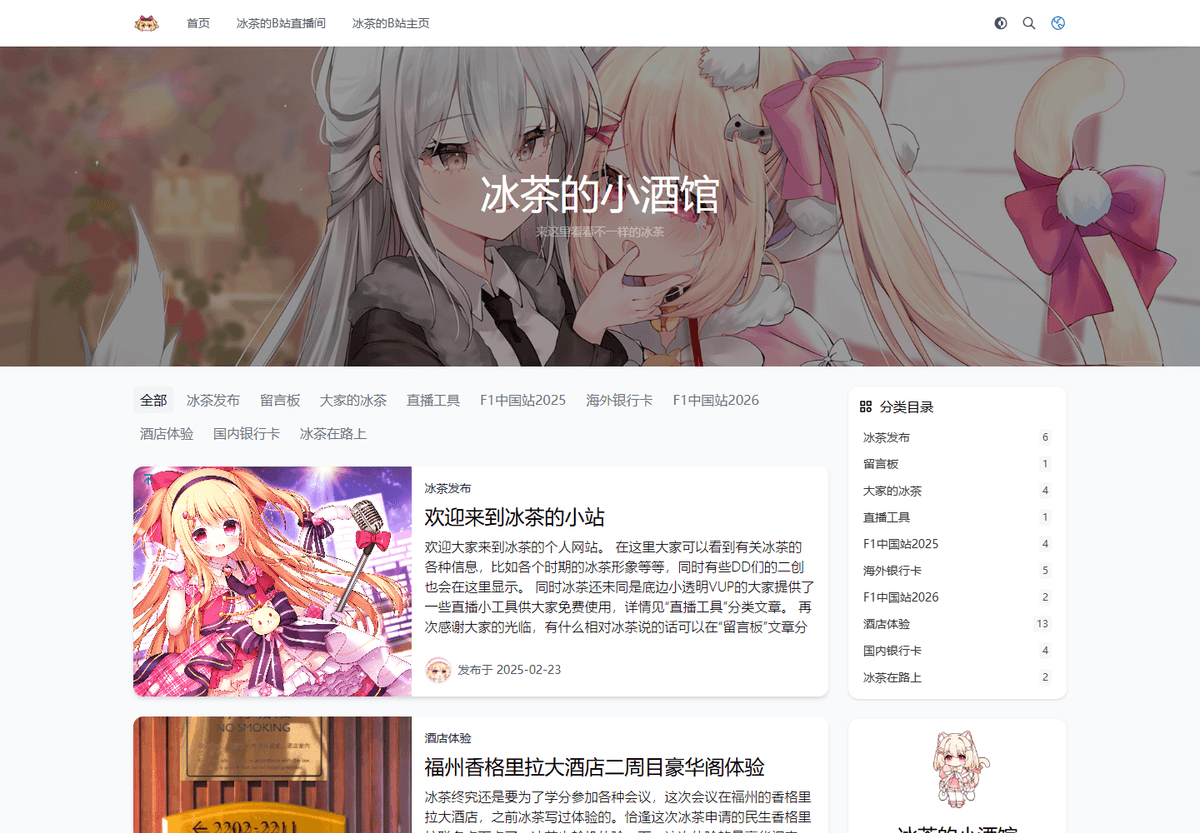
- Website: icedtea.fans
- Category: personal creator blog and community hub
- Primary audience: followers of the creator's livestreams, projects, interests, and community
- Observed sections: personal updates, fan-created work, livestream tools, F1 galleries, travel, hotel notes, and banking-related experiences
- Activity signal: multiple dated posts visible in 2026
- Website checked: September 8, 2026
An Independent Home for a Multi-Interest Identity
Creators rarely fit one category forever. A livestream may introduce the person, but over time the audience can become interested in projects, recommendations, travel, hobbies, and community contributions. On a platform feed, these subjects compete with an algorithm and disappear chronologically. On Icedtea.fans, categories turn them into a browsable record.
This creates continuity across formats. A visitor can move from a creator update to a fan submission, then to a practical streaming resource or a photo-heavy F1 post. The creator identity holds the collection together even when the topics differ. That is a useful model for personal brands that have outgrown a single channel description.
Fan Contributions Become Part of the Archive
A dedicated section for fan-created work changes the site's role. It is not only a place where the creator publishes outward; it can also preserve what the community sends back. Giving those contributions a stable category makes participation visible beyond a fleeting chat message or social repost.
Community publishing needs rules. Contributors should understand whether a submission will be displayed, how they will be credited, whether it may be edited, how long it will remain online, and how they can request removal. The operator also needs a moderation process for privacy, harassment, plagiarism, copyrighted characters, music, photography, and other third-party material.
Useful Tools Give Followers a Reason to Return
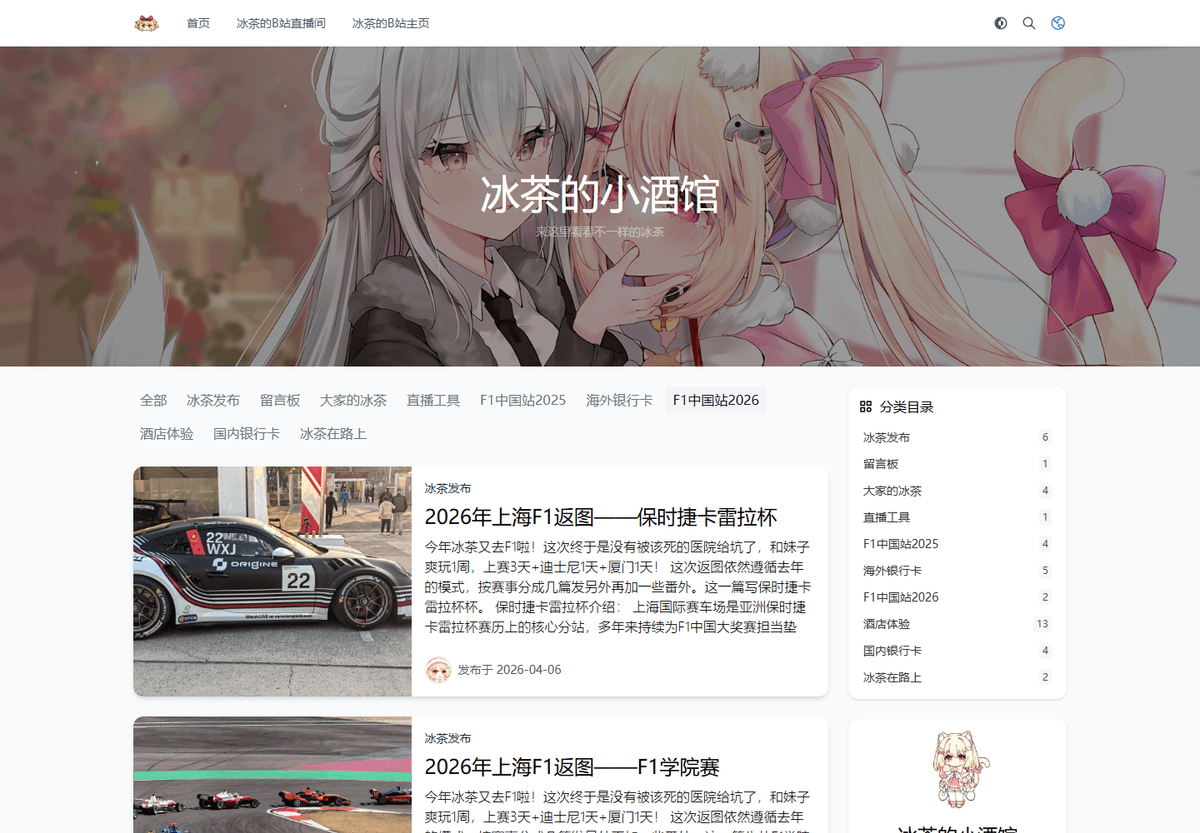
The site's livestream-related material adds a practical layer to the personal archive. Resource posts can answer recurring questions from viewers and reduce the need to repeat the same explanation in every broadcast. They can also be updated when software, platform rules, or recommended workflows change.
This is a strong pattern for creator websites: pair personality-led content with durable utility. Announcements bring immediate attention, while guides and tools can remain useful between broadcasts. Clear update dates and version notes are especially important when a post concerns software or account procedures.
New Interests Do Not Need a New Domain
The F1 category and travel or hotel posts show how a personal hub can expand without losing its center. During the review, the site included 2026 motorsport galleries as well as recent hotel experiences. These subjects may reach different segments of the audience, but the category system lets them coexist without making the homepage incomprehensible.
The lesson is not to publish every thought in one place. It is to define a navigation system that makes variety intentional. Broad personal categories should have plain names, archive pages, dates, and enough context for a visitor who did not see the original social post.
Why the .fans Domain Fits
“Icedtea” functions as the creator identity, while `.fans` describes the people gathering around it. The address is personal without limiting the site to one network, one content type, or one period of the creator's work. It can be spoken during a livestream and reused in a profile bio, video description, or printed event material.
This is where an audience-centered domain can be especially helpful. Social accounts may change, but the creator controls the organizing address and can decide which channels, archives, and community activities it connects.
Execution Lessons for Personal Creator Sites
- Organize around audience intent. Separate updates, tools, fan contributions, and personal interests into clear paths.
- Keep active work visible. Dates and recent posts reassure visitors that the independent site remains maintained.
- Turn repeated questions into durable resources. Useful reference posts complement time-sensitive social content.
- Moderate community submissions. Consent, credit, removal, and rights rules should be explicit.
- Let the domain outlast individual platforms. Social and video channels can point back to one controlled home.
Boundaries for Advice and Third-Party Content
Some Icedtea.fans categories concern bank cards, travel, hotels, events, and products. Readers should treat these as personal experiences unless the author clearly provides qualified professional guidance. Fees, eligibility, laws, promotions, travel conditions, and product details change. Articles should include dates, locations, relevant disclosures, and links to authoritative information where decisions carry financial or safety consequences.
Motorsport, hotel, entertainment, and fan-work pages may also contain third-party names and imagery. A personal editorial context does not remove copyright, trademark, publicity, venue, or event-accreditation requirements. Publication rights should be checked independently.
Practical Takeaways
A creator building a similar hub can begin with four sections: current updates, evergreen resources, community contributions, and personal projects. Add an archive, search, and clear contact or submission route only where they support real habits. Every category should answer a visitor question rather than merely mirror an internal filing system.
For the domain layer, browse .fans use cases, read the .fans FAQ, and check a creator name through the registration page. The goal is not to replace every social channel; it is to give them a stable center.
Conclusion
Icedtea.fans shows how an independent creator site can hold more than a biography and a list of links. Its categories connect active publishing, fan participation, practical resources, and evolving interests in one navigable archive. The `.fans` ending keeps the audience relationship visible while leaving the creator room to grow. For creators whose work no longer fits inside one feed, that combination of continuity and flexibility may be the website's most valuable function.