
Headcanon.fans presents a browser extension for readers who want to move selected fanfiction from the web to an ebook device. The homepage describes support for works found on Archive of Our Own and FanFiction.net, with a Chrome Web Store listing available and Firefox support marked as coming later.
The project focuses on a very specific moment in the reading journey: someone discovers a work in the browser but would prefer to continue on an ereader. By shortening the steps between those contexts, Headcanon demonstrates how a narrowly scoped fan tool can be more useful than a broad portal. It also creates responsibilities around browser permissions, email processing, source-site terms, author rights, and redistribution.
Case Snapshot
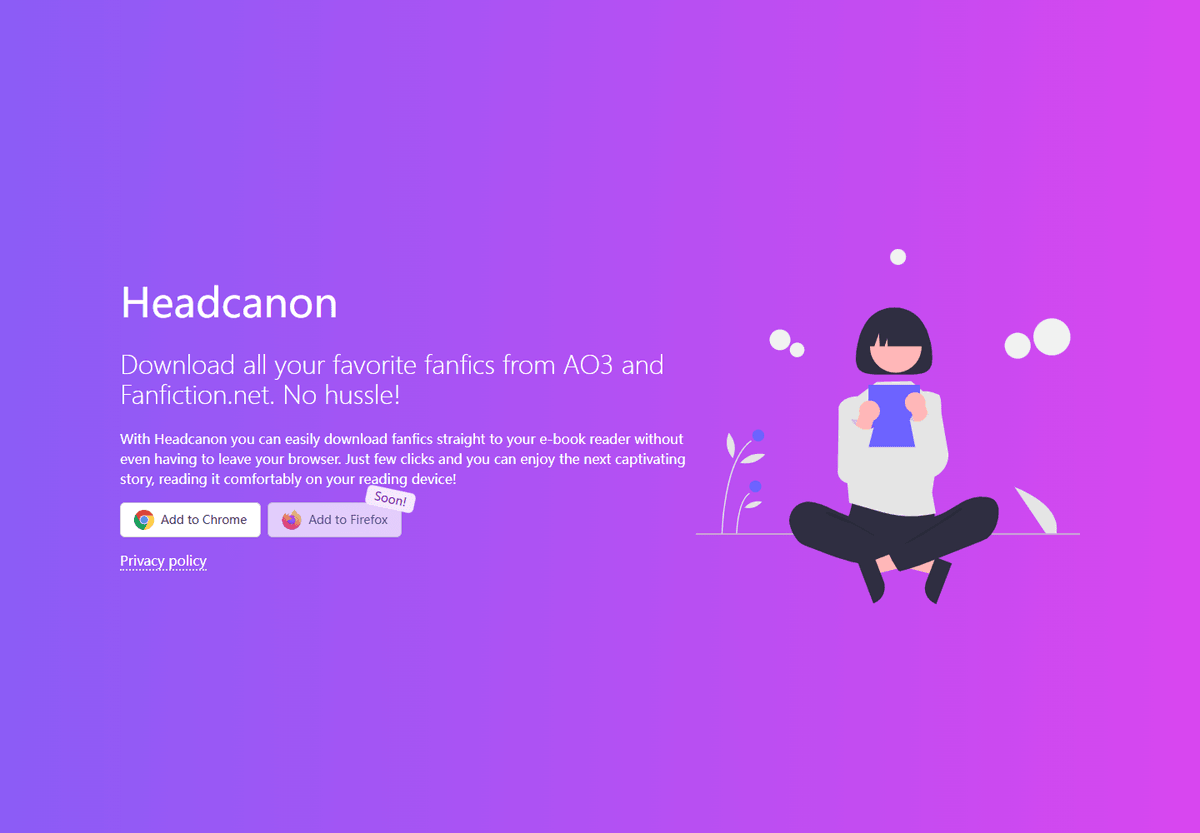
- Website: headcanon.fans
- Category: fanfiction reading utility and browser extension
- Primary audience: readers who prefer long-form fanfiction on ebook devices
- Main purpose: send selected works from supported fanfiction pages toward a reader's device
- Observed features: Chrome extension link, support messaging for two fanfiction platforms, email configuration, privacy policy, and planned Firefox availability
A Tool Built Around a Specific Reading Transition
Headcanon does not try to replace fanfiction archives or become another discovery platform. Its value appears after discovery, when a reader decides that a long work would be more comfortable on a dedicated device. That focus keeps the product story concise: install the extension, configure the necessary address, choose a supported work, and initiate delivery.
This is a useful pattern for fan technology. Large communities already have established publishing and discovery spaces. A smaller project can contribute by improving one awkward transition around them. The opportunity is not always another destination; it may be a respectful connector that helps users move through an existing workflow.
The Extension Listing Adds a Layer of Verifiability
The public Chrome Web Store page gives prospective users a place to inspect the publisher name, visible user count, ratings, screenshots, description, and browser permission prompts before installation. Those details can change, so they should be reviewed directly rather than treated as permanent marketing facts.
A store listing is helpful, but it is not a complete security review. Users should still examine which pages the extension can access, when it runs, what data leaves the browser, and whether the code or change history is available for inspection. The website should explain permissions in plain language and update that explanation whenever the extension's behavior changes.
The Privacy Page Explains a Narrow Data Flow
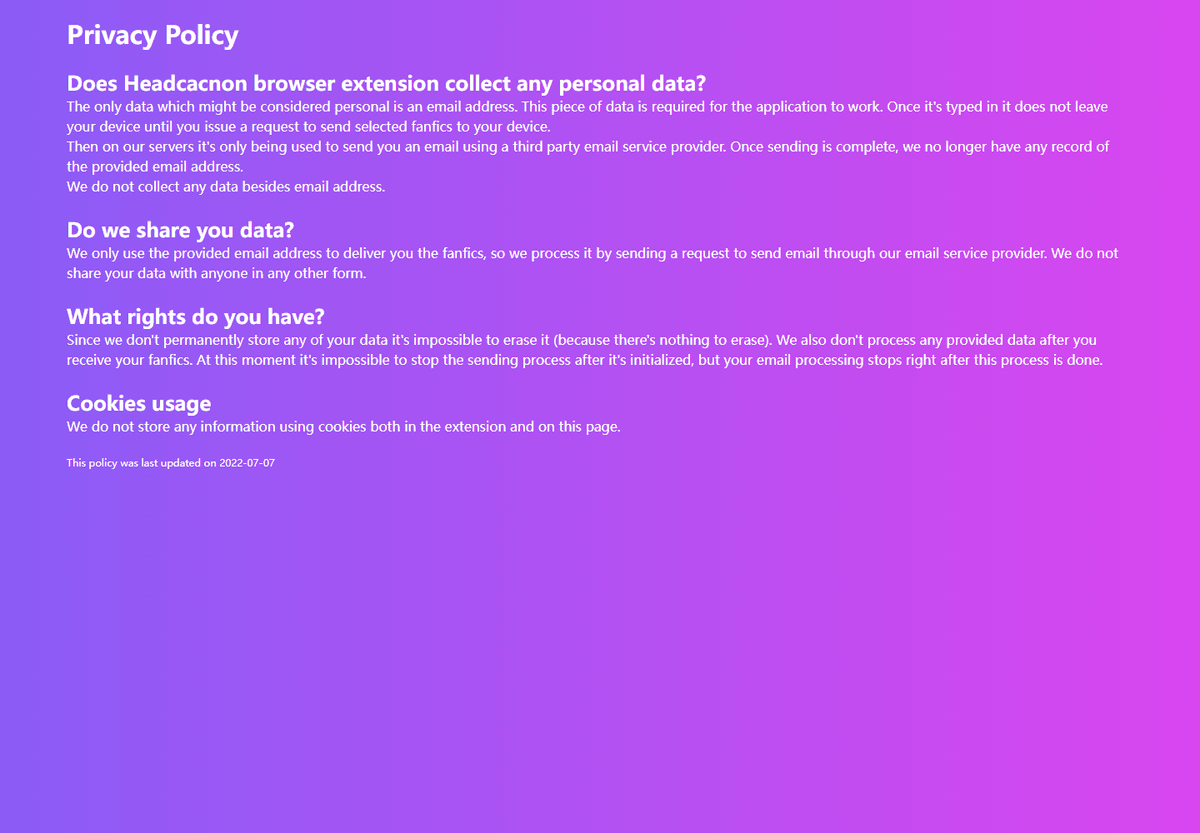
Headcanon's privacy policy says an email address is the only potentially personal data it processes. According to the page, the address remains on the device until a request is made, is then used on the project's servers through a third-party email provider to send the selected work, and is no longer retained after sending. The policy also says the extension and website do not store information through cookies.
That description is more useful than a generic promise because it connects data to a purpose. It is also dated July 7, 2022. As a browser extension and its service providers evolve, the operator should review the policy regularly and identify the email processor, technical logs, error handling, retention exceptions, security measures, and contact route for privacy questions.
Why the .fans Domain Fits
“Headcanon” is a term closely associated with imaginative participation in fictional worlds, while `.fans` identifies the audience without tying the tool to one franchise. That combination gives the project room to support readers across many fandoms and source websites.
The domain also makes the project's independent role easier to frame. Headcanon should not be presented as part of AO3, FanFiction.net, Amazon Kindle, or any other platform unless such a relationship is verified. Clear compatibility language is preferable to logos or wording that might suggest partnership.
Execution Lessons for Fan Reading Tools
- Solve one transition well. Moving from browser discovery to comfortable long-form reading is a clear, recurring task.
- Explain every permission. Browser access should be tied to visible features in language a nontechnical user can understand.
- Map the data journey. State what stays locally, what reaches a server, which third parties process it, and when it is deleted.
- Separate compatibility from affiliation. Supporting a platform does not imply endorsement by that platform.
- Design for source changes. Archive layouts, export functions, access rules, and browser APIs can change, so failure states and maintenance plans matter.
Copyright and Community Boundaries
Technical ability to transfer a work does not automatically grant permission to redistribute it. Fanfiction authors retain interests in their writing, and the underlying franchises may involve additional rights holders. A personal reading copy is different from republishing, sharing a download library, selling files, or bypassing an author's access choices.
Users should follow the source site's terms and the author's stated preferences. The extension should preserve attribution, avoid stripping notices, and make clear that delivered files are for the requesting reader's lawful personal use. It should not make unavailable, restricted, or deleted works accessible through a separate cache. A correction and takedown contact would help creators raise concerns.
Email-to-reader workflows can also expose document content and addresses to several systems. Readers should understand that the source website, extension, project server, email provider, and device vendor may each play a role. Sensitive account credentials should never be requested, and failures should not leave files or addresses retained indefinitely.
Practical Takeaways
A fan-reading utility should document the full path of one request before expanding platform support. List each browser permission, network request, temporary file, email processor, retention period, and deletion event. Pair that technical map with a rights policy that distinguishes private reading from redistribution and respects removals at the source.
The .fans use cases show that fan-oriented names can support practical tools as well as communities. The .fans identity overview describes the extension's audience-first meaning, while the registration page provides a way to explore focused project names.
Conclusion
Headcanon.fans offers a strong example of narrow utility: it addresses the point where browser reading becomes inconvenient and an ebook device becomes preferable.