
FootballWorldCup.fans is a Spanish-language browser game organized around international football enthusiasm. Visitors choose a country and play short practice or competition sessions, with the competitive mode contributing to a global ranking. The site's project page describes it as an independent effort created by football supporters.
Its terms state that the service is not affiliated with, endorsed by, or sponsored by FIFA. That distinction is essential because the visual presentation and tournament references can otherwise look official at first glance. The project is best understood as a fan-made entertainment experience, not as a source of official fixtures, tournament information, or governing-body announcements.
Case Snapshot
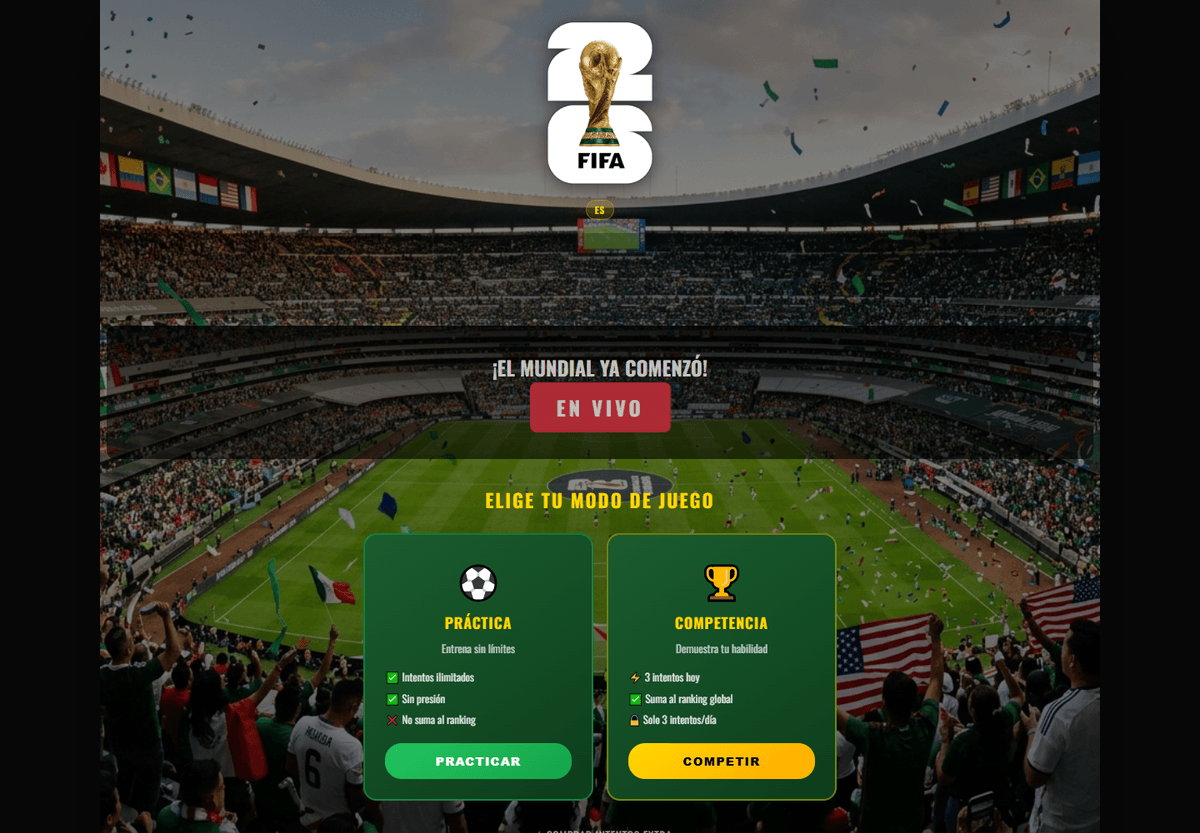
- Website: footballworldcup.fans
- Category: independent football-themed browser game
- Primary audience: international football supporters who want to represent a country in a casual competition
- Main purpose: practice, play limited competitive attempts, and contribute scores to a country ranking
- Observed features: country selection, practice mode, competition mode, daily attempt limits, paid additional attempts, rankings, fixture content, an about page, and terms
Country Identity Gives a Simple Game Social Meaning
The central design choice is representation. Players do not only chase an individual score; they select a country and can contribute to a wider ranking. That gives a lightweight interaction an emotional layer familiar to international sport. A visitor can understand the premise quickly: choose a side, play, and see how the result relates to other participants.
This structure can be effective for event-related projects because it supports participation even when visitors are not watching the same match at the same moment. The game creates its own activity loop around the theme. However, the ranking rules need to remain easy to inspect. Players should know whether a country's position reflects total points, average results, unique players, paid attempts, or another method.
Practice and Competition Serve Different Intentions
The website separates unlimited practice from competition. Practice offers a low-pressure place to learn the interaction and does not affect the ranking. Competition provides a limited number of free attempts per day and connects results to the wider leaderboard. This distinction protects experimentation while giving ranked play more weight.
The site also offers additional competitive attempts for payment. Once money influences the number of chances a player receives, transparency becomes more important. The operator should explain whether more attempts can materially affect country rankings, how payments are processed, what happens after a technical failure, and whether a spending limit or age control applies. A competitive experience should not leave players guessing about the relationship between skill, persistence, and payment.
A Timely Theme Requires Careful Information Design
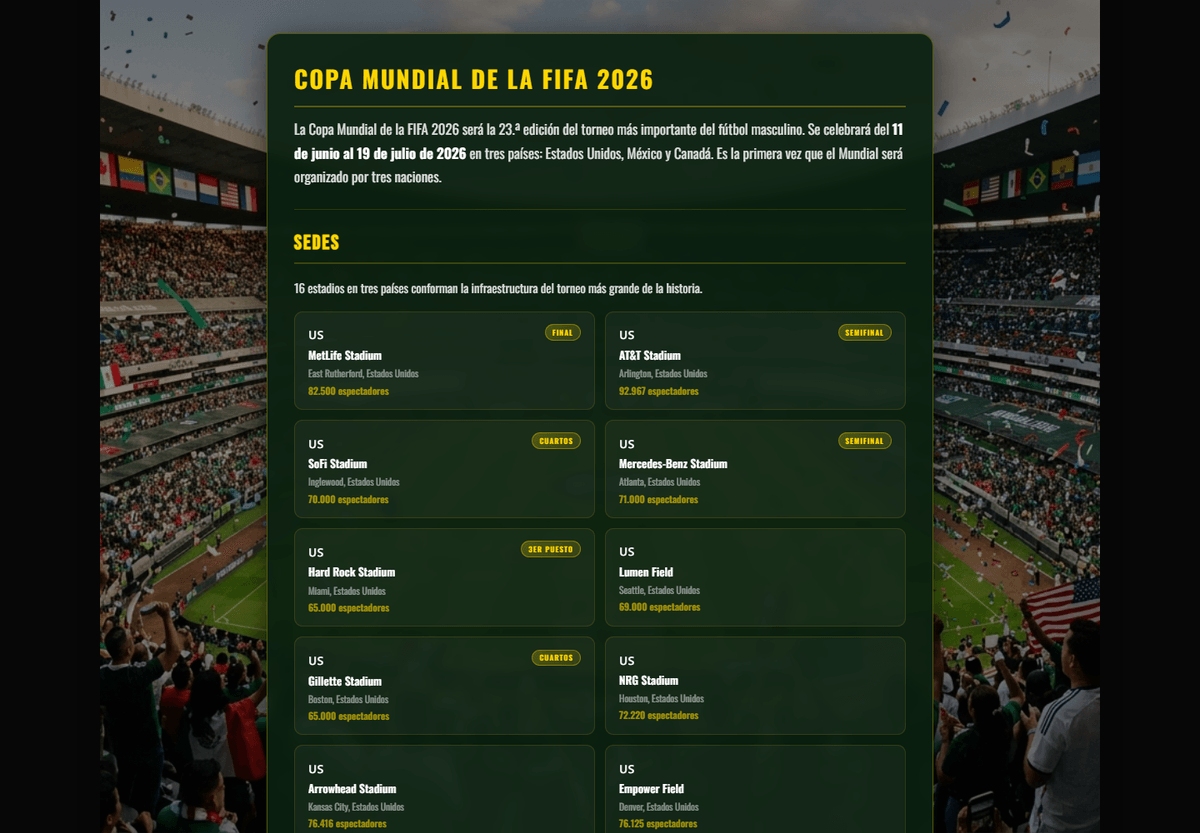
The site contains tournament and fixture pages in addition to the game. Event content can make a themed project feel richer, but it also creates a new responsibility: dates, groups, venues, performers, broadcasters, and match information can change or be wrong. A fan website should identify its sources, show update times, and send visitors to authoritative organizers for confirmation.
For that reason, this case study does not treat the site's tournament copy as verified event reporting. The useful lesson is structural. A game, ranking, and reference section can live under one memorable destination, but entertainment content and factual information should be visually separated. An independent project should never allow decorative authority to substitute for source authority.
Why the .fans Domain Fits
The `.fans` ending clearly suits a project designed around supporter participation. It tells visitors that the experience is about the audience's enthusiasm and collective identity. The broad phrase “football world cup” also makes the site's theme easy to understand across borders.
That semantic fit does not establish authorization. The strongest implementation would pair the domain with a prominent, plain-language independence notice on the homepage, game screen, payment screen, social previews, and search metadata. A disclaimer hidden only in terms is less effective than a boundary visitors see before they play or pay.
Execution Lessons for Event-Themed Fan Games
- Give the player a meaningful identity. Country representation turns a solitary score into a shared result.
- Separate learning from ranked play. Unlimited practice lets visitors understand the game before limited attempts matter.
- Define the leaderboard. Publish scoring, aggregation, tie, reset, anti-cheat, and moderation rules.
- Explain payment effects before checkout. Players need to know exactly what an additional attempt buys and how it influences competition.
- Distinguish entertainment from event reporting. Source changing facts and direct visitors to authoritative information.
Governance, Privacy, and Rights Boundaries
The site's terms disclose anonymous scoring through Firebase Firestore, local preferences, and a browser fingerprint described as a nonreversible hash. These are material details. Fingerprinting can still create privacy expectations even when the identifier is pseudonymous, so the site should explain purpose, retention, access, deletion, security, and any third-party processing in clear language.
The terms also contain an unfinished owner placeholder. That weakens accountability, especially for a service taking payments. Before asking visitors to buy attempts, the project should publish the responsible legal entity, a consistent contact address, refund and technical-failure procedures, age rules, and applicable consumer terms. Its FIFA non-affiliation statement is useful, but trademark and visual-identity review remains necessary.
Practical Takeaways
An event-themed game should begin with a short rules page that answers five questions: Who operates it? Is it official? How are scores calculated? What data is collected? What does payment change? These answers should be visible before competitive play. Rankings should have anti-cheat controls and a public method that does not reward spending in a misleading way.
The .fans use cases illustrate how supporter experiences can be organized around events, communities, and interactive tools. The .fans identity overview explains the audience signal of the extension, and the registration page can be used to explore suitable names. Whatever the address, visible governance should grow with the project's commercial and competitive features.
Conclusion
FootballWorldCup.fans shows how a simple browser game can borrow energy from international football by letting each player represent a country. Its practice-versus-competition structure is easy to understand, and the ranking gives short sessions a collective context. The case also shows why trust details cannot be secondary. When a fan project uses major-event imagery, publishes changing information, collects identifiers, and sells attempts, clear independence, ownership, sourcing, privacy, and payment policies become part of the experience itself.