
FiftyFifty.fans is a Swiss-operated platform that presents free promotional contests, deals, results, testimonials, and tools for advertisers. Its public pages describe a “Love Ad” concept in which brands sponsor quiz-style games and part of the advertising budget is intended for participant rewards.
The case is useful because the domain is not simply decorative. “FiftyFifty” expresses the platform's redistribution idea, while `.fans` places participation and community at the center of the brand. At the same time, availability is market-specific. During review, the English page said the service was coming soon in the visitor's country, and the French games page showed no available games. Those visible limits are essential context.
Case Snapshot
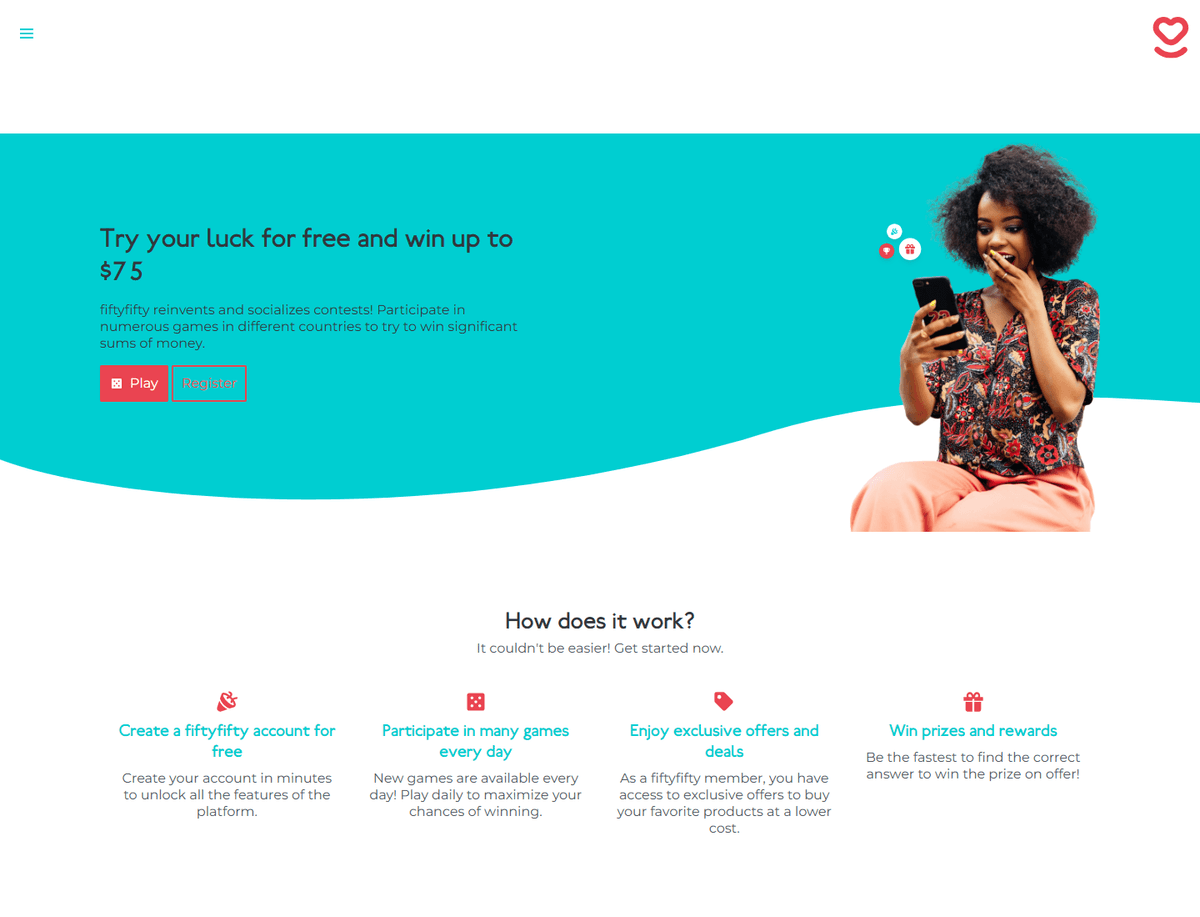
- Website: fiftyfifty.fans
- Category: promotional contest and consumer-deals platform
- Audience: participants, consumers, brands, advertisers, and agencies in supported markets
- Public features: games, deals, results, testimonials, player and advertiser registration, multilingual routes, FAQ, and legal policies
- Activity checked: September 4, 2026
The Website Serves Two Audiences
Participant-facing pages emphasize free registration, daily games, deals, prizes, and results. Advertiser-facing pages explain how a business can publish a contest or promotion and request a demonstration. Separate registration routes make the two roles visible from the main navigation.
This two-sided structure is important. A marketplace or promotional platform needs enough clarity for each audience to understand its next step without reading the other side's sales language. One navigation system can support both, but calls to action, eligibility information, and account expectations should remain distinct.
The Participation Flow Is Explained Before Play
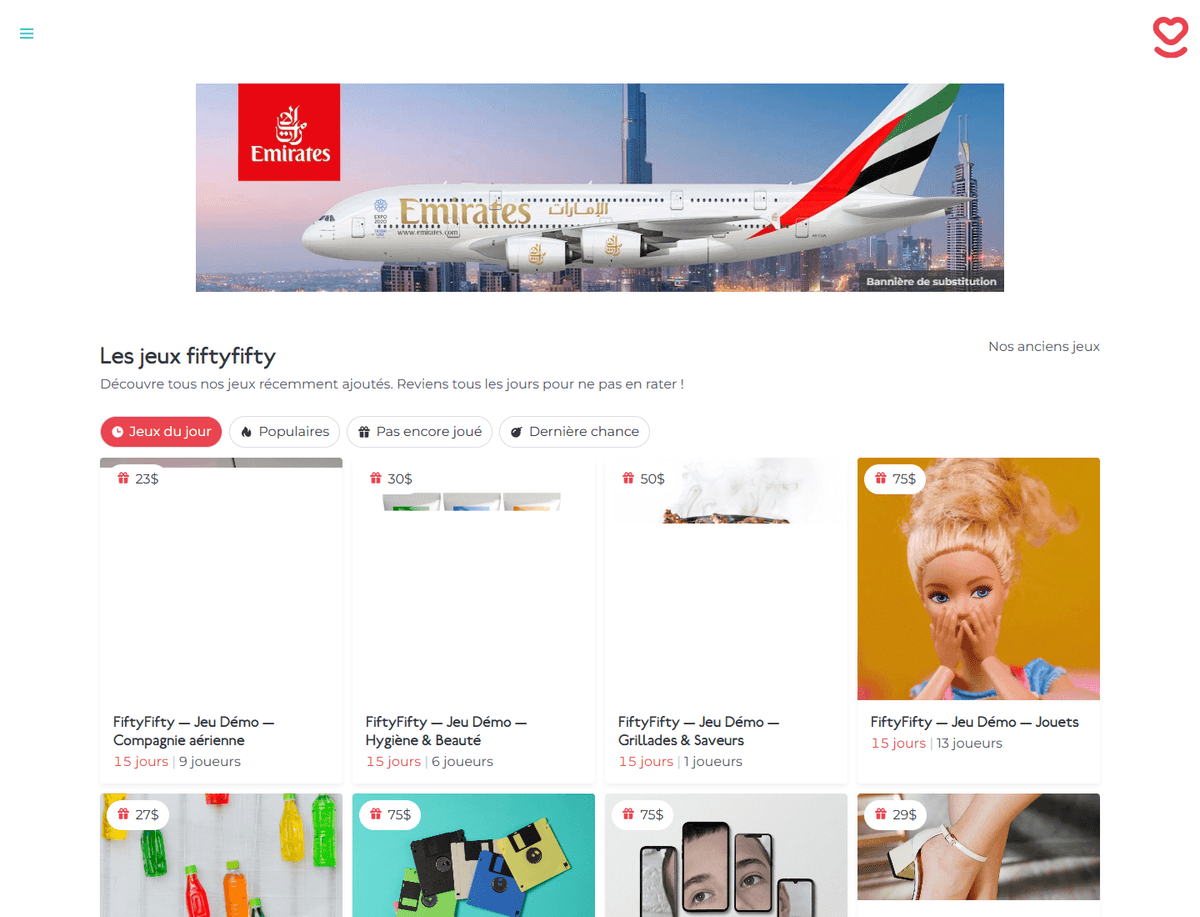
The public “How does it work?” sequence introduces account creation, repeated participation, offers, and rewards. The FAQ adds more detail: games are described as free, without a purchase obligation, and quiz performance is based on correct answers and speed. It also describes result publication and contact with winners.
These are first-party descriptions of the intended service, not proof that a particular contest is open or that a visitor is eligible. Every live game should display its sponsor, territory, dates, entry conditions, judging or timing method, prize, winner-notification process, and controlling rules before a person participates.
Market and Language Routing Need to Be Explicit
The site offers country and language navigation and says the platform is available in multiple markets and languages. This supports a concept that may vary by jurisdiction. It also increases operational complexity: promotions law, age requirements, prize taxation, identity checks, privacy rights, and marketing consent can differ by location.
The “coming soon” notice is a good start because it stops an unsupported visitor from assuming they can play. A stronger location-aware experience would keep the notice persistent, explain which content is informational, and link directly to the rules that apply in the selected country.
The .fans Name Makes Participation the Brand Idea
Many promotional platforms use a corporate or technical name. FiftyFifty.fans instead foregrounds the relationship among brands, rewards, and people who choose to engage. The repeated language of sharing reinforces that positioning across participant and advertiser pages.
This illustrates how a community-oriented domain can carry a product proposition rather than merely redirect to a campaign. The name is most effective when the rules and available experiences consistently fulfill that promise.
Five Lessons for Participation Platforms
- Explain both sides of the exchange. Participants and advertisers need separate, concrete value propositions.
- Put eligibility before excitement. Territory, dates, age, and entry requirements should appear before registration.
- Show the full lifecycle. Entry, scoring, results, notification, and prize delivery need one traceable flow.
- Localize rules, not only language. Translation does not replace jurisdiction-specific terms.
- Keep status honest. Empty game lists and zero counters should not be hidden behind generalized activity claims.
Trust Depends on Rules and Data Practices
Contest platforms collect account, contact, performance, and potentially payment information. FiftyFifty.fans publishes legal notices, terms, game rules, and a privacy policy. Its FAQ warns users that the platform should not ask them to pay a fee to receive a prize, which is a useful anti-fraud message.
Operators should still make the data path easy to understand: what is required to enter, what is needed only after winning, which sponsor receives information, how long records are retained, and how consent can be withdrawn. Security claims and winner-selection systems should be documented proportionately and reviewed independently where appropriate.
Practical Takeaways for Community Commerce
A participation product should begin with one complete, auditable journey rather than a large catalogue of empty categories. Show an example game, its rules, a closing date, a results page, and the eventual prize-delivery status. Add advertiser tools only after the participant experience and legal review are dependable.
Teams developing a participation brand can read the .fans positioning guide, consult the domain FAQ, and check names through the registration page. Contest, advertising, consumer-protection, and privacy obligations require qualified local advice.
Conclusion
FiftyFifty.fans shows how a descriptive domain can connect a social idea, a participant experience, and an advertiser proposition. The strongest elements are the role-based routes, explanatory FAQ, legal navigation, and market-aware notice. Its central challenge is equally clear: trust depends on showing exactly where, when, and under what rules participation is available. In this category, accurate status is part of the product.