
College athletics contains far more stories than any general sports feed can comfortably hold. AllBlue.fans built its identity around that gap, publishing independent coverage of Michigan Wolverines teams with particular attention to sports that receive less routine coverage.
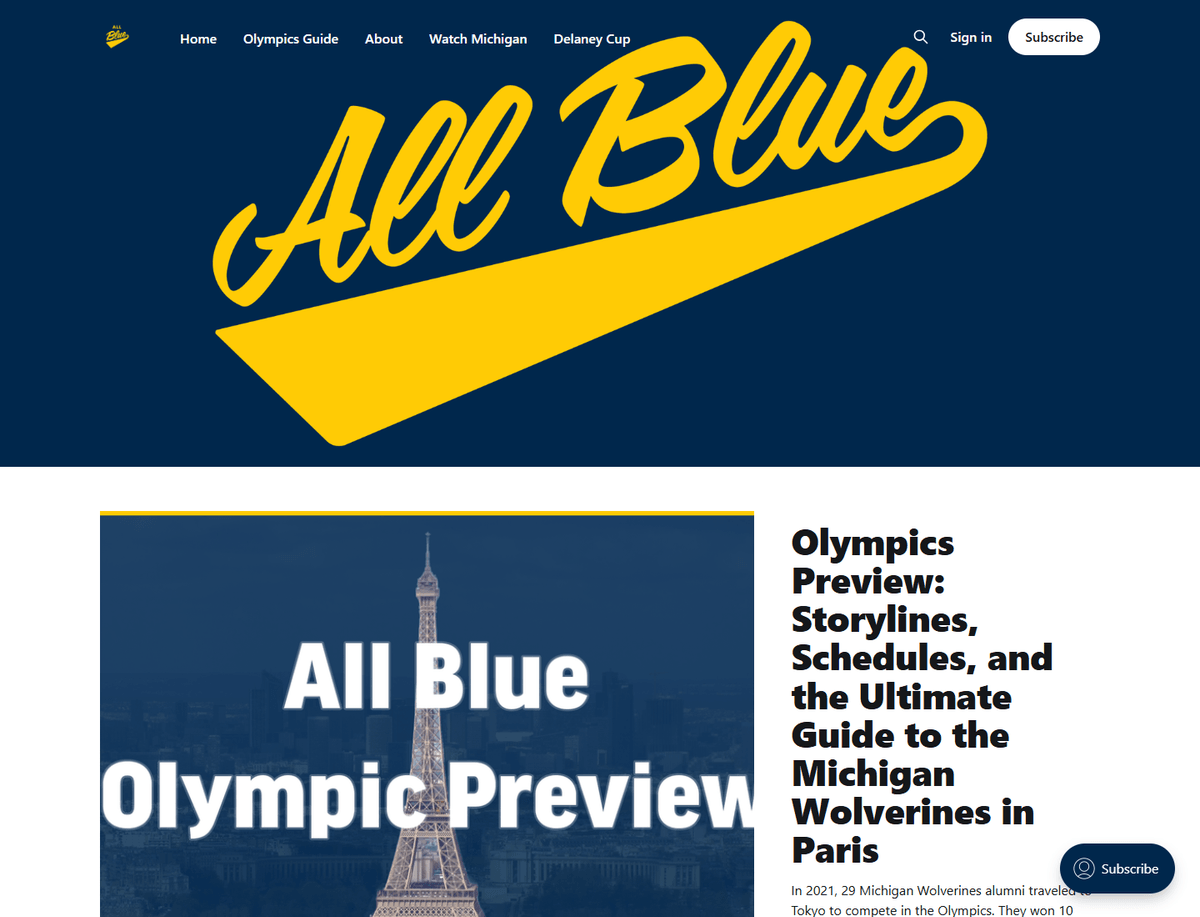
The site remains publicly accessible as a Ghost publication with an article archive, an Olympics guide, a Watch Michigan page, and the Delaney Cup project. Its latest visible article is dated July 23, 2024, so this case should be read as an accessible specialist publication and archive, not evidence of a newsroom posting in 2026. That boundary also reveals a useful lesson: a well-organized site can preserve editorial value after its publishing cadence changes.
Case Snapshot
- Website: allblue.fans
- Category: independent college sports publication
- Audience: Michigan Wolverines supporters interested in broad, multi-sport coverage
- Public features: feature articles, event previews and recaps, Olympics guide, viewing information, subscriptions, and the Delaney Cup standings project
- Activity checked: September 4, 2026; latest visible post dated July 23, 2024
A Narrow Promise Creates Editorial Room
All Blue does not try to reproduce every score or compete with a full athletic department. Its archive moves across women's lacrosse, tennis, gymnastics, water polo, basketball, swimming, track, soccer, and other Michigan sports. That selection gives the publication a recognizable point of view: follow the broader athletic program, especially where mainstream attention is uneven.
This is a strong model for an independent fan publication. A useful niche is not merely a smaller subject; it is a consistent editorial decision about what deserves attention. A purpose-built .fans site can make that decision visible in its name, navigation, and recurring formats.
The Olympics Guide Packages Complex Information
The site's Paris 2024 guide gathered Michigan-connected athletes, sports, schedules, and background into a single destination. The accompanying preview placed those appearances in context by recalling the university's representation and medals at the previous Games. For a reader, this is more useful than chasing scattered social posts whenever an athlete competes.
Guide-style content has a natural maintenance challenge. Schedules, rosters, television listings, and results can change. Publishers should date every update, retain a visible correction method, and distinguish planned appearances from completed results. When the event ends, the page can become a clearly labeled archive rather than quietly appearing current.
The Delaney Cup Adds an Original Editorial Product
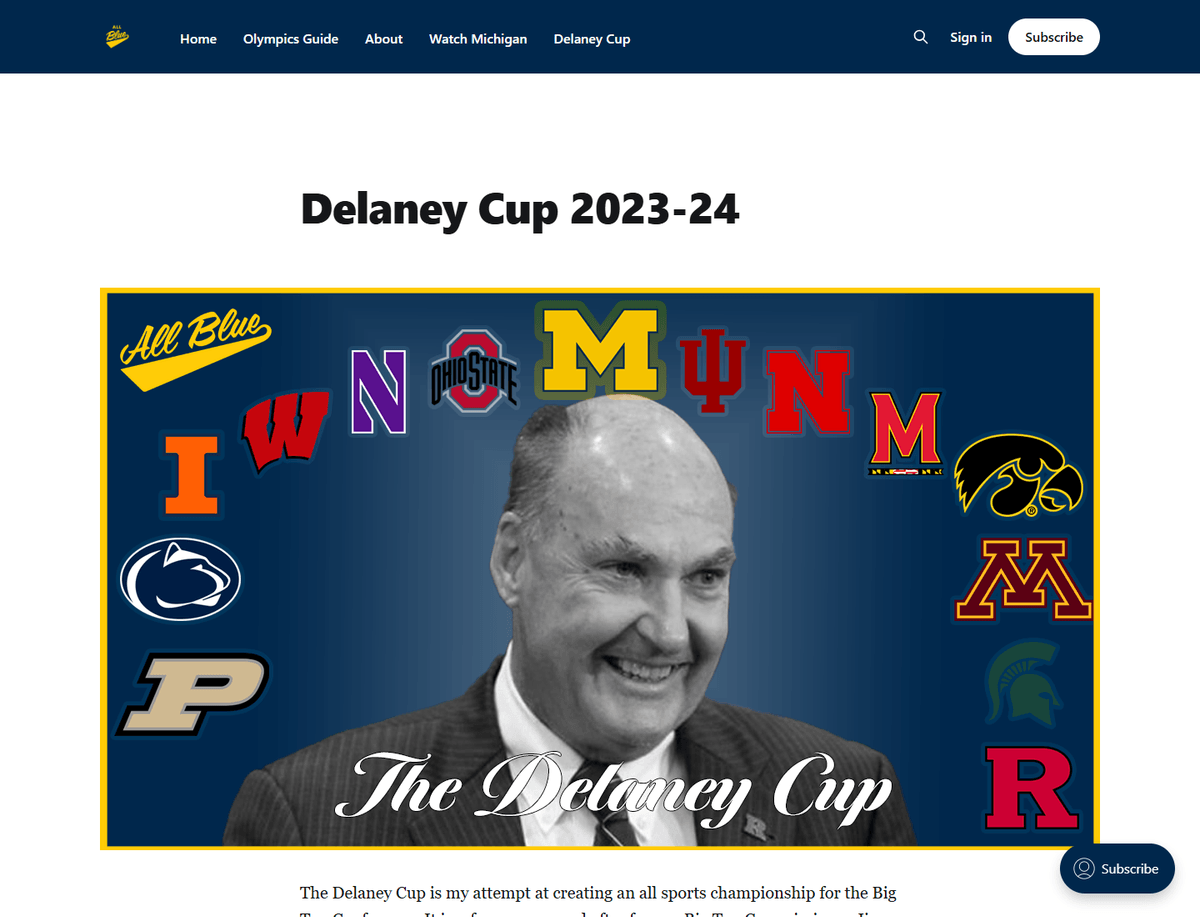
The Delaney Cup is the site's attempt to score an all-sports Big Ten championship. The page explains its rules, assigns points for conference standings and tournaments, adds NCAA bonuses, and provides school-by-school breakdowns. Its last displayed update is April 22, 2024.
This feature is important because it creates something readers cannot get from a standard news recap. It turns the publication's broad interest into a repeatable framework. Original scoring systems, trackers, indexes, rankings, and calendars can give a fan site a durable reason to be bookmarked, provided the methodology and update status are transparent.
The .fans Address Matches a Reader-Led Voice
“All Blue” evokes Michigan's visual identity, while `.fans` describes the intended relationship: this is coverage made for supporters. The address feels appropriate for a publication that moves between analysis, enthusiasm, practical viewing information, and personal editorial voice.
That fit should not be confused with institutional ownership. The site should maintain clear About and footer language about who publishes it and whether it has any formal university relationship. Anyone developing a team-focused publication can use the .fans identity while still making independence unmistakable.
Five Lessons for Independent Sports Publishers
- Cover the overlooked parts of a familiar subject. Breadth across smaller sports creates a distinct editorial role.
- Build reference pages, not only posts. Guides and viewing pages solve recurring reader needs.
- Create a signature format. The Delaney Cup turns a point of view into a reusable product.
- Date dynamic information. Readers need to know whether schedules, standings, and rosters are current.
- Design for pauses. Clear archives and update notes preserve trust when publishing slows.
Editorial Rights and Accuracy Still Matter
Sports reporting involves names, statistics, photographs, team marks, broadcasts, and rapidly changing results. An independent site should cite primary schedules and official results, license or create its images appropriately, correct errors, and avoid implying access or endorsement it does not have. Commentary can be opinionated while factual claims remain verifiable.
Subscription tools also create responsibilities. Publishers need reachable privacy information, an honest explanation of what subscribers receive, and a simple way to leave the list. A dormant or paused publication should not continue promising a frequency it no longer maintains.
Practical Takeaways for a Specialist Publication
Choose a coverage promise that can be explained in one sentence. Then build two or three recurring assets around it: a weekly roundup, an event guide, a tracker, or a methodology-driven ranking. Use an About page to disclose ownership and scope, and place last-updated labels on pages that readers may treat as current.
Editors exploring a focused fan publication can review the .fans FAQ and use the registration route to check a name. Rights to team names, marks, photography, and broadcast material require separate review.
Conclusion
AllBlue.fans demonstrates how a small publication can widen the field of attention around a major athletic program. Its most memorable work is not a generic stream of posts but a collection of specialist artifacts: multi-sport reporting, an Olympics guide, viewing support, and an original conference scoring system. The archive also shows why update dates matter. Clear status turns older work into useful history instead of misleading freshness.