
A creator link works best when the visitor already understands what kind of relationship the destination is meant to support. Shoutout.fans uses a concise platform name and creator-specific URL paths to make that purpose easy to recognize.
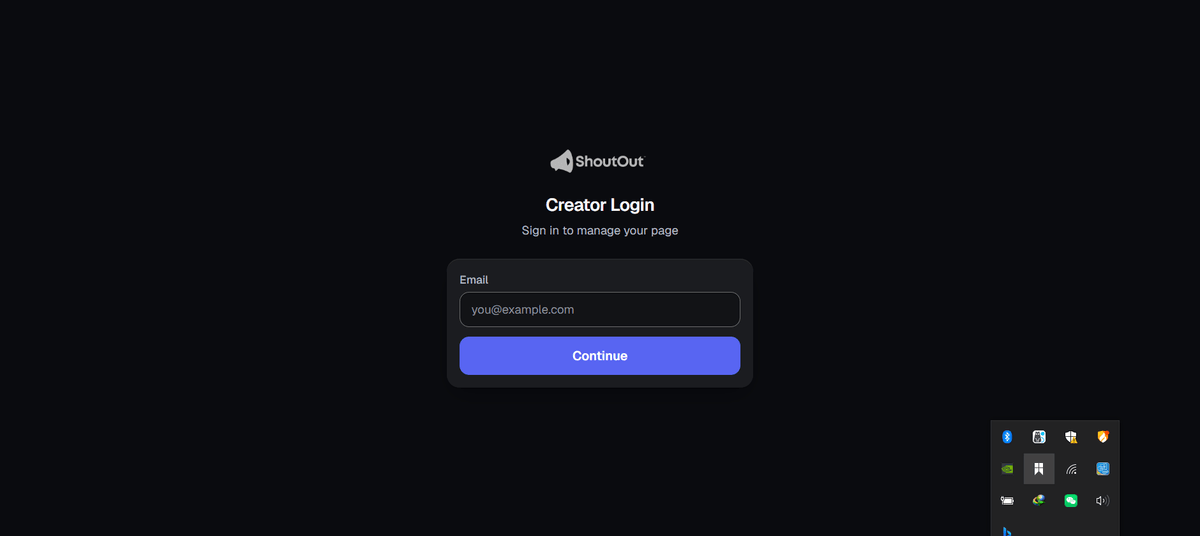
During the September 8, 2026 review, the main public page displayed a creator login, while indexed profile routes identified creators including DeVory Darkins, Chris Salcedo, and Isabella Moody in their page titles. The profile client did not finish loading its public content during the review, so this case deliberately avoids claims about current offers, prices, payments, turnaround, availability, or fulfillment. Even within that limited evidence, the domain architecture provides a useful lesson about creator identity and direct audience routing.
Case Snapshot
- Website: shoutout.fans
- Category: creator profile and direct-audience platform
- Observed public entry point: creator login
- Observed profile structure: creator names placed directly after the domain
- Verified profile titles: DeVory Darkins, Chris Salcedo, and Isabella Moody
- Website checked: September 8, 2026
The URL Does Part of the Explanation
Consider the structure shoutout.fans/creatorname. The first half describes the type of audience action, and the second identifies the person. A creator can share a single route in a social bio, video description, newsletter, or live broadcast without forcing fans to search a larger marketplace first.
This is a small information-architecture decision with practical consequences. Search and browsing are useful when people are still deciding whom to follow. A direct profile is better when the creator has already generated the interest elsewhere. The link should preserve that intent, confirm the creator's identity, and explain the next available action with minimal friction.
A Platform Name Can Carry Category Meaning
“Shoutout” is an action-oriented word. The `.fans` ending identifies the people expected to request or receive that interaction. Together, the words form a compact description of the platform category rather than an abstract company name that needs a separate tagline every time it appears.
This illustrates one way to use a fan-first domain identity. The extension can clarify audience context at the point of sharing. It does not establish creator authenticity or guarantee a transaction, but it can reduce the amount of explanation required before a visitor reaches the profile.
Separate Creator Operations from the Fan Journey
The public root page presents a creator login. That implies an operational boundary between account management and public profile access, though the private workflow was not tested. This separation is sensible for any creator service. Creators need authenticated tools for account details, requests, content delivery, schedules, payouts, or support; fans need a clear public destination.
Those two experiences should not be designed as mirror images. A creator dashboard can contain dense controls and status information. A fan page should answer a shorter set of questions: Is this the right person? What is available now? What will I receive? What does it cost? When should I expect it? What happens if the request cannot be completed?
Reliability Is Part of the Public Experience
The profile routes returned creator-specific titles during review, but the visible client remained on a loading state. This may have been temporary, regional, or related to a dependent service; the review did not establish the cause. For a direct-response platform, however, availability is not a secondary technical detail. A creator may send high-intent visitors from a short-lived post or livestream, and a loading failure can consume that moment.
Platforms with public profiles should monitor the complete anonymous journey from several locations and devices. The test should cover domain resolution, page rendering, creator data, media, offer details, checkout handoff, confirmation, and support links. A page title alone helps discovery, but visitors need the full content to make an informed decision.
Trust Requirements for Personalized Interactions
Any platform that facilitates paid or private creator interactions should make identity, pricing, delivery terms, refunds, content rules, privacy, and dispute handling clear before an order. This paragraph describes a best-practice boundary, not a claim about features that were visible on Shoutout.fans during the review.
Impersonation risk deserves particular attention because fans may arrive through reposted or shortened links. Creator verification, consistent social links, recognizable profile details, and a report mechanism can help users check that they reached the intended person. Platforms should also define prohibited requests, protections for minors, harassment rules, intellectual-property responsibilities, and what happens to uploaded messages or delivered media.
Execution Lessons for Creator Platforms
- Give every creator a memorable direct path. The profile URL should be short enough to say, display, and recognize.
- Confirm identity immediately. Name, current image, verified social links, and a clear platform relationship reduce uncertainty.
- Design around fan questions. Availability, deliverable, price, timing, usage rights, and refund conditions belong near the action.
- Monitor the anonymous journey. Public profile rendering matters as much as the authenticated creator dashboard.
- Avoid implying availability. An indexed profile may remain online even when a creator is paused or no longer accepting requests.
Practical Takeaways
A creator tool can begin by mapping two flows separately. The creator flow covers verification, profile setup, availability, request review, delivery, account records, and support. The fan flow covers identity confirmation, offer details, request input, informed payment, status, delivery, and resolution. Shared data should connect the flows, but each interface should remain focused on its user's task.
The domain should then make the relationship obvious wherever it is shared. Teams can explore .fans use cases, review common questions in the .fans FAQ, and check a suitable name through the registration page.
Conclusion
Shoutout.fans demonstrates the value of a domain and path structure that reads like an invitation: platform purpose first, creator identity second. The reviewed evidence does not support conclusions about its present commercial workflow, and the incomplete profile rendering is a meaningful limitation. The durable lesson is narrower but useful. When interest originates on another platform, a direct creator URL should preserve that intent, prove who the visitor reached, and make the next step reliable and understandable.