
A DJ website needs an address that connects the artist people remember with the music they want to hear. A .fans domain puts that audience relationship into the name itself. DJInsomnia.fans shows the idea in practice: an artist name becomes the address for recordings, background information and a booking contact. For a performer choosing a domain, it is a concrete example of how .fans can become part of an artist brand.
The case is useful because the address has a clear purpose. It gives listeners and event organizers a destination associated with one performer. This article looks at the site's publicly visible features, then uses them to explain the decisions behind choosing and using a .fans address.
DJInsomnia.fans: an artist name with an audience in mind
The DJInsomnia.fans homepage displays the artist name Insomnia and navigation for shows, a biography and pictures. It also includes two recordings with visible durations exceeding an hour, a mailing-list entry and booking information. Together, those elements show an artist using a .fans address as a public home for both listening and contact.
The name has two complementary parts. “DJInsomnia” identifies the performer, while “.fans” gives the address an audience-oriented meaning. To a visitor, the full address pairs a recognizable artist name with an audience-oriented ending. That reading does not assume why the artist originally selected it.
For your DJ website, start with the name someone would know from a lineup, a flyer or a recommendation. The domain should help carry that recognition into the browser. If your performance name includes an abbreviation, test whether a newcomer can spell it after hearing it once. A name that looks striking in a logo still needs to work in ordinary text, where the logo cannot explain it.
Why .fans belongs on a DJ website shortlist
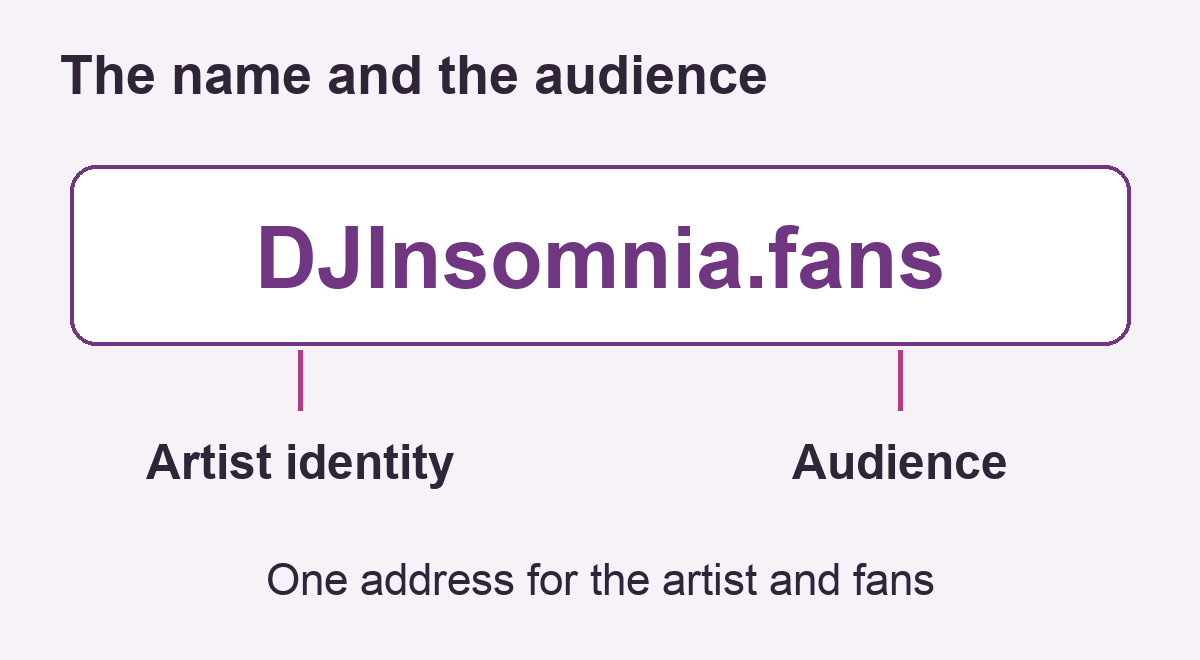
Original naming illustration: the artist identity and audience meaning in DJInsomnia.fans.
A domain ending can contribute to the meaning of the complete address. For an artist whose work depends on people choosing to listen, attend and return, .fans makes that audience visible. It fits a destination built around an ongoing relationship with listeners, whether the first version contains one mix or a broader collection of artist material.
The registration decision should therefore begin with fit. Ask what the full name communicates when it appears on a show announcement or in a profile. Does it clearly belong to the artist? Does the audience understand why they would visit? Does it leave room for the project to develop? A .fans address can frame the site around the people following the work, without naming a particular music genre or one release.
DJInsomnia.fans illustrates that combination of recognizable identity and audience language. You can apply the same naming logic while keeping your own artistic character. A long string of extra words may make the address harder to share; adding every genre, location and service to the domain is unnecessary when the website can provide those details.
Choose the extension because it suits the relationship you want the site to support. Registration does not supply the music, the design or the audience. It establishes the address at which you can bring those elements together. That distinction makes the value proposition concrete: a relevant name, used consistently, supporting a destination you actively maintain.
A practical naming review should include your existing audience touchpoints. Put the candidate beside a show announcement, a mix description and a booking introduction. Check that each use points to the same artist identity. Your DJ website address should feel like a consistent part of those materials, with a purpose people can explain to someone else.
Turn the address into a listening destination
The public player is one of the most direct uses of the DJInsomnia.fans address. A visitor can move from the artist's name to a choice of recordings without first searching through several profiles. The visible player demonstrates a listening route; it does not establish how many visitors play a set or how long they stay.
On your DJ website, give the address one immediate job when you launch. A strong starting point is a featured mix accompanied by enough context to choose it. State whether it is a live set or studio recording, add the date when useful, and explain the musical direction in a short introduction. These details make the page worth visiting after someone has heard the domain name.
Think about the setting in which the address will be shared. On a printed flyer, a person may type it later. In a social profile, they may open it while standing outside a venue. The first screen should confirm the artist's identity and make the listening route easy to find. A visitor should not need to infer which of several unnamed buttons opens the music.
The address can remain the same as the featured set changes. That is useful for recurring promotional material: the artist can update the destination while keeping a familiar name on current profile pages. Before reusing older printed materials, check the full route yourself. A consistent address is only useful when it still leads to content that represents the artist well.
Give promoters a clear route from artist identity to inquiry
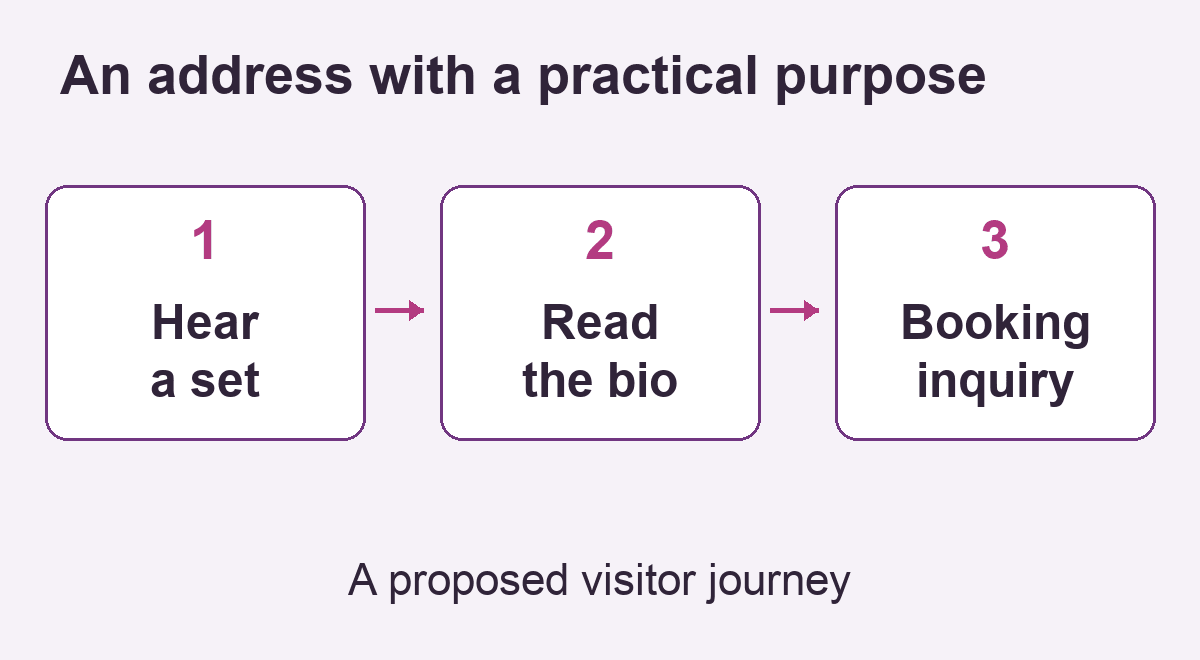
Original planning illustration: a listening visit can lead to artist context and a booking inquiry.
The artist's biography page combines an account of the performer's electronic music background with booking information. Its event text includes an “Upcoming Events 2025” heading, so those entries should be read as historical material during this November 2026 review. The page is a naming and content example, not a verified current availability calendar.
For a DJ website serving promoters as well as fans, the same address should support a second clear journey. After hearing a set, an organizer may need a concise biography, a suitable photograph and a way to ask about an event. Put those materials under labels that describe their purpose, and keep the booking route distinct from general audience updates.
This is where the domain becomes useful beyond a profile link. An organizer can share the artist's website with a colleague while discussing a lineup. The recipient gets a recognizable destination with context, rather than a bare audio file. Keep the artist name consistent between the address, biography and downloadable materials so that the information remains identifiable when it is forwarded.
Ask for only the details needed to begin an inquiry. A date, location, event description and reply contact can establish the conversation. If you offer a downloadable press kit, include a clear version date and check that its contact information matches the website. These are content decisions you make after registration; they turn the domain into a working part of your artist communications.
Build a reason for fans to use the address again
DJInsomnia.fans also displays a mailing-list signup. It is a visible invitation to receive artist news, although the signup delivery and subscriber experience were not tested for this case. The useful naming lesson is that a .fans destination can support more than a first encounter with a recording.
A returning visitor might want the latest mix, a confirmed show date or a reminder of the booking contact. Plan those repeat visits when deciding what belongs on your DJ website. You do not need to launch a large membership service to give the address a purpose. A small collection of current, clearly labeled material can serve an audience better than several sections you cannot maintain.
For example, a new recording can become the featured item while the previous one moves into an archive. A confirmed show can have a short entry with the venue, city and organizer's ticket link. After the event, that entry can become a dated recap. This publishing routine gives the artist address continuity across different moments in a career.
The .fans name helps express who the destination is for. The content supplies the reason to return. When choosing between potential names, picture the address beside an invitation to hear your next set. If the wording feels natural and the identity remains clear, you have a useful candidate to check with a registrar.
Before announcing the new DJ website, ask a listener and an event organizer to use it independently. Their different tasks will help you check whether the destination supports both audiences without burying the music or the contact details.
Choose and register a name you can use consistently
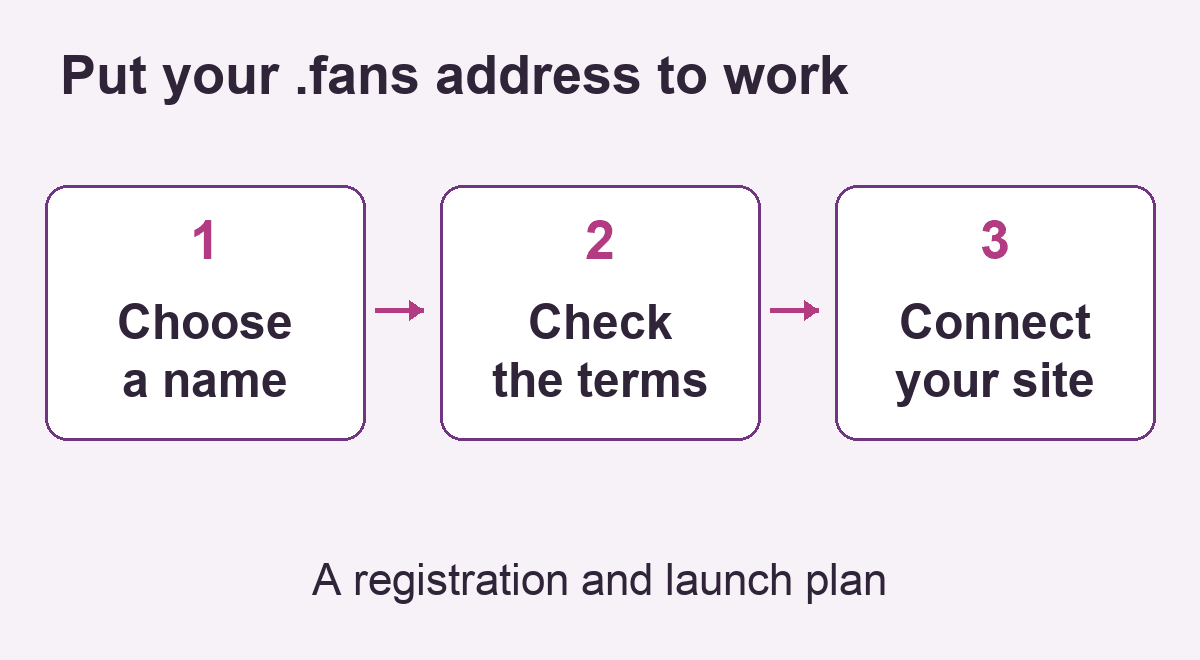
Original planning illustration: choose a name, check registration terms and connect a useful site.
Start your shortlist with the artist name you actually perform under. Read each candidate aloud, type it on a phone and place it beside your current artist logo. Test whether punctuation in the performance name creates confusion when written as a web address. Ask a listener to repeat the spelling without looking at the screen.
Next, decide where the address will lead at launch. For your DJ website, a focused homepage with a recording, brief introduction and booking route may be sufficient. If you already have a site, ask your website provider what is required to connect a custom domain. Check the service and plan requirements before paying for changes you may not need.
Review the registration offer for the exact name. Confirm availability, the registration period, renewal price and any separate services you plan to use. A first-year offer should not be the only figure in your decision. Keep the domain account under the control of the artist or the responsible business, and record who will maintain the renewal and contact details.
The introduction to the .fans domain explains the audience-focused positioning behind the extension. Use that context to assess whether the name supports your project. When you are ready to check a candidate, the .fans registration page is the next place to start. Availability and terms must be confirmed for your own name; this case makes no claim that a particular alternative is available.
Questions to answer before you launch
Can .fans work for an independent DJ?
The DJInsomnia.fans example demonstrates an individual artist using the extension for a public site. For your own DJ website, evaluate the complete name and the experience it will introduce. A clearly presented artist identity and useful listening route make the purpose understandable. You can start with a focused site and expand its content as your publishing routine develops.
Should the domain match the artist name exactly?
A close match is a useful starting point because listeners may already know the performance name. The important test is whether people can recognize, say and type the complete address. If a candidate needs constant explanation, consider a clearer variation that preserves the identity. Check each candidate's availability rather than assuming a spelling is free to register.
What should be ready when the domain is connected?
Prepare a clear artist introduction, a current music selection and a working contact route. Open the finished page on a phone and follow the links a fan or promoter would use. Confirm that old dates are labeled as past events and that the page gives visitors an obvious next step. Registration and a maintained destination should work together from the beginning.
Give your next set a recognizable home
DJInsomnia.fans provides a real example of an artist name paired with .fans and used for music, background information and contact. The broader opportunity is to make your DJ website an address people can associate with your work across releases and performances. Choose a name that sounds like your artist identity, connect it to useful content and keep that destination current.
Ready to bring your music and audience together under a .fans address? Take your preferred artist name to the registration step and check the available options and terms.