
Technical community services often fail at the first step: a visitor may understand the idea but not know how to join. DeltaChat.fans addresses that problem with a Russian-language onboarding site for community-operated chatmail servers designed for use with the Delta Chat app.
The website is not presented here as the official home of the wider Delta Chat project. Its own information page describes the service as being run by a small group of volunteer developers and system administrators. What makes it a useful .fans case is the way it packages installation, server selection, QR-based account creation, operating limits, privacy information, and community support around one clear entry point.
Case Snapshot
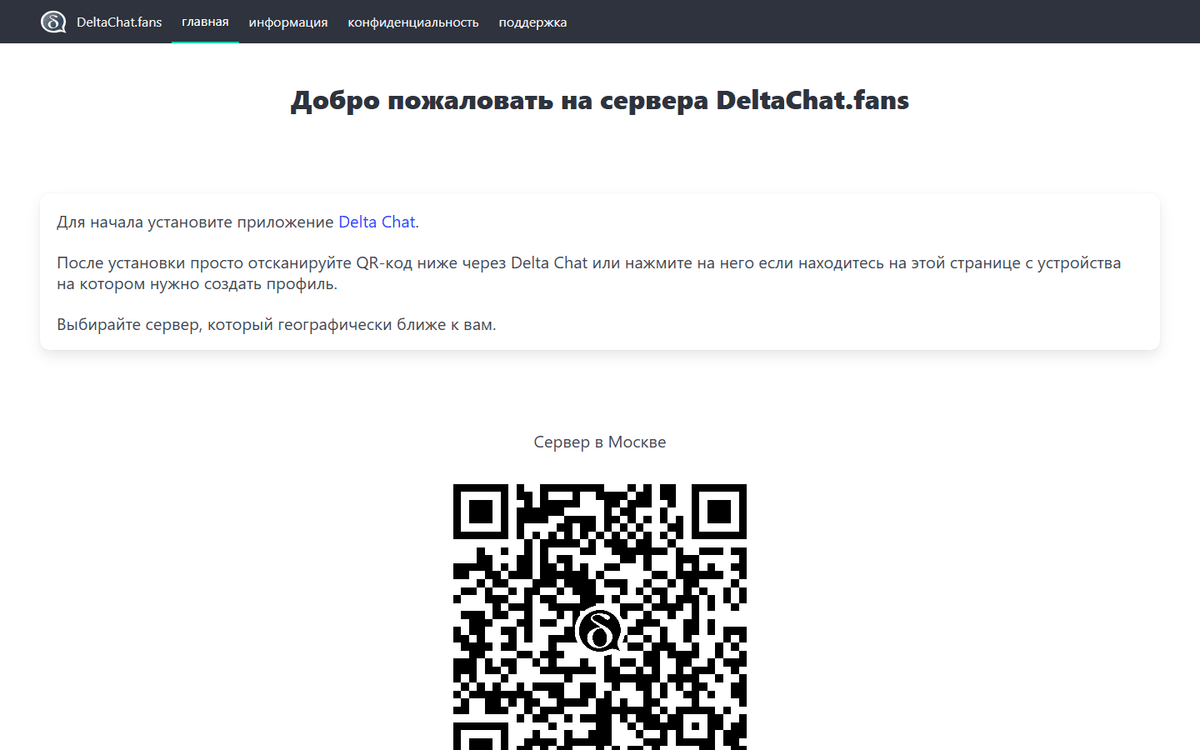
- Website: deltachat.fans
- Category: community-operated messaging infrastructure
- Audience: Russian-speaking Delta Chat users seeking a chatmail account
- Public features: regional server choices, QR invitations, service information, privacy policy, and support page
- Activity checked: August 19, 2026
The Homepage Turns Setup into a Short Journey
The first instruction is concrete: install Delta Chat. The page then asks the visitor to scan a QR code in the app or select it on the device where the profile will be created. Instead of forcing users to understand mail-server configuration before they begin, the site presents the account invitation as the main action.
Visitors can choose among servers identified with Moscow, Krasnoyarsk, and Sweden. Geographic choice is explained in plain language: select the server closer to you. The page does not bury this decision in a technical configuration panel. It gives each option a visible label and a scannable code, making the interface understandable even for someone who has not operated email infrastructure.
A Community Name Connects the Tool and Its Users
“DeltaChat fans” reads as a community identifier rather than a generic hosting label. That framing is important. The service depends on both software and people willing to operate infrastructure, explain policies, and maintain onboarding routes. The domain brings those roles together without suggesting that every visitor must be a system administrator.
This is a broader lesson from community-oriented .fans websites: the extension can describe enthusiasm for a protocol or tool as naturally as it describes support for an artist or team. The strongest implementations still make ownership and affiliation explicit so a community project is not mistaken for the upstream product.
Information Pages Explain the Operational Contract
The Information page explains what chatmail is, describes the service's storage and rate limits, discusses account deletion, and names the volunteer operating model. These details help visitors understand that the convenient QR code sits on top of a real service with capacity rules and lifecycle decisions.
The privacy page goes further by outlining data-minimization goals, message handling, abuse protection, and information a browser may transmit when visiting the site. Some retention descriptions visible across the site's pages are not identical. For that reason, prospective users should read the current Information and Privacy pages together rather than relying on a fixed number repeated in a third-party summary.
Safety Messaging Is Visible Before Participation
The homepage states that the service is intended for free and safe communication and rejects violence, discrimination, malware distribution, harassment, threats, and other unlawful activity. It also emphasizes that privacy is not a promise of impunity. That message is valuable because privacy communities can attract both legitimate users and people looking to misuse technical protections.
Policies alone cannot eliminate abuse, but placing expectations close to onboarding makes them part of the experience. Operators of any community infrastructure should explain prohibited behavior, complaint routes, technical limitations, and the circumstances under which accounts or traffic may be restricted. Clear language protects users and maintainers better than vague claims of being “completely private.”
Support Is Treated as Infrastructure
A separate support page explains that servers require time and funding and displays cryptocurrency donation details. Whatever funding method a community chooses, the structural point is useful: maintenance is made visible. Hosting, monitoring, updates, abuse response, documentation, and user assistance do not happen automatically.
Community projects considering a fan-first domain identity should plan for that ongoing work before launch. A memorable name can bring people to the front door, but reliability depends on named responsibilities and a sustainable operating model.
Practical Lessons for Community Service Operators
- Lead with the action a new user must take, then expose technical detail progressively.
- Label community ownership clearly when the service depends on a separate open-source project.
- Place privacy, limits, account deletion, and acceptable-use information in primary navigation.
- Use QR codes only with readable labels and text alternatives so users know what each code will do.
- Review policy pages together and remove conflicting operational details whenever the service changes.
Boundaries Users Should Understand
This case study observes the public website; it does not independently audit the servers, encryption implementation, logging behavior, or deletion process. Users should review the Delta Chat project's own documentation, inspect current service policies, and decide whether a community-operated server matches their threat model. Organizations with strict compliance requirements may need infrastructure they control directly.
For projects building a comparable onboarding destination, the .fans FAQ explains the extension, while the registration page provides a route to check available names. Rights, upstream trademarks, and affiliation language should be reviewed before publication.
Conclusion
DeltaChat.fans demonstrates how a community domain can make technical infrastructure approachable. The site narrows the first visit to installation, server choice, and QR onboarding, then gives users routes to operational and privacy detail. Its best lesson is that community identity and technical transparency should reinforce one another: a welcoming name works most effectively when the service behind it also explains its limits.