
A domain extension can help explain whom a destination serves. At apphub.fans, the audience is people who use mobile apps and want a closer connection with the developers behind them. The platform presents a place for updates, contributions, and feedback. It offers a useful example of “fans” describing engaged product users, rather than only followers of musicians or sports teams.
The homepage identifies apphub#fans as a TenTenKay, LLC company. This is a business presenting its own community product, not a fan page claiming affiliation with an unrelated celebrity. Its public description is specific about the intended customer: mobile app developers. That combination of an identifiable provider, a defined audience, and a concrete use gives the name something meaningful to express.
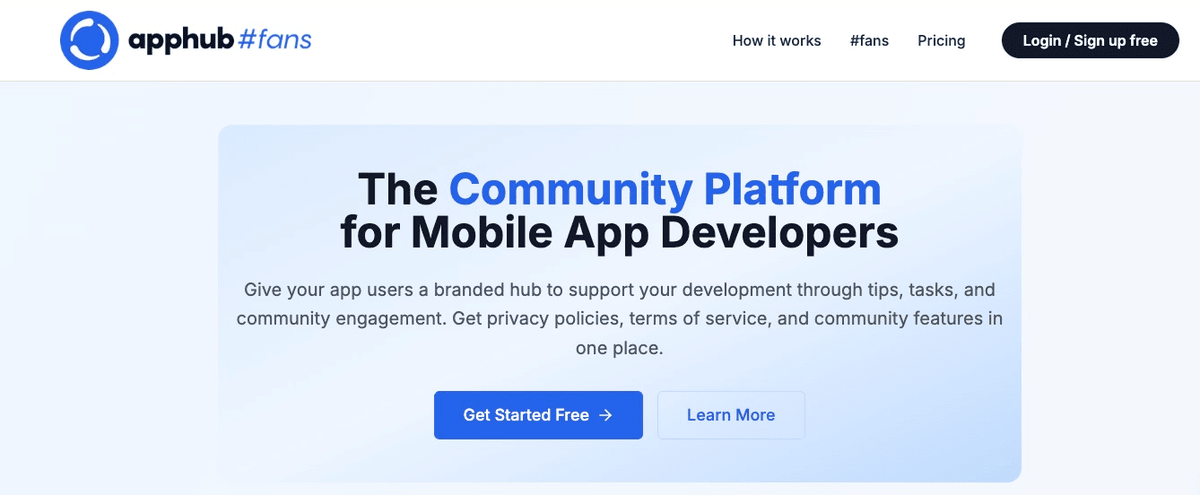
Screenshot from apphub.fans · November 17, 2026
Start with the audience behind the domain extension
The name combines “apphub” with .fans. Read together, those elements suggest a gathering place for people interested in an app. The homepage then makes the intended relationship explicit: developers can create a branded destination for their users. The domain extension supplies an audience cue, while the page explains what visitors and developers can do there.
That is a useful distinction for a software business considering its own name. A product download page answers one set of questions: what the app does and where to get it. A community destination answers another: where to find updates, contribute ideas, or contact the team. Keeping those purposes understandable helps a visitor recognize whether they have reached the right place.
The case does not prove that a particular suffix attracts more users. It shows a naming decision that is consistent with a product’s stated purpose. Performance would require separate evidence, such as measured visits or participation, which this article does not claim.
The platform separates different kinds of participation
The public homepage groups its offer into contributions, community, updates, and feedback. Examples include helping with translations, reporting bugs, reading development announcements, and submitting structured responses. These are the provider’s published feature descriptions, rather than a hands-on test of an account or a guarantee that every customer has enabled the same modules.
The interesting point for a domain extension case is the range of relationships gathered under the name. Some people may want to read a release update. Others may be willing to help improve the product. A shared destination can describe both groups as part of the app’s audience without requiring every visitor to become a contributor.
For another team, the transferable lesson is to distinguish those actions on the page. “Read the latest update” and “report a problem” should not look like interchangeable invitations. An audience-oriented name creates a broad welcome; clear labels help each person find the task that brought them there.
One platform name, separate customer addresses
The homepage describes a setup model in which a developer claims a subdomain in the form of yourapp.apphub.fans. This is a particularly useful detail when evaluating a domain extension: the name is not only the platform’s own address, but also part of the address pattern it proposes for customer hubs.
There are different naming jobs within that pattern. The customer-specific label identifies the app. The apphub label identifies the platform. The ending provides the fan-oriented context. Someone planning a similar service should test the complete address, rather than assessing only the shortest root name in isolation.
For example, a software team might read the proposed customer address aloud alongside the label of the button that would link to it. Does the destination sound like a user community, a help desk, or a sales page? The answer may affect the wording of that button. This is an editorial planning exercise, not a claim that apphub.fans has measured the outcome of that test.
The entry point matters as much as the name
The homepage presents WallStream as an example of linking to an apphub community from an app. The linked destination did not provide readable content in our text inspection, so this case does not describe its internal discussions or claim that its features were tested. The public presentation still identifies the intended connection: an existing product can point users toward a separate community destination.
That relationship helps explain the role of the domain extension. The address should support a transition that already makes sense to the visitor. A person using an app might want to read an update or send feedback. A clearly labeled link can connect that moment to the relevant destination without expecting the person to search for the developer elsewhere.
The lesson for another product team is to plan both ends of the link. The label inside the app should set an expectation, and the destination should fulfill it. Selecting an audience-oriented domain extension is one part of that arrangement; it does not replace the work of maintaining the linked page.
Service plans are different from evidence of adoption
The published plan page distinguishes service tiers and describes a user in terms of a unique visitor within a rolling period. Those plan allowances describe the offer. They do not establish how many customers currently use the platform or how many people visit a particular hub. No adoption total is inferred from the pricing table here.
This distinction matters when reviewing any domain extension example. A service can have a clear name and a well-described product without publishing audited usage figures. The case should then be evaluated for the qualities readers can inspect: audience fit, naming consistency, product structure, and attribution.
A developer considering the service would need to check its current terms and available features directly. A team considering a name can learn from the structure without treating this article as a product endorsement or a replacement for that review.
Questions for a similar community project
Can a .fans domain extension suit a software product?
The apphub.fans example shows a provider using it for communities around mobile apps. The relevant connection is the relationship between developers and interested users. A team should still explain the destination clearly; the ending alone cannot tell visitors whether they will find announcements, feedback tools, or a place to discuss the product.
Is a customer subdomain the same as registering a separate domain?
They are different arrangements. The address pattern described on the apphub.fans homepage places a customer label beneath the platform’s domain. A separately registered domain would have its own registration relationship. This article observes the published pattern; it does not claim that every plan includes custom-domain support or that a customer owns the platform’s domain.
Does the public example show how much community engagement increases?
No. The pages reviewed describe the product and its intended use, but they do not provide a verified before-and-after result. The naming lesson concerns how a destination is presented. Any claim about increased engagement would need its own measurement and explanation of what was counted.
Name the relationship you intend to support
apphub.fans makes the audience relationship part of its name and then explains it through a focused product offer. That is the main lesson for choosing a domain extension: the address and the destination should describe the same purpose.
Before naming a community space, decide whom it serves, what they will find, and how they will reach it. The registry’s .fans examples provide other contexts for comparison. Choose a domain extension that fits your actual project, then give visitors a clear reason to return.