
Short domain names work best when the destination gives their few letters a clear purpose. At app.fans, that purpose becomes visible through an artist roster: visitors encounter names including TWICE, DAY6, Stray Kids, and ITZY under one shared address. The site is a useful case for entertainment teams deciding whether an online destination should carry an individual artist’s name or represent a broader platform.
The .fans case directory identifies app.fans with JYP Entertainment. The public Apple listing names Blue Garage Corporation as the app’s developer. Those are specific, attributable identities; neither a memorable domain nor a familiar artist photograph alone would establish who operates a service. Here, the connection between the address, the roster, and published product information gives readers a concrete project to examine.
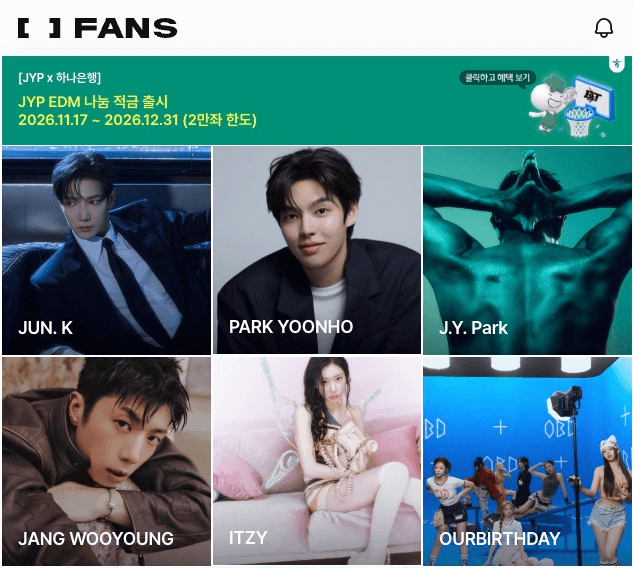
Screenshot from app.fans · November 17, 2026
One address, several artist destinations
A visitor arriving at app.fans does not first encounter an essay about the platform. Artist names and images communicate the site’s scope. Someone looking for DAY6 can recognize a relevant destination, while a visitor following multiple acts can see that the platform extends beyond one group. The opening experience therefore does two jobs: it identifies the shared service and makes individual artists discoverable within it.
This is where short domain names can be useful for a multi-artist organization. An umbrella address does not have to list every act it serves. The roster can explain the range after arrival. That is an editorial interpretation of the visible structure, rather than a claim that the domain produced additional visitors or that every visitor completes the same journey.
For a team reviewing its own site, the important comparison is between the address and the first screen. If the address is broad, the page needs to become specific quickly. app.fans provides that specificity through recognizable artist identities. A broad name without a clear selection would leave visitors doing the organizational work themselves.
How short domain names leave room for a roster
The word before the dot describes a type of destination rather than a single performer. That makes app.fans an interesting example of short domain names serving a platform identity. The address can remain coherent while the content presents different artists, each with a distinct name and audience.
Consider a label preparing a campaign for one release. Naming that campaign after the release may be appropriate because its scope is deliberately narrow. A shared fan platform has a different job: its entrance must continue to make sense beyond one album cycle. In the app.fans example, the artist roster supplies the detail that the compact address intentionally leaves out.
Brevity also creates a responsibility. Three letters do not explain membership terms, identify every feature, or establish which artist a person wants. Teams comparing short domain names should therefore ask what information the destination will carry immediately after the click. The answer should be visible content, not an expectation that visitors already understand the organization’s internal structure.
Published services extend the idea beyond a directory
The developer’s App Store description describes artist announcements, schedules, media, memberships, and events. This shows the intended product scope more clearly than the roster alone. It is a published product description, however, not a test of every feature or a promise that each artist offers an identical experience.
That distinction matters when examining short domain names as brand examples. The domain identifies the destination; the service has to earn repeat visits through useful content and dependable operations. An address can organize access to a product, but it cannot provide a membership benefit, answer a support request, or maintain an event schedule by itself.
For an entertainment team, the practical lesson is to connect the promise on the first screen with the next destination. If an artist card leads toward announcements, those announcements should be easy to recognize. If the next step requires an account, the page should make that transition understandable. These are planning lessons drawn from the platform model, not additional claims about tested app.fans workflows.
A dated shop announcement makes the structure more concrete
The platform’s April 9, 2025 shop announcement provides another specific example. It introduced artist shops for official merchandise and albums and described reaching them from the shared service and artist community pages. The notice also distinguished artists whose shops had opened from those whose shops had not.
This is a useful relationship to study: one platform entrance, artist-specific destinations, and a service attached to those destinations. The published notice also discussed country settings and product shipping restrictions. Readers should consult current product pages for present availability; an announcement records what was introduced at that time.
For organizations considering short domain names, the example demonstrates why navigation needs more detail than the address. A compact entrance may be appropriate, while labels inside the site must distinguish artists, content, and shopping. Trying to put every service into the domain would make the entrance more complicated without replacing those internal choices.
What another team can borrow from this case
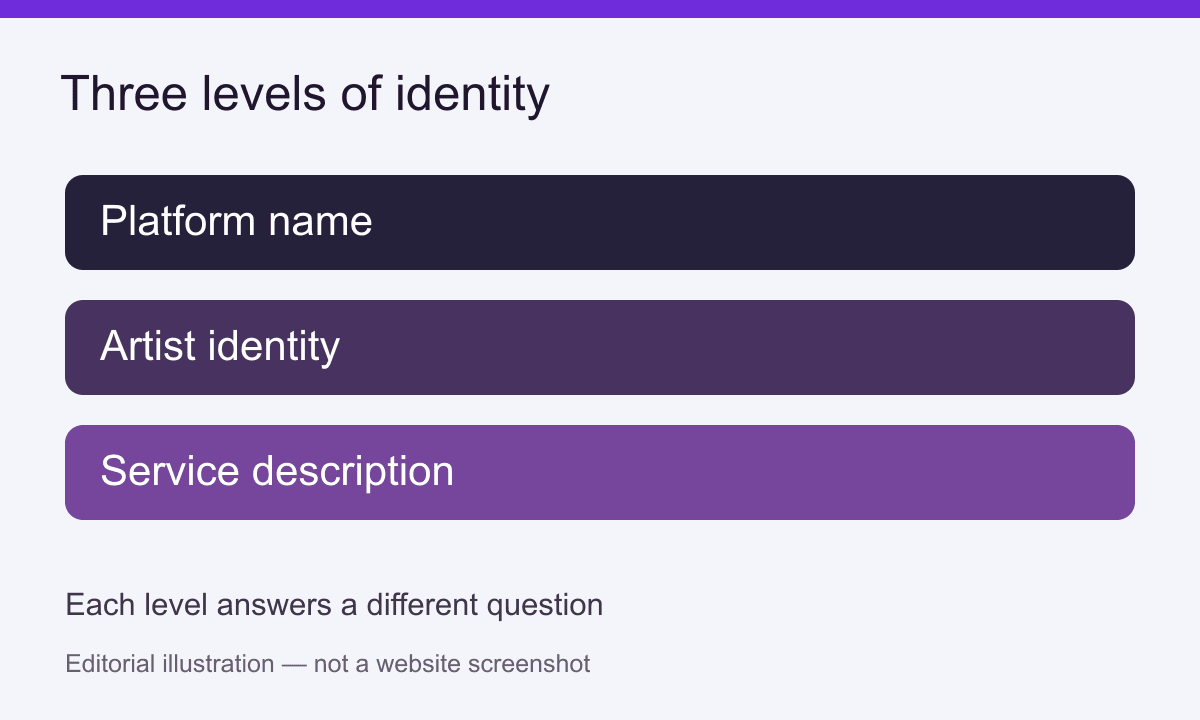
The strongest lesson is not to imitate the word “app.” It is to align the name with the level at which the destination operates. app.fans names the shared platform; the roster names the artists; published notices explain individual services. Each layer answers a different visitor question.
When evaluating short domain names for another project, sketch those layers before selecting a candidate. An organization with one performer may need a direct artist destination. A multi-artist service may need an umbrella entrance. A temporary event may need a narrower identity. The right choice depends on the actual content and the audience’s reason for arriving.
Then read the proposed address beside the first heading and first action. Do they tell one coherent story? A name that looks elegant in isolation can become unclear beside an unrelated landing page. The app.fans example is useful because its public roster gives the umbrella idea an immediate, recognizable expression.
Questions this example helps answer
Do short domain names have to include an artist’s name?
No. app.fans illustrates a different arrangement: a platform-level address with individual artists identified inside the destination. That can suit a service spanning several acts. A single-artist project may make a different choice. The example supports comparing naming structures; it does not establish that one structure always performs better.
Does a .fans address prove that a platform is official?
The extension alone does not establish an operator’s identity. In this case, the registry’s directory, the public artist roster, and the developer’s product listing provide the relevant context. Readers should use attributable operator information when assessing any example, rather than treating the domain ending as an endorsement or an authorization badge.
Does the app.fans case show that shorter names increase traffic?
No measured website traffic or conversion result is presented here. The case shows a naming and navigation arrangement that readers can inspect. Claims about audience growth would require separate evidence. Teams can still evaluate clarity, scope, and consistency without assigning an unsupported performance benefit to the address.
Give the name a clear job
The value of studying short domain names is in seeing how much meaning the destination supplies around them. app.fans pairs a broad platform name with an identifiable artist roster and published descriptions of the service. That relationship is more useful to another team than the domain’s character count alone.
For your own project, decide whether the name represents one artist, an event, or a shared platform, then build a destination that makes that scope apparent. Explore the registry’s examples of .fans use and compare candidate short domain names against the experience you intend to offer.