
A live show creates a rare concentration of attention. Fans have chosen the artist, bought access, traveled to a venue, and arrived ready to participate. Yet the relationship often becomes fragmented after the final song because ticketing, social profiles, merchandise, and audience data live in separate systems.
planet.fans is built around that gap. The public site describes Planet as a system for live audience activation, helping artist teams identify fans and act before, during, and after a show. It is a strong .fans case because the domain names the exact group the product is designed to understand and serve.
Case Snapshot
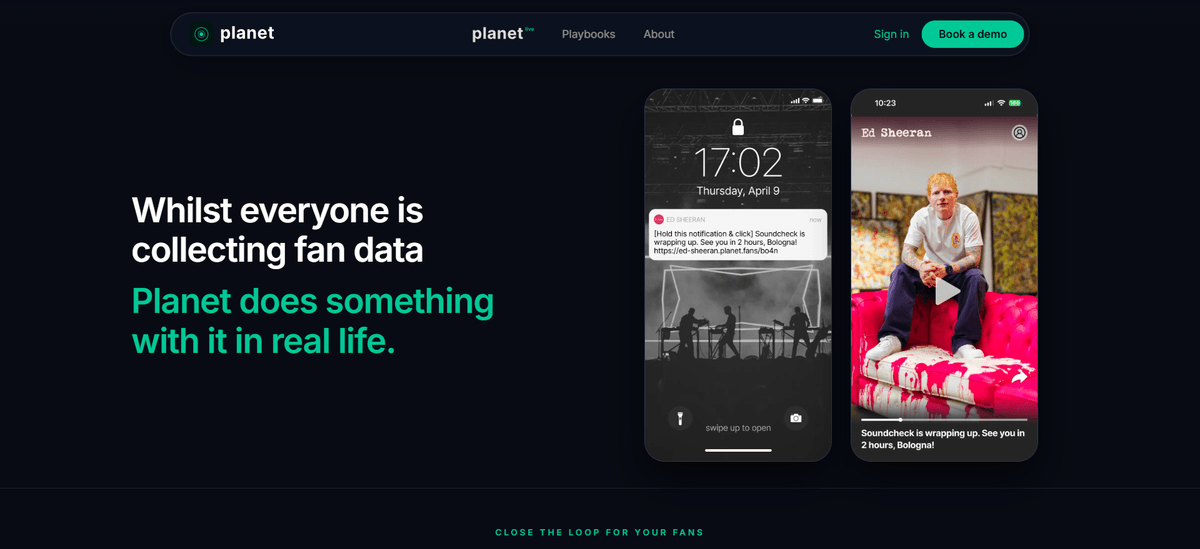
- Website: planet.fans
- Primary users: artist teams, labels, promoters, and live-music operators
- Audience: concertgoers and artist fans
- Product pillars: fan acquisition, audience building, drop creation, event management, and smart actions
- Status checked: August 11, 2026
Start Where Fan Intent Is Highest
Planet's central idea is unusually focused: begin with live events because attending a show is a high-intent action. Instead of treating every follower as equally engaged, an artist team can use an event to invite people into a more direct relationship.
The website describes account creation, fan-first presales, event RSVPs, and in-venue signups as acquisition tools. That sequence turns a moment of excitement into permission to continue the conversation. The lesson for other community builders is simple: ask for participation when the value is visible, not at a random point in the visitor journey.
Five Product Pillars Form One Journey
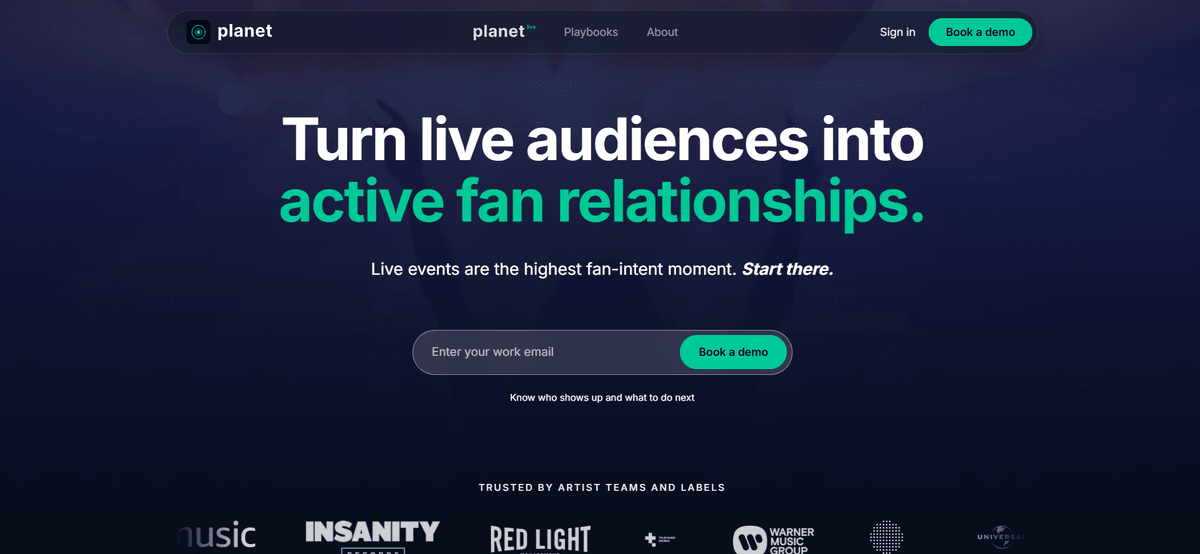
The product is presented in five connected parts rather than as a loose feature list. Fan Acquisition brings people in. Audience Builder organizes what is known about them. Drop Creator provides content and offers. Event Manager supports the venue moment. Smart Actions use past interactions to guide what happens next.
This architecture makes the homepage easier to understand. Each pillar has a distinct job, but all five support the same lifecycle. That is a useful pattern for any platform serving creators: explain where information enters, how it becomes useful, what action follows, and how the next interaction improves.
Examples Visible on the Public Site
- Segment audiences by tour, event, city, region, or interaction.
- Deliver video, image, audio, playlists, set times, and merchandise previews.
- Support guest lists, venue check-in, NFC taps, and location-aware notifications.
- Track opens, clicks, RSVPs, and other responses at the individual fan level.
- Use updated interaction tags for referral, retargeting, and future campaigns.
The Fan Hub Bridges Digital and Physical Experience
One of the clearest ideas on planet.fans is a personalized fan hub that can carry content around the show. Before the event, it might deliver a welcome message, playlist, set times, or merchandise preview. During the event, it can support timely information and in-venue actions. Afterward, it can reconnect the fan with relevant content or offers.
This is more coherent than sending every fan to a generic homepage. Context matters. Someone attending tonight's show has different needs from someone browsing an artist for the first time. Personalization should serve that context without becoming intrusive, and teams need clear consent, privacy, and data-retention practices.
Playbooks Turn Features into Repeatable Operations
The site presents playbooks for album campaigns, live moments, individual shows, and global tours. This is an important product communication choice. Buyers often understand a workflow more quickly than a feature inventory. A playbook can show the order of actions, the team responsible, and the fan experience at each stage.
For artist teams, repeatability is valuable. A successful activation should not need to be rebuilt from scratch for every venue. At the same time, local context still matters: language, timing, ticketing partners, venue rules, accessibility, and audience expectations can differ across a tour.
Why the .fans Name Fits a B2B Product
planet.fans demonstrates that a fan-oriented domain is not limited to public fan clubs. The buyer is an artist team, but the product's purpose is to improve the fan relationship. The domain keeps that outcome visible and makes an otherwise technical platform feel connected to the people behind the data.
This is the same reason the official .fans case collection includes platforms as well as individual artists and communities. A relevant extension can describe the audience served even when the product operates behind the scenes.
What Other Audience Platforms Can Learn
- Organize features around a clear lifecycle rather than a crowded dashboard.
- Use high-intent moments to invite a direct, permission-based relationship.
- Explain products through practical playbooks that match customer campaigns.
- Keep fan value visible alongside team efficiency and data capture.
- Build privacy, consent, deletion, and access controls into the workflow.
Trust Is Part of Fan Activation
Audience intelligence can improve relevance, but it also creates responsibility. Fans should understand what they are joining, which organization will contact them, what data is collected, and how to change their preferences. Artist teams should avoid making access feel conditional on unnecessary tracking.
A strong fan destination combines memorable identity with clear governance. The .fans identity overview can help teams frame the audience relationship, while the registration page provides a route for exploring available names.
Conclusion
planet.fans turns the live show from an isolated transaction into the center of a longer audience journey. Its strongest idea is not a single notification or dashboard. It is the connection between acquisition, understanding, timely experiences, and follow-up. The domain reinforces that purpose at every step: the system may be used by professional teams, but the relationship it is designed to improve belongs to fans.