
Lume.fans redirects to Lume's main platform at Lumemusic.com. Lume describes itself as a new digital album format: a fan buys an album once and receives the music together with material the artist chooses to include, such as demos, alternate versions, voice notes, videos, photographs, lyrics, or archival work.
The case is interesting because the fan relationship is not treated as a generic social layer. It is built into the product model. The destination separates routes for fans and artists, maintains a store and personal collection, and frames the album as a world to explore rather than a sequence of tracks competing for passive attention.
Case Snapshot
- Website: lume.fans
- Final destination: lumemusic.com
- Category: digital music ownership and album discovery
- Primary audience: album listeners, collectors, independent artists, labels, and rights holders
- Main purpose: sell artist-shaped digital album editions and keep purchased releases in a personal collection
- Observed features: release discovery, album pages, multimedia extras, artist information, purchase flow, account collection, artist onboarding, and FAQ
The Product Begins with the World of an Album
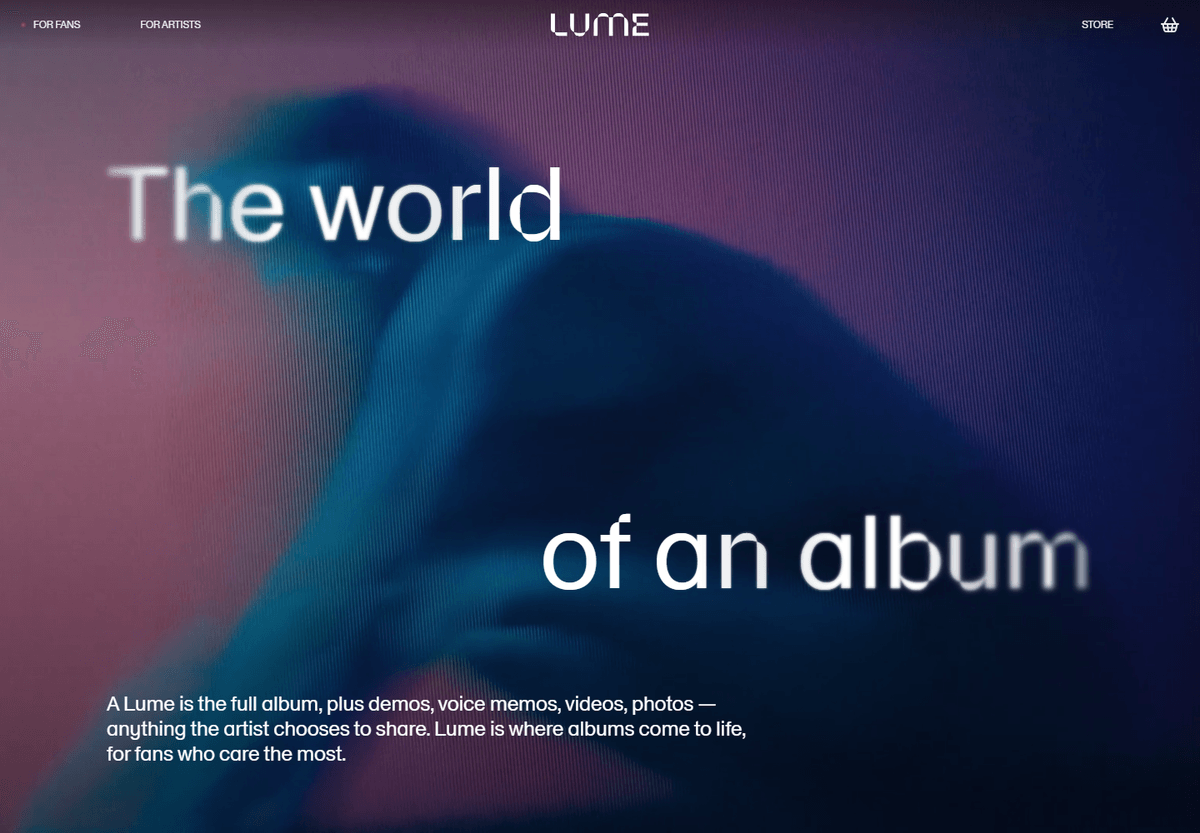
Lume's fan page repeats a simple idea: an album can contain more than finished audio. The platform presents each release as a collection of music and context. Depending on what the artist supplies, that may include demos, live material, working notes, video, photography, or stories about how the record was made.
This positioning addresses a gap between streaming convenience and the richer experience once associated with liner notes, booklets, physical editions, and artist archives. The platform does not need to replace streaming to make that idea useful. Instead, it gives the most interested listeners a separate action: purchase a specific body of work and spend more time with it.
Discovery Leads to Ownership, Not Just Playback
The discovery area presents new releases and curated groupings with prominent cover art. A visitor can move from browsing into a release-specific experience, while the FAQ explains that purchased albums live in a collection tied to the user's account. Lume states that the format is not a subscription and that a purchase remains available through the collection.
Those details are commercially important. “Own” can mean different things in digital services, so a platform should explain access, offline use, downloads, file rights, account recovery, territorial limits, and what happens if the service changes. Lume's FAQ raises these questions directly, helping users understand that the product is an account-based digital experience rather than an unrestricted transfer of every source file.
The Artist Route Treats Format as a Creative Canvas
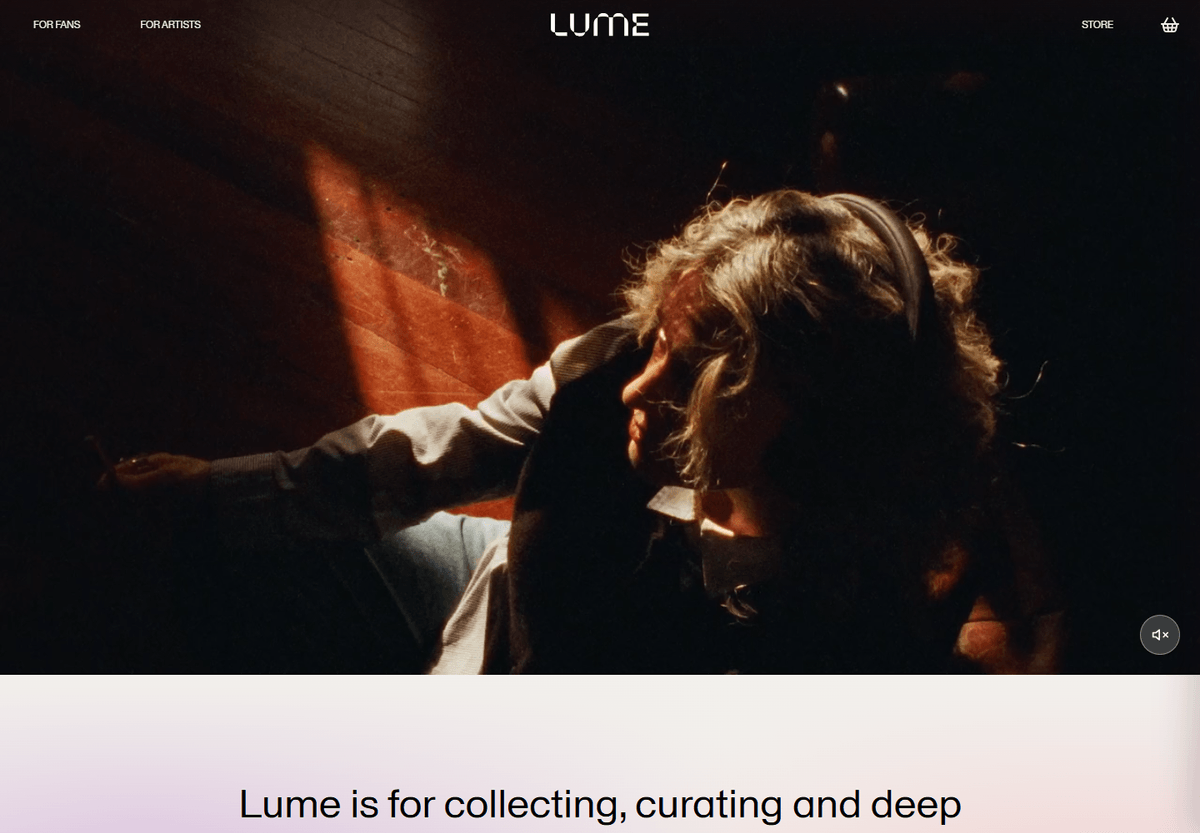
The artist page describes several possible shapes for a Lume. A release may be music-only, archival, built around a live stage period, or assembled from existing materials such as lyric drafts, videos, and rehearsal footage. This flexibility matters because not every artist has the same budget, catalog, or fan relationship.
Lume says artists can decide what belongs in the release and presents the format as a home for work that may already exist but lack a coherent destination. The page also states that 80 percent of net revenue goes to artists and their partners. That is the platform's published commercial term; artists should still review the current agreement, definitions, fees, tax treatment, rights requirements, and payout conditions before participating.
Why the .fans Domain Fits
The `.fans` address functions as a memorable audience-facing route even though the canonical product and store live on Lumemusic.com. “Lume” names the format and company; `.fans` identifies the people most likely to value the deeper edition. The redirect preserves one main platform while giving campaigns, social profiles, and spoken promotion a concise alternative entrance.
This is a strong example of a redirect doing real brand work. The destination matches the promise: visitors who arrive through Lume.fans immediately see album artwork, artist names, fan-oriented language, and a path to explore or buy. The .fans use-case collection shows how similar audience routes can support music, media, creator, and community projects.
Execution Lessons for Music Platforms
- Design around a specific fan action. Lume focuses on purchasing and exploring a complete album edition rather than duplicating a general social network.
- Let the artist shape the package. A flexible content model can accommodate music-only releases, archives, tour records, and multimedia editions.
- Explain digital ownership carefully. Access rights, downloads, offline behavior, account dependence, and service continuity should be easy to find.
- Separate fan and artist journeys. Buyers need discovery and collection tools; artists need economics, rights, production guidance, and examples.
- Make the redirect coherent. A secondary domain works when the destination immediately fulfills the expectation created by the address.
Rights, Payments, and Long-Term Access
A multimedia album may combine masters, compositions, performances, lyrics, photographs, video, artwork, and archival documents. Artists and labels need authority for every component, including material created by photographers, filmmakers, designers, producers, featured performers, and publishers. The platform also needs clear rules for takedowns, territory restrictions, refunds, account transfer, and the treatment of purchased access when rights expire.
Fans should be able to distinguish a collectible digital experience from legal ownership of copyright. Clear language protects both sides. Accessibility is another opportunity: transcripts, captions, readable lyric presentation, image descriptions, and keyboard-friendly navigation can make the “world of an album” available to more listeners.
Practical Takeaways
A creator planning a premium digital edition can begin by inventorying the album's surrounding material: demos, drafts, photography, commentary, live recordings, visual design, and production stories. The next step is editorial, not merely technical. Each item should deepen the release rather than create an unfiltered folder of extras.
The .fans identity guide explains how the extension can signal an audience destination, while the registration page provides a route for exploring a music or product name. Lume's broader lesson is that fan engagement becomes more meaningful when it is attached to a concrete, well-explained experience.
Conclusion
Lume.fans leads listeners to a platform that treats albums as complete digital objects rather than isolated streams. Release discovery, artist-shaped extras, direct purchase, personal collections, and separate artist guidance create a coherent product around deeper listening. Its most transferable lesson is focus: define what devoted listeners can do here that they cannot do as clearly elsewhere, then make the commercial and rights boundaries equally visible.