
Heroverse.fans redirects to Heroverse.com, the main website for a connected world of original heroes, teams, magic, fantasy, and technology. The destination introduces comic projects, presents a large character directory called Cortex, publishes individual biographies, explains the creators behind the universe, and links readers to books and merchandise.
Heroverse identifies itself as a registered trademark of Heroverse, LLC and marks its characters and content as protected material. That explicit ownership makes this different from an unofficial fandom archive: the `.fans` address is a brand-controlled audience route into the company's own fictional universe.
Case Snapshot
- Website: heroverse.fans
- Final destination: heroverse.com
- Category: original comics and transmedia entertainment
- Primary audience: comic readers, character-focused fans, collectors, and prospective creative or licensing partners
- Observed features: featured characters, universe filters, individual biographies, comic descriptions, creator profiles, press history, purchase links, merchandise links, and contact information
The Homepage Introduces Both Characters and Projects
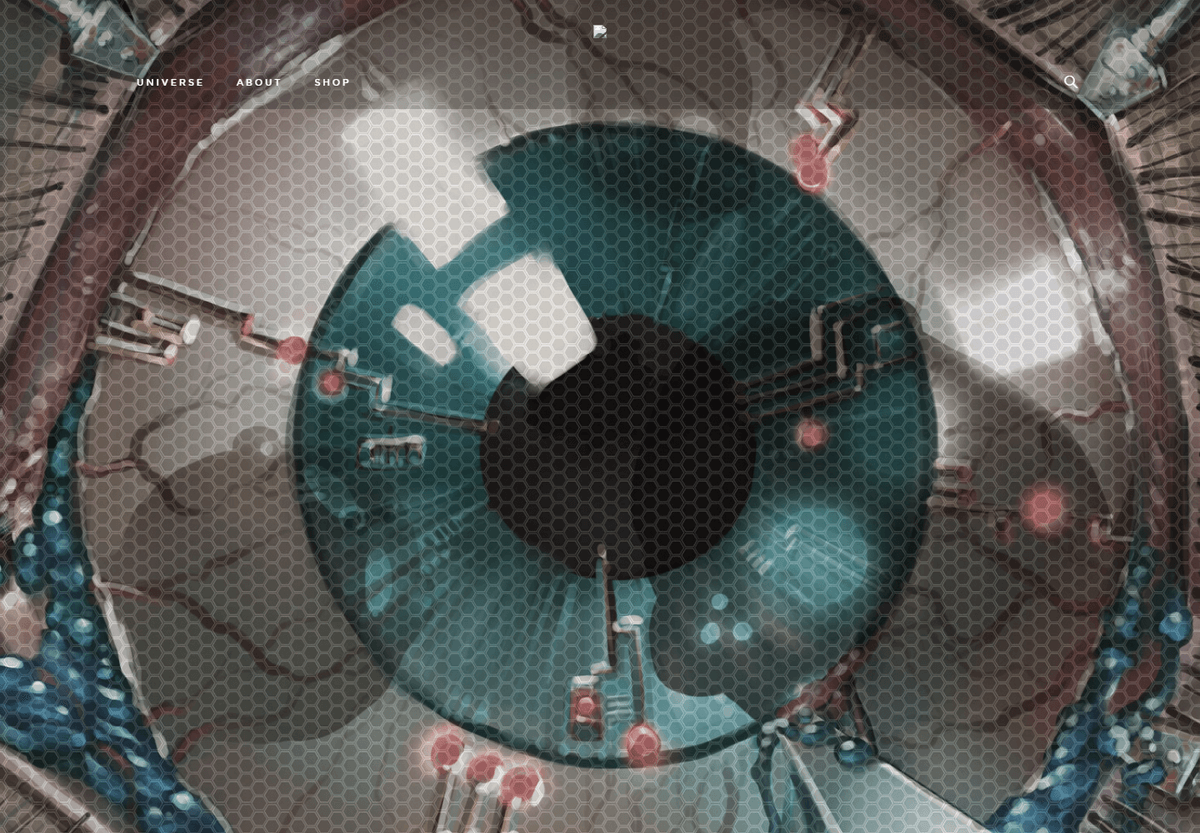
The destination homepage describes Heroverse as a comic company with a digital-first, multi-platform approach. It then provides two discovery paths. One path presents featured characters such as Decker, Lionheart, Gammahawk, Opal, Grendel, Essence, Shadowmask, and Beowulf. Another introduces titles and upcoming projects.
This is a useful balance for a fictional universe. Some visitors begin with a character image or power concept; others begin with a complete book. Letting both routes coexist makes the site accessible without requiring readers to understand the entire continuity before they can explore.
Cortex Turns a Large Cast into a Browsable System
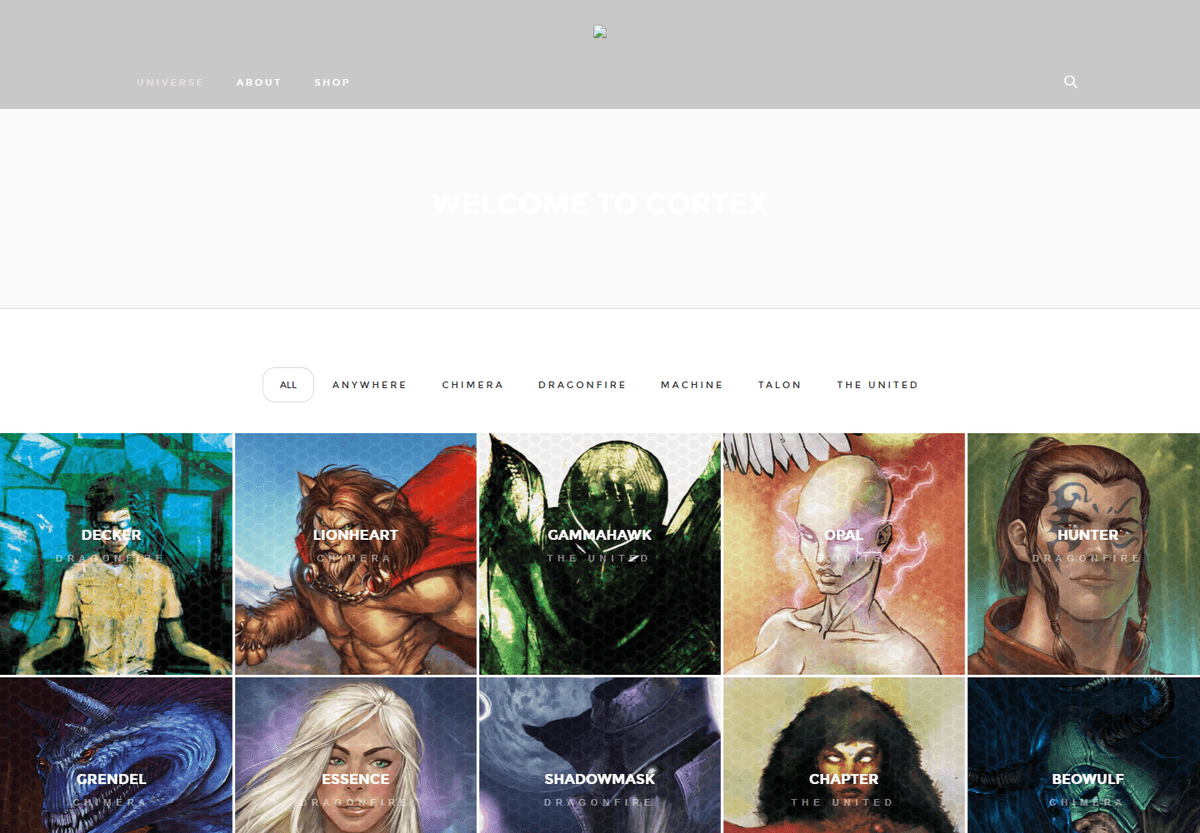
The Cortex directory organizes dozens of characters and provides filters for story groups including Anywhere, Chimera, DragonFire, Machine, Talon, and The United. Each visual tile displays a character name and associated group before linking to a full profile.
A filtering system is valuable when a universe grows beyond a small cast. It helps readers understand relationships and gives the publisher a repeatable way to add characters. To become an even stronger reference tool, the directory could add search, first-appearance information, reading-order links, status labels, and clear connections between characters and available books.
Character Pages Reward Deeper Exploration
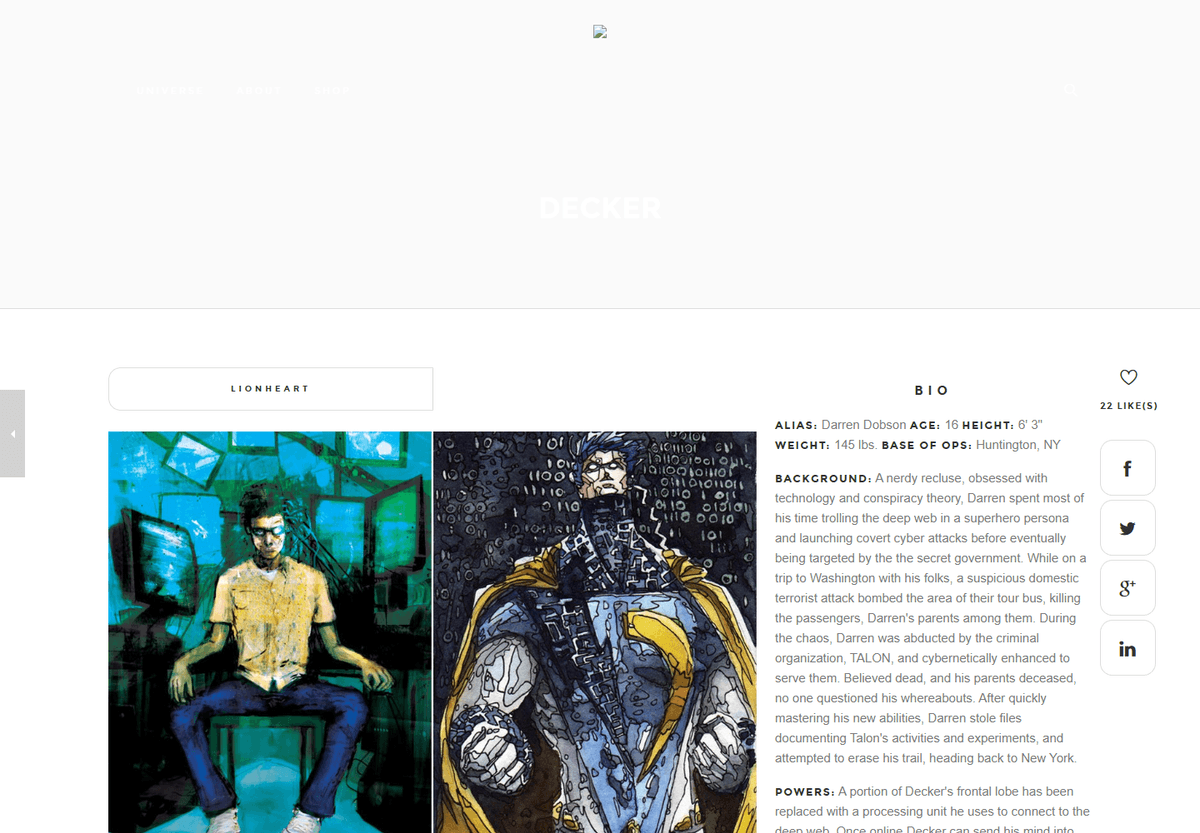
The Decker page demonstrates the next layer. It combines illustrated artwork with an alias, age, physical details, base of operations, background, abilities, team association, and social sharing controls. The result reads like an in-universe reference entry while still directing visitors back toward the wider cast.
Structured biographies are useful beyond storytelling. They create reusable information for editorial planning, marketing, licensing, games, collectibles, and fan discussion. Consistency matters: shared fields, terminology, timeline rules, and image credits prevent contradictions as more creators contribute to the universe.
The About Page Adds Creator Authority
The about page positions comics and sequential art as the center of Heroverse and describes the project as a multi-platform storytelling company. It gives extensive background on chief creative officer Tom Akel and identifies artists associated with projects, including Alan Quah, Ted Wing III, and Steve Babb.
That creator context helps visitors see the work as a produced universe rather than an anonymous gallery of character concepts. A long press timeline also provides external routes for readers who want to understand the team's industry history. Creator credits should remain connected to the specific stories and images each person contributed.
Why the .fans Domain Fits
“Heroverse” already names a world larger than one title. Adding `.fans` makes the audience invitation explicit and creates a memorable route for conventions, social profiles, printed material, or community campaigns. The redirect keeps canonical content on the primary `.com` while giving supporters an address written in their own language of belonging.
That strategy works because the brand name and destination match. Visitors are not redirected to an unrelated store or generic publisher page. They arrive inside the same Heroverse identity, with characters and story projects immediately visible.
Execution Lessons for Fictional Universes
- Offer several discovery paths. Characters, teams, titles, and creators serve different kinds of reader curiosity.
- Use structured character records. Consistent fields make a large cast easier to explore and maintain.
- Connect lore to available work. Every character page should help the reader find the stories where that character appears.
- Credit the creative team precisely. Universe ownership and individual artistic contribution should both remain visible.
- Use the fan domain as a coherent entrance. A redirect is strongest when the brand, destination, and audience expectation all match.
Rights, Commerce, and Maintenance Boundaries
Heroverse clearly states its trademark and copyright position. That is essential for a site built around original characters and artwork. The operator should also attach creator credits to individual images and stories, maintain licensing records, and define what fans may share, remix, or use in noncommercial fan works.
The website links to third-party book and merchandise destinations. Those services can change product availability, pricing, territorial access, and account policies. Links should be reviewed regularly, and unavailable products should be marked rather than silently leading to broken or unrelated pages. Visible missing image assets and other legacy interface details should also be repaired so the archive continues to feel intentional.
Practical Takeaways
A fictional-universe website should begin with a content model before a visual grid: characters, groups, titles, appearances, creators, rights, images, and purchase availability. Once those relationships are structured, the homepage can feature selected entry points while the directory supports comprehensive exploration. A fan-facing redirect can then provide a simple campaign address without splitting the source of truth.
The .fans use cases show how entertainment properties can create focused audience destinations. The .fans identity overview explains how the extension signals a supporter context, while the registration page provides a route for exploring a story-world or creator name.
Conclusion
Heroverse.fans provides a direct audience entrance into an original comic universe. The destination combines visual character discovery, structured biographies, title information, creator context, press history, and commerce. Its strongest lesson is organizational: a fictional world becomes easier to follow when lore is treated as structured content and every discovery route leads readers back to the stories.