
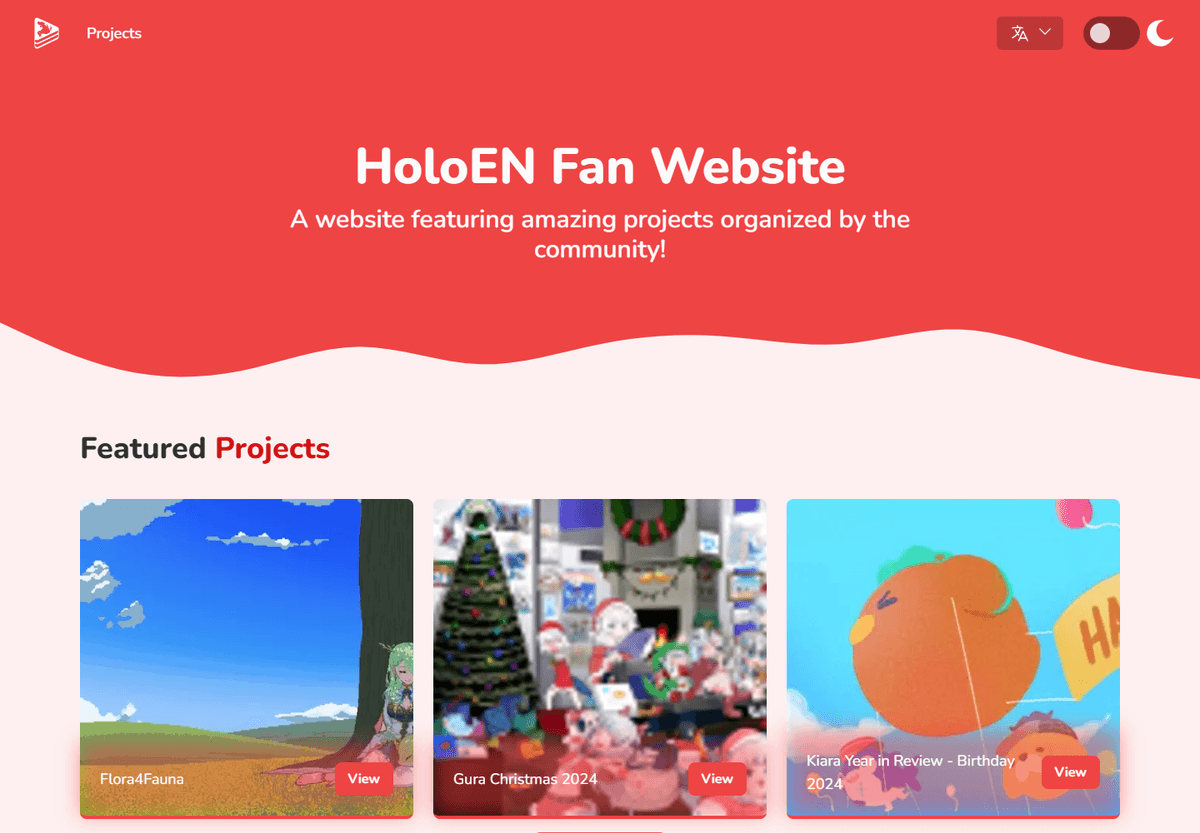
HoloEN.fans is a fan-made website that gathers community-organized projects related to Hololive English talents. Its homepage and project directory present a wide range of activities, including birthday messages, fanbooks, advertisements, meetups, creative compilations, charity-oriented efforts, and farewell projects.
The website repeatedly frames these initiatives as organized by the community. It should not be treated as an official Hololive, COVER Corporation, or talent-operated destination. Within that independent role, HoloEN.fans demonstrates how a fandom can build memory and discoverability around work that would otherwise be scattered across social posts, forms, external project pages, and short-lived event announcements.
Case Snapshot
- Website: holoen.fans
- Category: fan-made community project directory and archive
- Primary audience: Hololive English fans seeking projects to explore, join, or remember
- Main purpose: organize community-led initiatives under consistent project pages
- Observed features: featured projects, a project directory, individual project pages, dates, organizer labels, external links, language navigation, and a public contributor link
A Directory Gives Temporary Campaigns a Longer Life
Fan projects often begin on platforms optimized for the present moment. A social post recruits contributors, a form collects submissions, and an external page presents the final result. After the event, those links can become difficult to find. HoloEN.fans addresses that problem by providing a dedicated directory where projects can remain grouped and browsable.
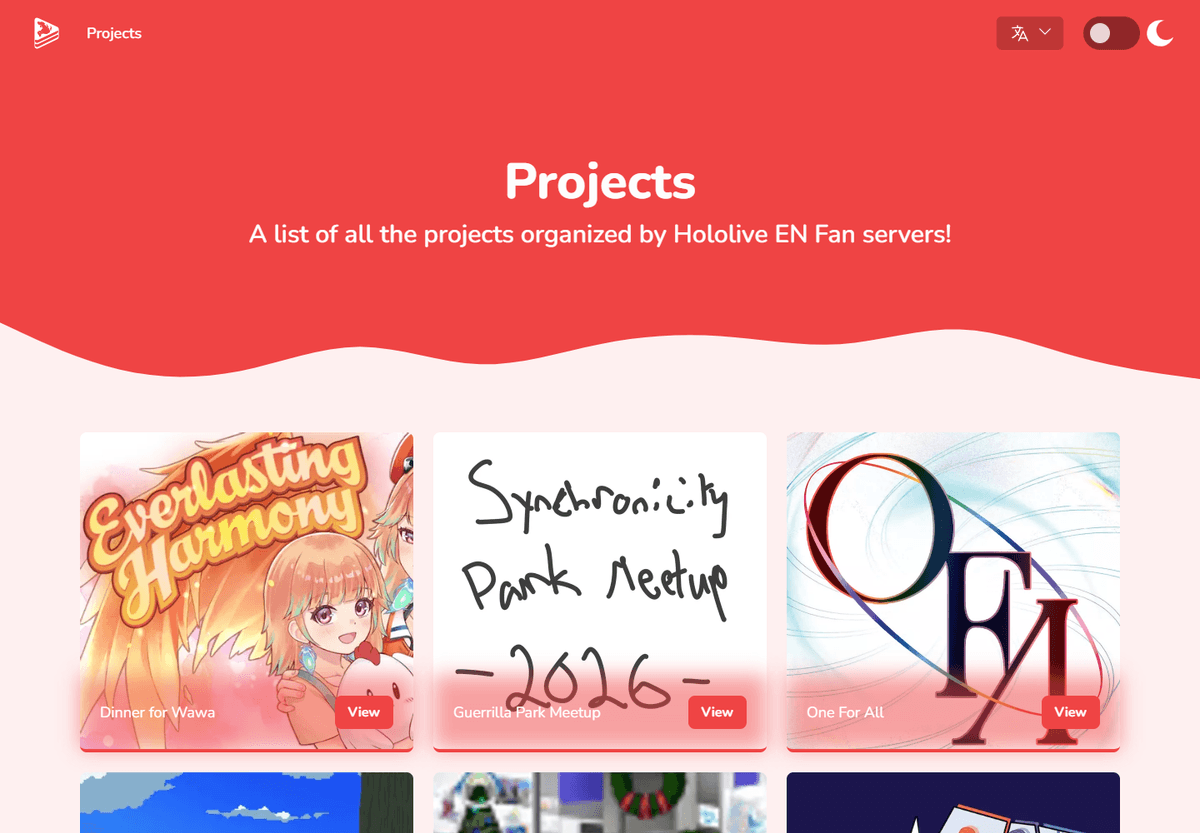
The breadth of the list is part of its value. Visitors can encounter visual tributes, books, park gatherings, anniversary campaigns, public advertisements, charity-related activity, and archival timelines within the same structure. That variety communicates that community participation is not one behavior. Different fans contribute art, writing, event coordination, translation, fundraising, documentation, or technical work.
Project Pages Provide a Consistent Orientation Layer
Individual pages give each initiative a stable title, project image, organizer description, event date, and related link. The Flora4Fauna page, for example, describes a community-organized effort centered on planting real saplings and directs visitors to the project's own destination. HoloEN.fans acts as an index and orientation layer rather than claiming to host every activity itself.
This approach is scalable because the directory can keep a consistent navigation model while specialized projects use tools appropriate to their needs. A fanbook may need submission guidelines, an event may need location and safety information, and a fundraising project may need transparent payment records. The central archive does not have to reproduce all of those systems, but it should label external destinations clearly and review broken or changed links.
Featured Projects Help Visitors Enter a Large Archive
A growing directory can become overwhelming if every item receives equal visual weight. The homepage uses featured projects to create an approachable starting point, while the full directory supports deeper browsing. This pairing serves both the newcomer who wants a few representative examples and the returning community member looking for a specific initiative.
For long-term value, the archive should also make status visible. Planned, accepting submissions, completed, postponed, and archived projects have different expectations. Dates alone may not explain whether a visitor can still participate. Filters by talent, year, project type, language, and status could make a larger collection easier to navigate without changing its community character.
Why the .fans Domain Fits
The site's purpose is inseparable from fan initiative. The `.fans` ending immediately signals that the archive belongs to an audience context, while “HoloEN” narrows the subject to a recognizable community. The resulting address is concise enough to serve as a directory name rather than a single campaign title.
That clarity makes the independence boundary even more important. Visitors may arrive through a project link and never see the homepage. Every project page should therefore carry a visible fan-made notice and avoid language that implies official approval. The same boundary should appear in social previews, contribution forms, donation pages, and event materials.
Execution Lessons for Community Archives
- Create one stable record per project. Preserve the title, organizers, dates, purpose, status, links, credits, and outcome in a predictable format.
- Distinguish indexing from operation. Tell visitors whether the directory team runs a project, merely lists it, or links to an external organizer.
- Show status, not only dates. Clear lifecycle labels prevent visitors from submitting to a closed campaign or relying on old instructions.
- Credit the people behind the work. Organizers, artists, translators, developers, moderators, and contributors need consent-based attribution.
- Maintain external links. Archives should review destinations, mark unavailable material, and avoid silently redirecting visitors to unrelated content.
Rights, Safety, and Community Boundaries
Fan projects may use talent names, character designs, screenshots, logos, music, illustrations, and community submissions. The directory should follow the relevant fan-work guidelines, obtain permission for contributed materials, preserve artist credits, and respond to correction or removal requests. Listing a project should not be presented as legal approval or official endorsement.
Projects involving money, physical events, gifts, or personal messages require additional safeguards. Fundraising pages should identify the recipient, fees, custody of funds, deadlines, refund conditions, and proof of delivery. In-person events need location, conduct, age, accessibility, and privacy guidance. Submission campaigns should explain whether names, handles, artwork, or messages will be public and how contributors can withdraw before publication.
An archive also has a duty not to expose personal information years later. Preservation should be selective: keep the public history and credits people agreed to share, but do not retain private forms, shipping details, unpublished messages, or organizer contact data merely because the project has ended.
Practical Takeaways
Community archivists can begin with a project template containing purpose, organizer, affiliation status, participation status, dates, external links, rights notes, contributor credits, and a final outcome. Add a review schedule for expired links and a contact route for corrections. When a project is external, label that handoff before the visitor leaves the directory.
The .fans use cases show how audience-led projects can become organized destinations. The .fans identity overview explains the extension's community focus, and the registration page provides a route for exploring names for a directory or archive.
Conclusion
HoloEN.fans turns distributed fan activity into a navigable public record. Its project directory and individual pages give community work a more durable home while allowing specialized initiatives to remain on their own sites. The strongest lesson is archival: a fandom creates more than posts, and preserving that work requires structure, status, attribution, and maintenance. With clear independence, rights, privacy, and safety practices, a fan-made directory can help a community remember not only who it supports, but what its members built together.