
DBTech.fans is a focused audience route rather than a standalone content site. The address redirects visitors to DB Tech's Patreon, where the creator publishes self-hosting, Docker, and home-server material and offers membership options. A separate first-party hub at dbt3.ch organizes tutorials, social channels, community links, merchandise, and support routes.
This arrangement is a useful `.fans` case because it gives one memorable address one clear job: take an interested viewer directly to the membership community. The destination remains Patreon, so accounts, billing, platform policies, and much of the member experience are controlled by Patreon rather than by the `.fans` domain owner.
Case Snapshot
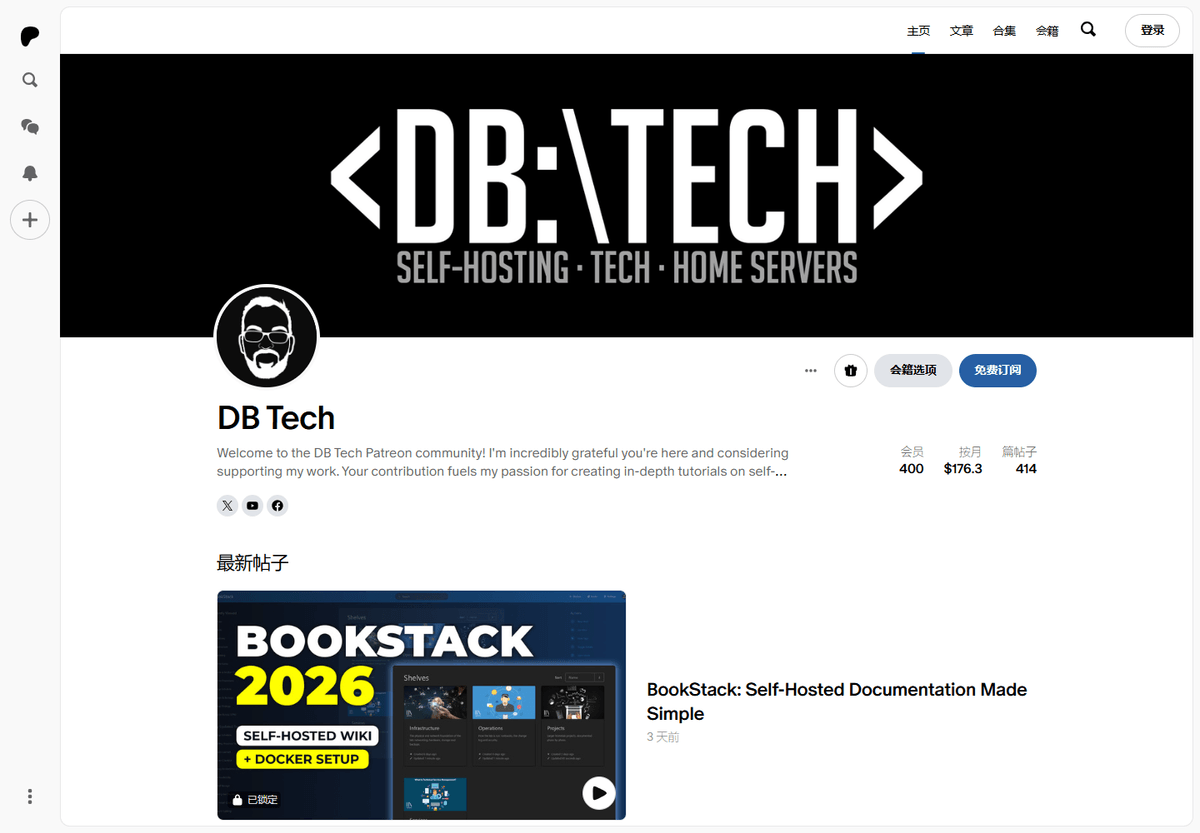
- Website: dbtech.fans
- Category: creator membership and technology education
- Primary audience: viewers interested in self-hosting, Docker, home servers, and data control
- Main purpose: provide a direct route to the DB Tech Patreon community
- Observed features at the destination: public and member posts, supporter tiers, Discord access, early or ad-free video access, collections, free subscription, and creator updates
The Redirect Removes a Decision
DB Tech already has a broader resource hub with links to YouTube, Discord, a wiki, reviews, merchandise, and several support options. Someone visiting DBTech.fans is not taken through that entire directory. The domain sends them straight to Patreon, making the desired action unambiguous.
This is a practical role for a campaign domain. It can be spoken in a video, shown on a slide, or placed in a profile where the audience already understands the creator. The shorter route reduces the need to remember a platform URL and can remain stable if the underlying membership link changes later.
The Patreon Page Explains What Support Enables
The destination page describes a community built around in-depth tutorials on self-hosting, Docker, and home servers. It connects support to production quality, broader topic coverage, and community access. The page also presents recent posts, public updates, locked member content, and a free-subscription option.
This combination gives visitors several levels of commitment. A person can read public material, subscribe without paying, or select a paid supporter tier. The membership page shows multiple contribution levels with substantially similar access, allowing supporters to choose how much they want to contribute rather than forcing different knowledge behind increasingly expensive tiers.
Collections Turn a Post Feed into a Learning Path
The Patreon includes a collection for an “Ultimate Media Server” series. Collections matter for technical education because a reverse-chronological feed is rarely the best way to learn a multi-step system. Grouping related episodes helps a new member understand sequence and scope.
For a self-hosting audience, that structure should be paired with version and risk information. Container images, operating systems, security guidance, and configuration steps can age quickly. Each tutorial or collection benefits from prerequisites, update dates, tested versions, backup advice, and a warning when instructions are no longer maintained.
A Separate Hub Preserves the Wider Creator Ecosystem
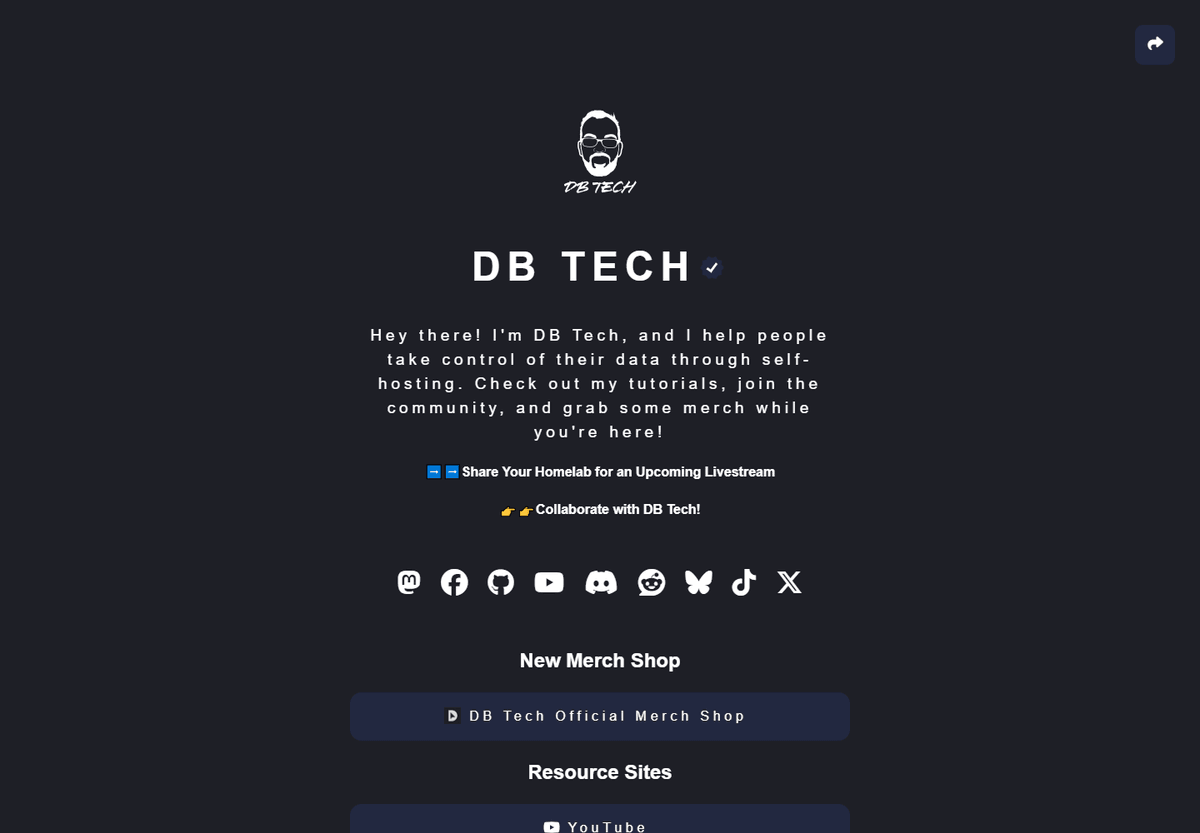
The dbt3.ch page describes DB Tech's broader purpose as helping people take control of their data through self-hosting. It links to content platforms, community channels, resource sites, merchandise, donations, and affiliate destinations. The page also discloses that some links may generate affiliate income.
This division of labor is sensible. DBTech.fans handles the membership call to action; the resource hub handles discovery across the creator's ecosystem; Patreon manages membership publishing and billing. Each destination has a different job, and the user should be able to tell which service they are entering.
Why the .fans Domain Fits
The `.fans` ending makes the intended relationship explicit. DBTech.fans is not a generic technical documentation URL; it is a route for people who want to follow and support a particular creator. That makes it suitable for spoken promotion and community calls to action.
A redirect still needs maintenance. The HTTPS certificate, destination, analytics, and social preview should be checked regularly. The intermediate address should never conceal a surprising destination, and campaign materials should name Patreon when payment or account creation will happen there.
Execution Lessons for Creator Memberships
- Give a short domain one clear job. A direct membership route is easier to remember than a platform path.
- Keep the broader ecosystem elsewhere. A resource hub can organize videos, community, documentation, merchandise, and support without weakening the membership call to action.
- Offer more than one entry level. Public posts and free subscription allow visitors to understand the creator before paying.
- Organize educational series. Collections create a learning sequence that a post feed cannot provide on its own.
- Name platform responsibilities. Visitors should know who handles billing, accounts, refunds, access, and privacy.
Technical and Commercial Boundaries
Self-hosting tutorials can affect data availability, network exposure, and system security. Readers should treat demonstrations as educational material, verify current documentation, use backups, and test changes before applying them to important systems. A membership relationship does not make every configuration suitable for every environment.
Prices, benefits, post access, and platform fees can change. Prospective members should confirm the current Patreon checkout terms. The creator should keep affiliate disclosures close to relevant links and distinguish editorial recommendations from sponsored or compensated relationships. Patreon and linked Discord communities also have their own privacy and conduct rules.
Practical Takeaways
A creator considering a membership shortcut should define the destination first. Decide whether the domain will lead to a membership overview, a specific tier, a free-subscription page, or a platform-independent explanation. Then make the redirect secure, disclose the third-party platform, and maintain a separate hub for people seeking tutorials or community resources rather than payment.
The .fans use cases show how creator and community projects can use focused audience routes. The .fans identity overview explains the extension's supporter signal, and the registration page provides a way to explore a memorable creator address.
Conclusion
DBTech.fans demonstrates that a useful domain does not have to host the entire creator business. It can function as a durable, memorable route to the action most relevant to supporters. The Patreon page provides membership and publishing, while the separate DB Tech hub organizes the wider ecosystem. The key is clarity: visitors should understand the redirect, the value of membership, the platform handling their account, and the limits of technical guidance.