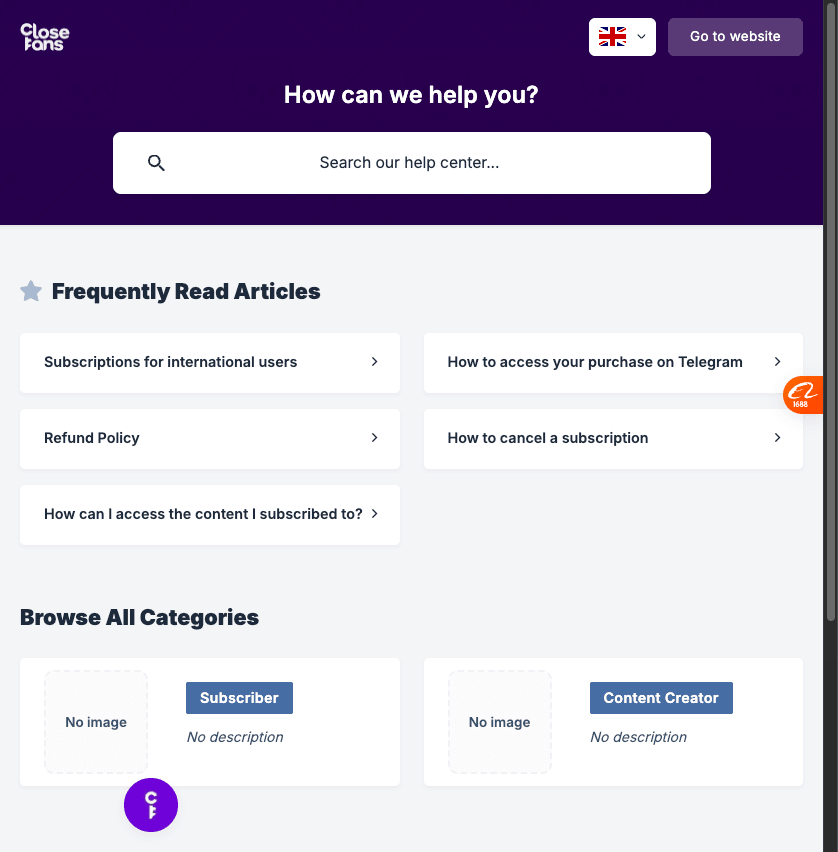
Close.fans presents a creator-content service whose Portuguese-language homepage connects an exclusive website, a Telegram bot and integration into one product proposition. The public help centre adds the detail behind that proposition: where subscribers find purchases, when Telegram access applies and how subscription management works.
The service includes adult content, as its subscriber documentation acknowledges. This case examines its public website and support structure, without reviewing creator media or making claims about earnings. Its relevance to .fans is the way a creator–subscriber relationship shapes the name, the service explanation and the information people need after purchasing.
Case Snapshot
- Website: close.fans
- Category: creator subscriptions and content access
- Primary audience: creators and subscribers using the platform
- Observed features: a creator proposition, sign-in and onboarding routes, creator discovery links, a blog and a multilingual help centre
- Documented access model: web-based purchases and Telegram access where the creator has an integrated channel
The Homepage Connects Publishing with Distribution
The public homepage presents publishing across a website and Telegram as one connected offer. It also separates routes for entering the service, finding creators and selling content. These links recognize that a creator and a subscriber arrive with different tasks.
That is a useful starting point for a paid-content service. A creator wants to understand the publishing and distribution arrangement. A subscriber wants to reach the person or content they chose. A homepage that speaks only to sellers would leave the second group without a clear route into an existing relationship.
The service’s integration language should remain attributed to the provider. We did not create an account, connect a channel or test a purchase. The case focuses on how the public website explains the relationship between those parts, rather than claiming that the full technical workflow has been independently tested.
The Help Centre Separates Access Questions from Sales Language
The official help centre includes subscriber articles about accessing content, Telegram purchases, subscription cancellation and other purchase-related questions. It offers language routes for English, Spanish and Brazilian Portuguese.
This introduces a useful second layer to the website. The homepage describes what the service is intended to do; the help centre addresses what an existing subscriber may need to understand. Those are different writing tasks. Promotional copy can explain an offer, but a person looking for a purchased item needs a recognizable route to that item.
The separation also gives the service a place to maintain operational instructions without turning the homepage into a long account manual. Clear article titles let a subscriber identify the right question before reading the detailed steps.
“My Purchases” Creates a Consistent Reference Point
The article on accessing subscribed content directs users through the “My Purchases” area and an “Access Content” action. The wording creates a reference point that can be reused in other support explanations.
A repeated label matters because a subscriber may not arrive through the same route every time. Someone might return from an email, a bookmarked page or a message. A clearly named purchase area gives the documentation a stable starting point instead of relying on the user’s memory of the original checkout.
The transferable lesson is consistency between interface language and help language. If a service calls something a purchase in one place and an unrelated name elsewhere, support becomes harder to follow. The public article shows how naming can keep the explanation anchored to a particular task.
Telegram Access Is Explained as a Conditional Journey
The Telegram access article states that this route applies when the creator has an integrated VIP channel. It also identifies account linking as a condition for using the bot route. Telegram access is therefore not presented as an automatic property of every subscription.
That qualification is important. The homepage can introduce an integration in a short phrase, while the help article explains the conditions under which a subscriber will encounter it. Without that detail, a user could reasonably expect an option that is not part of their particular purchase.
For other membership services, the lesson is to distinguish the general product capability from a specific creator’s configuration. Explain which destination handles the content and what connection is required. The domain creates a recognizable entrance; it does not determine whether an external channel has been configured.
Subscription Management Continues the Relationship after Payment
The cancellation article distinguishes preventing a future renewal from the access remaining in an already paid period. It points subscribers toward the relevant account-management area. This is the platform’s published explanation, not a purchase test or an assessment of every possible account situation.
Its relevance to the case is the attention given to the period after a sale. A subscriber relationship includes finding content, understanding access and deciding whether to continue. Those questions are part of the product experience, even though they are less prominent than the invitation to join.
A useful creator destination should make these operational explanations easy to find and keep them aligned with current account behavior. Support material is most valuable when its labels and conditions match what the subscriber actually encounters.
Why the .fans Domain Fits
The name “Close” expresses proximity, while .fans places that idea in an audience relationship. Together they suit a service built around creators and people choosing to follow or subscribe to them. The help centre remains within the same domain family, connecting product identity with ongoing support.
The ending does not provide subscriptions, payment handling or Telegram integration by itself. Those functions belong to the service. Keeping that distinction clear allows the case to explain the domain’s branding role without attributing software features or commercial results to the registry.
Execution Lessons for Subscription Platforms
- Give creators and existing subscribers distinct routes from the public site.
- Maintain support material for access and account questions as well as sales content.
- Use consistent interface labels across the product and documentation.
- Explain integration conditions and the difference between access and renewal.
Close.fans shows a fan-oriented name attached to an ongoing service relationship. Its most useful lesson is that the destination must continue to make sense after the initial decision to subscribe, when practical questions replace promotional ones.
Browse more .fans use cases to plan a destination for your own audience. A clear .fans identity can express who the project serves; the service behind it provides the experience. Domain registration is completed through participating registrars.