
AI model names can attract curiosity, but most visitors still arrive with a task: improve a document, debug code, translate a file, create an image, or start a conversation. QwenAI.fans turns that task-oriented behavior into the structure of an independent application hub built around Qwen technology.
The site describes itself as community-driven and identifies itself in the footer as an affiliate of lihaila.com. It should not be presented as the official website of Qwen, Alibaba Cloud, or DashScope. Its value as a case study lies in how it converts broad model capabilities into a catalogue of recognizable tools, then supports them with individual interfaces, a blog, an FAQ, and contact routes.
Case Snapshot
- Website: qwenai.fans
- Category: independent AI application gallery and learning hub
- Audience: professionals, students, creators, developers, and AI enthusiasts
- Public features: document, chat, image, code, translation, writing, and image-editing applications; blog; FAQ; newsletter; contact form
- Activity checked: August 25, 2026
The Homepage Starts with Tasks, Not Model Architecture
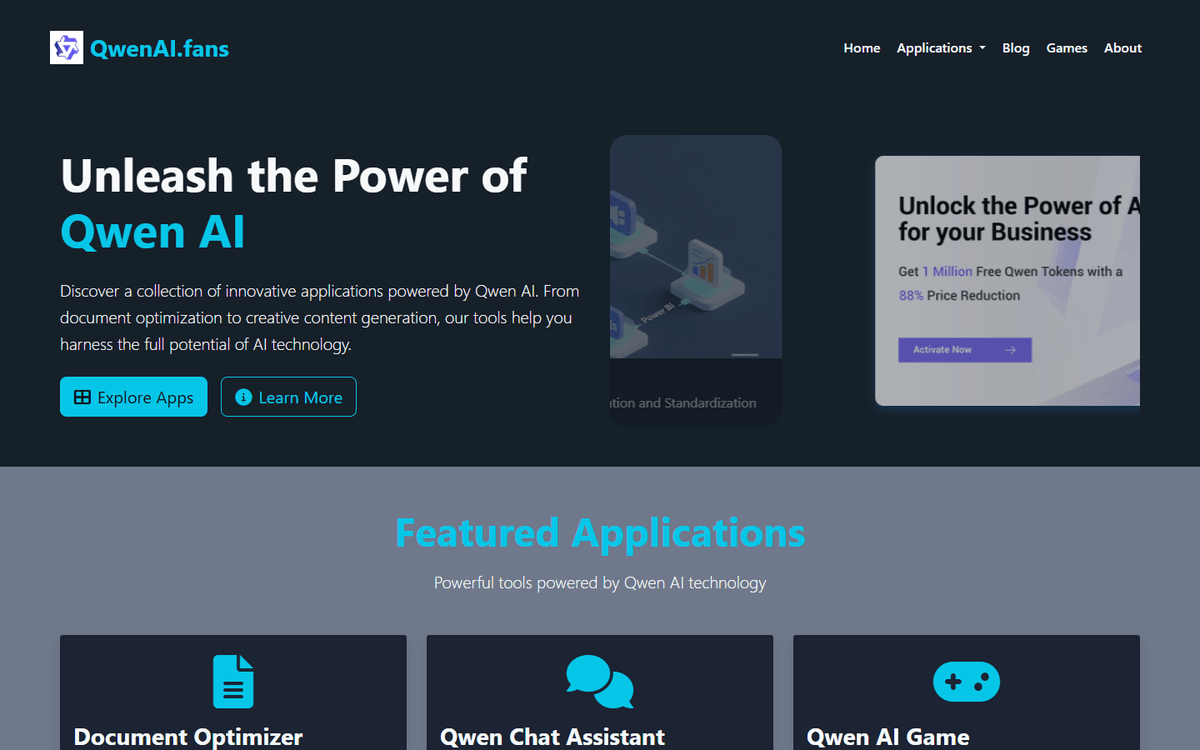
The featured applications use familiar names such as Document Optimizer, Qwen Chat Assistant, AI Image Generator, Code Assistant, Document Translator, Content Creator, PixelPerfect, and Image PS. Each card summarizes the intended job and lists a small set of functions before offering a launch action.
This is effective information architecture for a mixed audience. A developer can identify the coding tool without reading a model paper, while a writer can move toward document or content features. Tags such as Professional, Creative, Development, and Language add context without replacing the task name.
Individual Apps Make the Capability Concrete
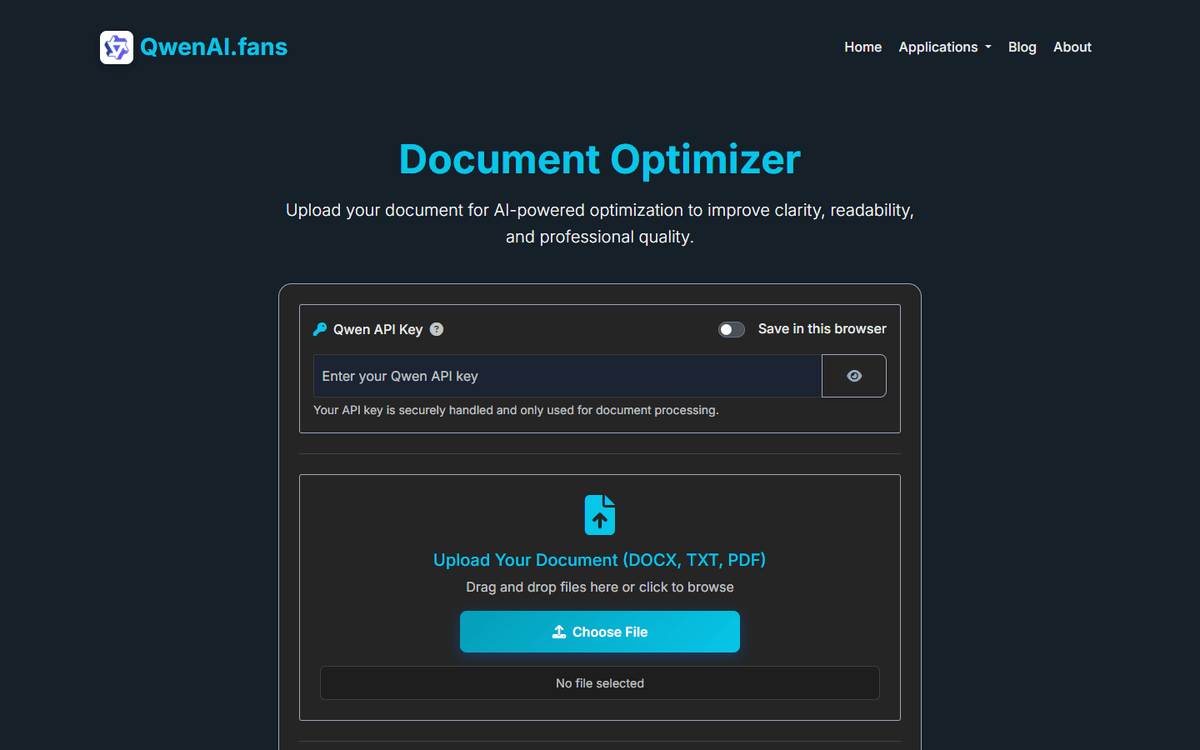
The Document Optimizer page provides a file-upload area, accepts DOCX, TXT, and PDF, displays a field for a Qwen API key, and offers options related to clarity, readability, and professionalism. The Code Assistant presents language choices and a conversational workspace for explanations, debugging, optimization, and generation.
These interfaces translate a broad promise into visible inputs and actions. That is useful for community projects built around a technology: demonstrations become more persuasive when visitors can see the workflow, prerequisites, and likely output. The same principle can apply to music tools, game utilities, sports data, or creator resources collected under a focused .fans destination.
The Blog Adds a Time-Based Discovery Layer
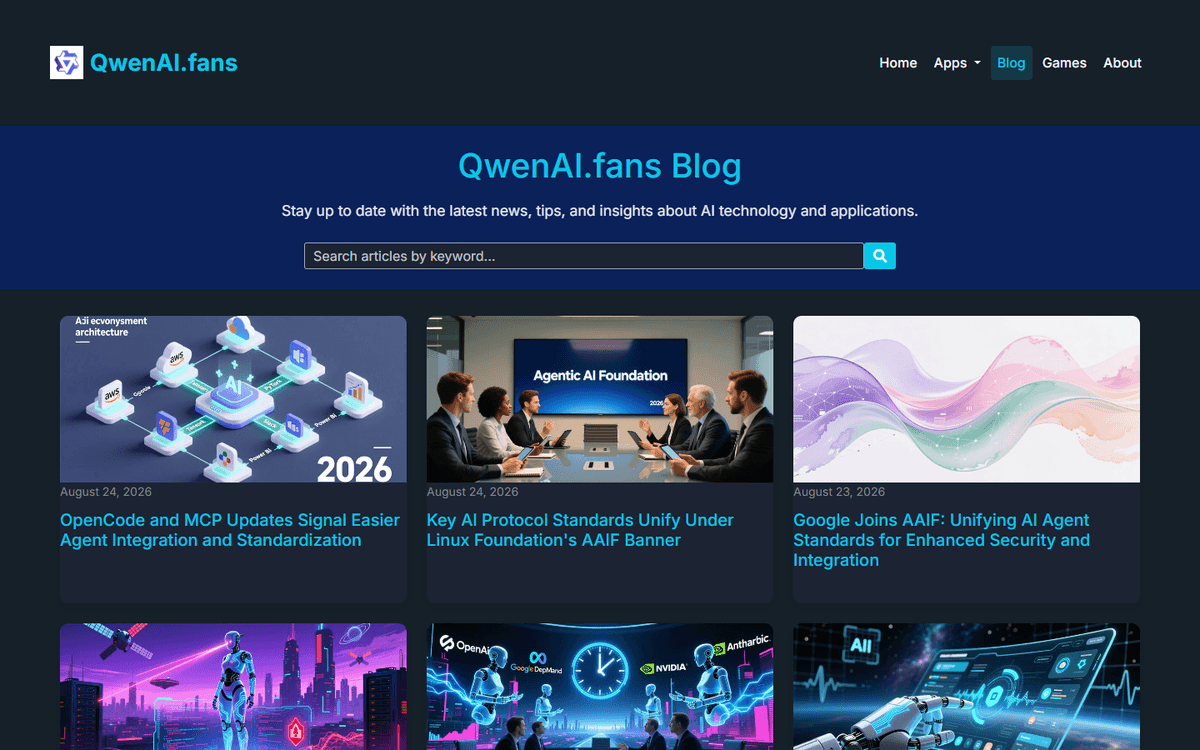
The blog index showed posts dated through August 24, 2026, covering agent protocols, AI standards, cybersecurity, model releases, and industry developments. That gives the site a second route for discovery. Someone may arrive for a tool and later read about the surrounding ecosystem, or encounter an article first and then try an application.
Frequent publishing also creates a verification burden. Technical claims, benchmark comparisons, product names, launch schedules, and security findings change quickly. Every article should link to primary sources, identify publication and update dates, and avoid treating expected releases as completed events.
The .fans Name Frames Independent Enthusiasm
“Qwen AI fans” clearly describes the intended audience: people interested in exploring and applying the model family. The domain gives multiple small applications a shared identity and an address that can be mentioned in tutorials or community conversations.
That clarity must be balanced with equally clear affiliation language. Visitors should not have to infer whether a model-name fan site is operated by the model developer. The footer disclosure is therefore important, and an even more prominent independent-site statement near the first use of Qwen branding would further reduce ambiguity. The fan-first identity guide is most useful when enthusiasm and ownership are both transparent.
API Keys and Uploaded Files Need Special Care
Several applications ask users to supply their own Qwen API key, and document tools invite file uploads. The FAQ says API connections are secure and content is not stored permanently, while app interfaces say keys can be saved in the browser or are not stored on the site's servers. Those are first-party statements, not an independent security audit.
Before using a third-party AI interface, visitors should review current privacy and terms pages, understand where a key is stored, use restricted credentials where the provider supports them, monitor usage, and avoid uploading sensitive or regulated information. A community app should explain data flow, retention, subprocessors, error logs, deletion, and breach contacts in one reachable policy set.
Five Lessons for Technology Community Hubs
- Organize around user jobs. Clear task names help people enter a complex ecosystem.
- Show prerequisites early. API keys, file formats, quotas, and costs should be visible before upload.
- Connect tools with learning. A blog and FAQ can explain the context surrounding each application.
- Separate platform claims from evidence. Link benchmarks, release news, and security statements to primary sources.
- State independence prominently. Technology fan sites should not be mistaken for vendor-operated products.
Boundaries and Responsible Use
AI output may be inaccurate, outdated, insecure, biased, or unsuitable for a particular professional decision. Code requires testing and review; translations require human checking; images and content require rights review. The site provides no public basis for claims about adoption, productivity gains, or output quality across all tasks.
Builders planning a comparable hub can review the .fans FAQ and check names through the registration page. Model trademarks, API terms, privacy obligations, and cost disclosures need separate review before launch.
Conclusion
QwenAI.fans shows how an enthusiast site can make an AI ecosystem approachable through a gallery of concrete tasks. Its strongest pattern is the movement from overview to application: a visitor sees a need, opens a purpose-built interface, and can continue into supporting articles or FAQs. The case is most credible when that usability is matched by clear independence, verifiable technical claims, and detailed data-handling information.