
MiracleFactory.fans is an artist website for Miracle Factory, a live music project presented through ceremonial looping, acoustic performance, ecstatic dance, and globally influenced rhythms. Rather than splitting the experience across many pages, the site uses one long-form homepage to move visitors from visual identity to description, listener comments, playable tracks, press photos, video, and booking.
The language on the page includes spiritual and transformational themes, and some testimonials describe the music as healing. Those statements communicate artistic positioning and audience experience; they should not be interpreted as medical or therapeutic evidence. Viewed within that boundary, the site is a useful example of how an independent performer can assemble discovery, proof of style, media materials, and a professional contact path under one audience-friendly address.
Case Snapshot
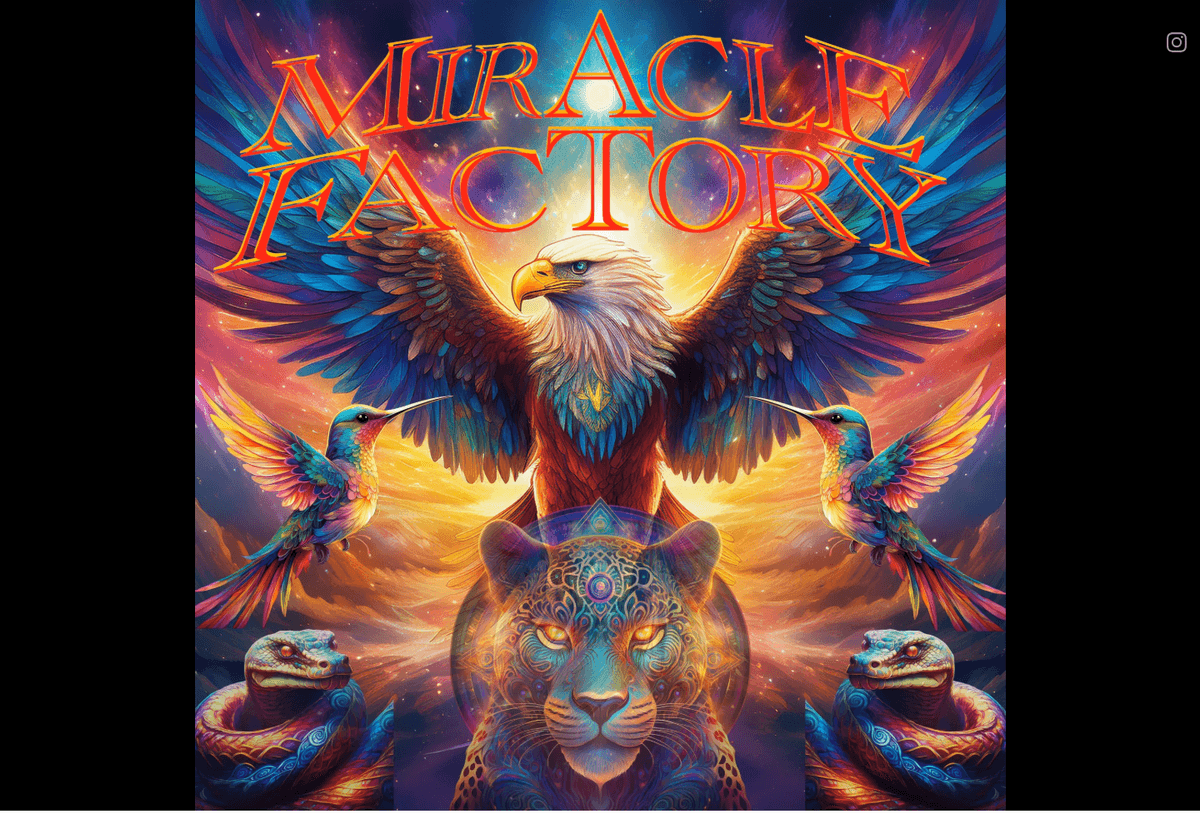
- Website: miraclefactory.fans
- Category: independent music and live performance
- Primary audience: listeners, festival organizers, event hosts, and communities interested in immersive dance music
- Main purpose: present the Miracle Factory sound and convert interest into listening, following, or booking
- Observed features: artist statement, audience comments, embedded tracks, free music links, press photography, video, social and streaming links, support link, and booking form
The Visual Identity Arrives Before the Explanation
The homepage opens with a large, highly saturated image that combines the Miracle Factory name with animal and cosmic imagery. It establishes the project's tone before the visitor reads a genre label. For an experience-led performer, that sequencing makes sense: mood is part of the product.
Immediately below, a compact group of platform icons gives returning visitors direct access to Instagram, Facebook, Apple Music, Spotify, Amazon Music, YouTube, Vimeo, and other channels. The site acts as the stable center, while distribution and social activity remain on the services listeners already use.
Audience Comments Translate an Unfamiliar Performance
Miracle Factory is not described through one standard genre term. The page instead uses an artist statement and several fan comments to explain what the live experience feels like. The comments discuss looping, acoustic instruments, rhythm, dance, community, and spiritual atmosphere.
Testimonials can be especially useful when a performance format is difficult to summarize. They provide language from the audience rather than only from the artist. However, the site should preserve consent, identify quoted people accurately, and avoid presenting subjective or health-related impressions as guaranteed outcomes.
Playable Tracks Reduce the Distance to the Work
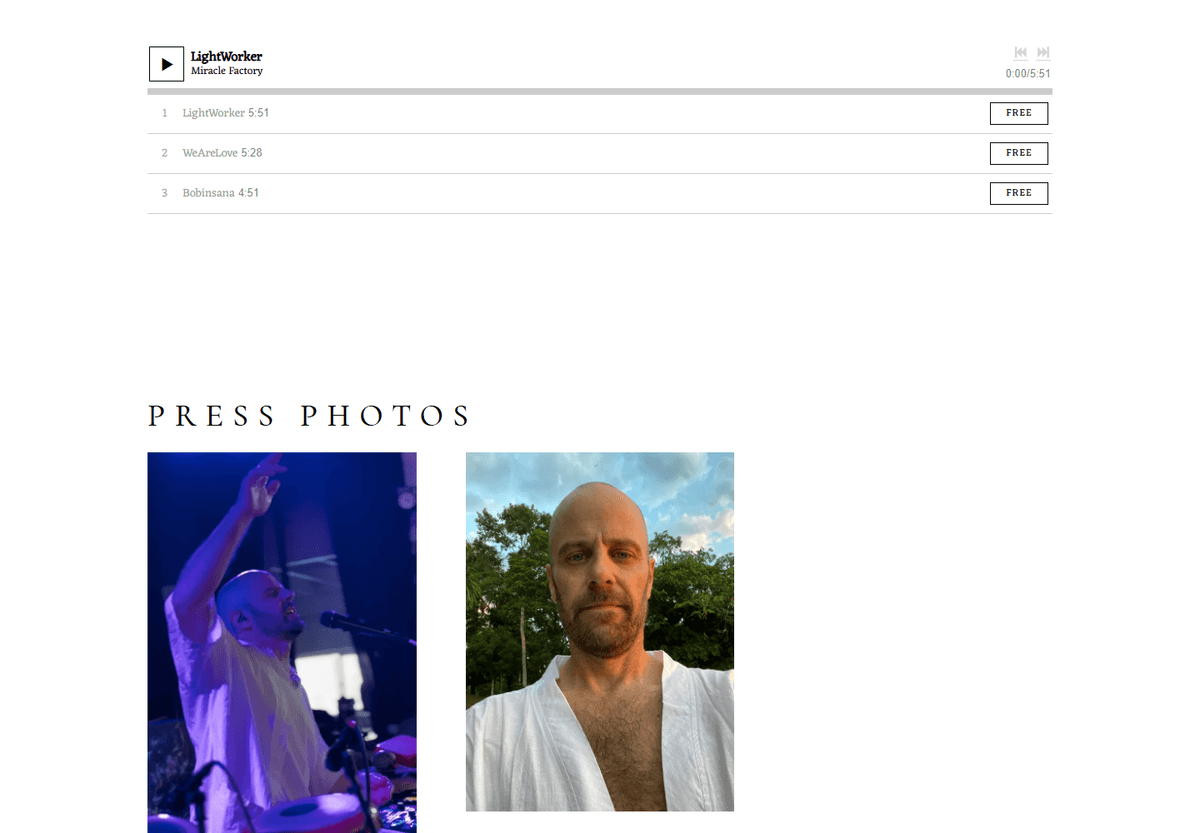
A built-in player offers three tracks with durations and free access links. This section is important because it lets the work substantiate the positioning. A festival organizer or new listener can move from description to sound without searching another platform first.
The small catalog also keeps the decision manageable. Instead of placing dozens of releases in front of a first-time visitor, the site presents a short sequence that can function as a musical introduction. External streaming links remain available for people who want to follow or explore further.
Press Assets and Booking Support Professional Use
The press-photo section includes performance imagery and a portrait, giving media and event partners material that reflects the artist's actual presentation. A video area offers another way to understand the live format. At the end of the page, booking copy names Joshua Stone and provides a contact form as well as direct contact information.
This creates a complete professional path: discover the identity, understand the performance, hear the music, view the artist, and make an inquiry. A stronger press area could add downloadable high-resolution files, photographer credits, usage guidance, a concise biography, stage requirements, and clearly dated performance footage.
Why the .fans Domain Fits
The `.fans` ending suits a music project whose public story emphasizes shared live experience. “Miracle Factory” names the artist, while `.fans` signals that the destination is designed for listeners and supporters rather than only for industry contacts.
The site also demonstrates that a fan-oriented address can serve several stages of a relationship. A newcomer can sample a track, an existing listener can follow a social channel, and an organizer can find booking information. The same name remains useful across discovery, community, and professional conversion.
Execution Lessons for Independent Musicians
- Let visitors encounter the work. Embedded music and live video provide stronger evidence than genre adjectives alone.
- Design one clear journey. A one-page sequence can move from identity to listening, visual proof, and booking without complicated navigation.
- Connect platforms without surrendering the home base. Streaming and social links are distribution routes; the artist website remains the durable directory.
- Prepare materials for professional reuse. Press photos need credits, resolution options, and explicit usage guidance.
- Frame testimonials carefully. Audience impressions should be consensual, attributable, and clearly subjective.
Claims, Rights, and Contact Boundaries
Artistic descriptions can use spiritual or emotional language, but statements about healing or transformation can be interpreted as health claims. The safest presentation is to describe the intended atmosphere and quote personal experiences without promising treatment, diagnosis, or therapeutic results.
Music, recordings, photographs, logos, and video all carry rights. The operator should retain permission records and photographer credits, define what media may download, and state whether free tracks are free to listen to, download for personal use, or reuse. A public booking form should also explain how inquiry data is processed and protected.
Practical Takeaways
An independent artist can build a useful website around four proof points: what the experience is, what it sounds like, what it looks like, and how to book it. Social icons should not replace these answers. Keep a small representative music selection on the page, attach clear credits to media, and separate expressive language from claims that require evidence.
The .fans use cases demonstrate how creators can organize an audience destination around their own identity. The .fans identity overview explains the extension's supporter-oriented meaning, and the registration page provides a route for exploring artist and project names.
Conclusion
MiracleFactory.fans turns a single page into a compact artist kit. Its visual opening establishes mood, comments interpret the live experience, tracks make the work audible, press photos make it visible, and the booking section turns attention into a practical next step. The most transferable lesson is coherence: every section supports the same performance identity while serving a different visitor need.