
Football news moves quickly, but a fan's need for context does not disappear when a season ends. Hansa-Rostock.Fans is a German-language archive that collected reports about F.C. Hansa Rostock from many publishers and organized them under one supporter-oriented address.
The website explicitly labels itself an “Innoffizielle Fan-Website,” or unofficial fan website. Its latest visible posts are dated April 2024, while the site remained publicly accessible during this review. It should therefore be described as a live archive, not as a currently updated newsroom. That honest boundary makes the case more useful: it shows both what large-scale aggregation can preserve and what happens when maintenance slows.
Case Snapshot
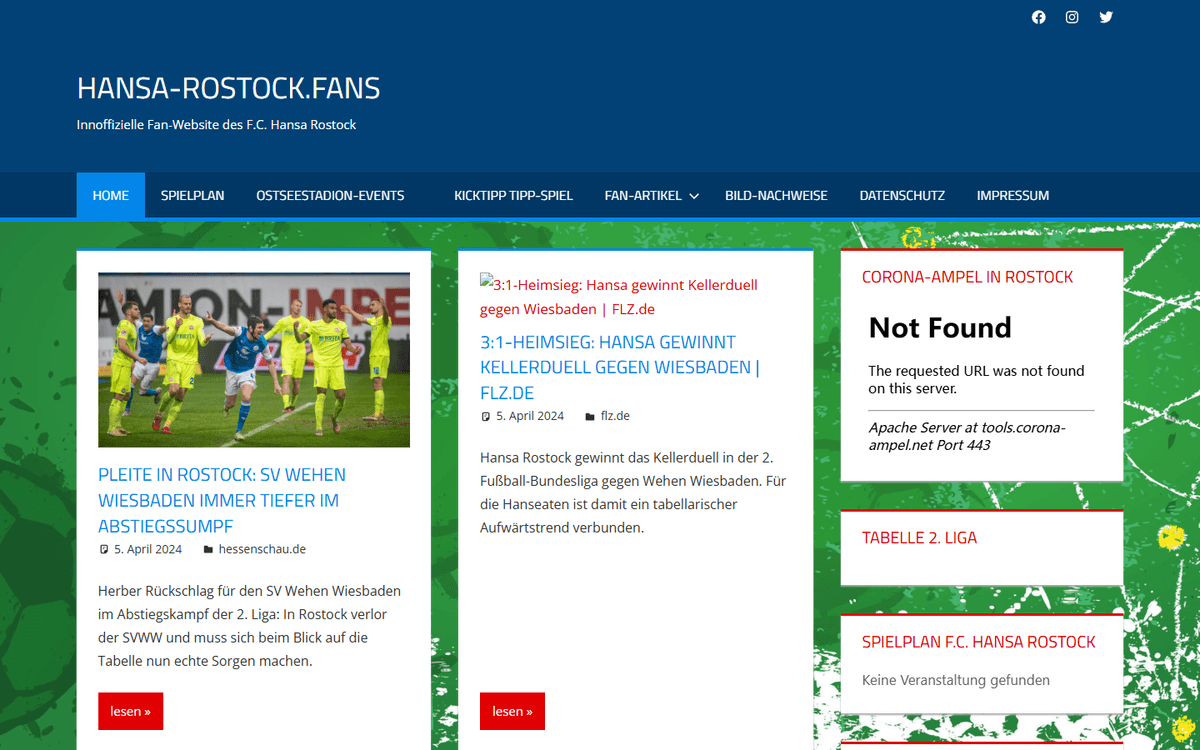
- Website: hansa-rostock.fans
- Category: unofficial football news archive and fan resource
- Audience: Hansa Rostock supporters and readers researching past coverage
- Public features: paginated news archive, source categories, monthly archive, social links, prediction-game page, image credits, privacy, and legal notice
- Activity checked: August 25, 2026
The Homepage Aggregates Multiple Viewpoints
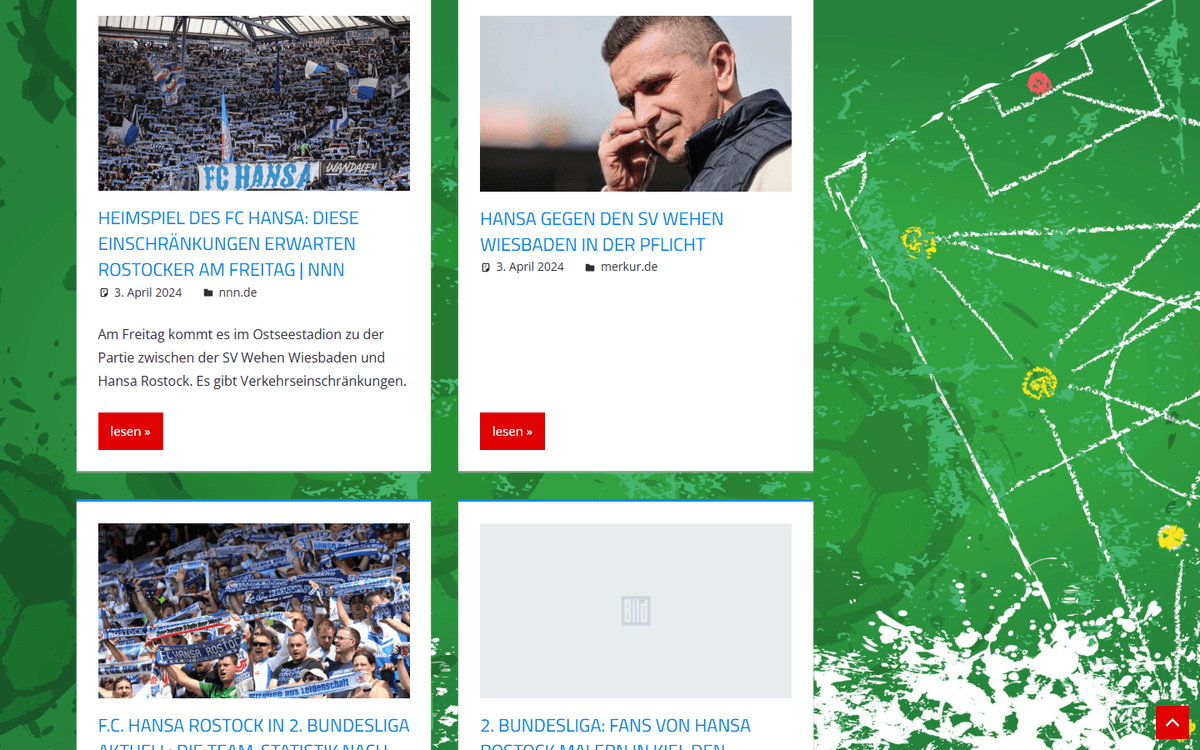
Each post card displays a headline, publication date, source category, summary, and reading link. The first page included coverage from regional broadcasters, newspapers, football publications, and the club website. This gives a supporter one index for match reports, team analysis, stadium information, transport issues, merchandise announcements, and fan stories.
An aggregator adds value when it helps readers compare sources rather than disguising borrowed reporting as original work. Hansa-Rostock.Fans keeps source names visible on the cards and provides category pages for individual publishers. That is a sound starting point for attribution.
The Archive Is the Site's Strongest Asset
The pagination reaches page 644, and the monthly archive lists substantial collections from 2020 through April 2024. A separate source index groups material by publisher. Together, those routes turn a large volume of time-sensitive links into a historical map of how the club was covered.
This is an important lesson for sports and community .fans websites. A current feed answers “what happened today,” while a structured archive can answer “how did this story develop?” Dates, sources, categories, and stable URLs are the elements that make that second question possible.
Community Features Can Extend Beyond News
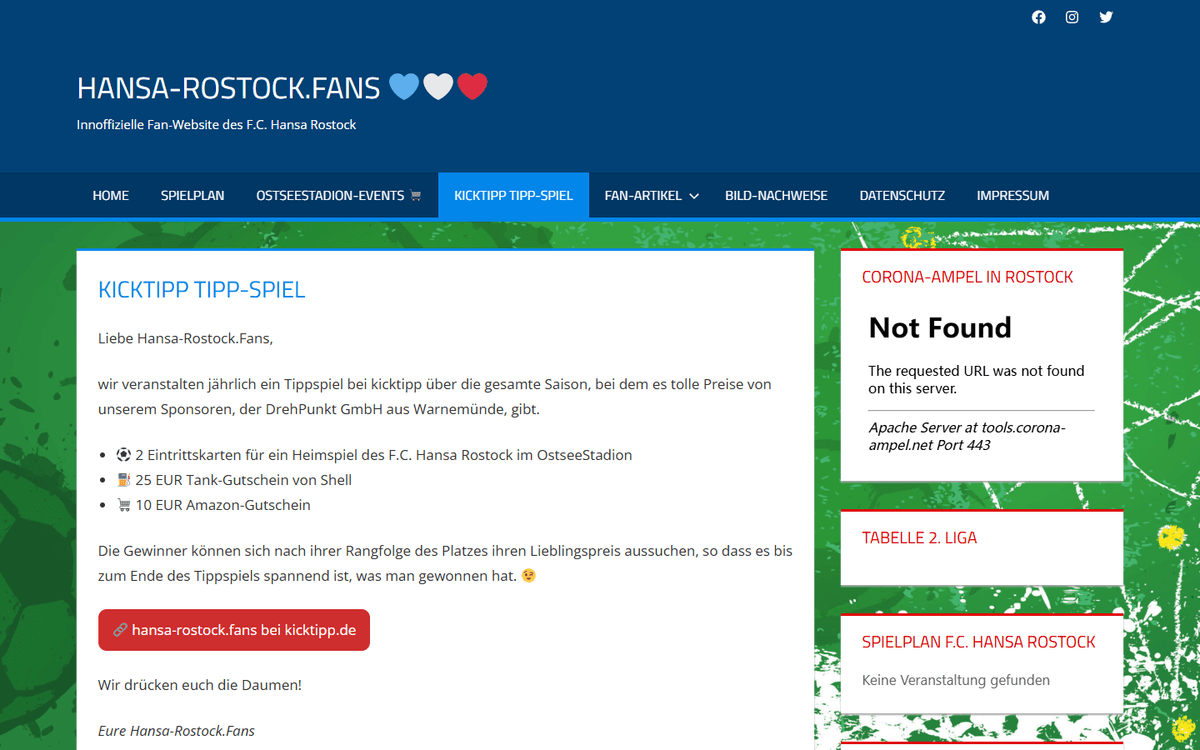
The navigation includes a seasonal prediction game hosted through Kicktipp. Its page explains prizes and sends visitors to the external competition. Social links provide additional community routes, while event and merchandise links broaden the site beyond editorial content.
These additions can strengthen a fan destination when they are current and clearly labeled. A prediction game benefits from dated rules, eligibility, sponsor disclosure, prize conditions, and a visible organizer. Commerce links should disclose affiliate relationships and distinguish third-party shops from official club sales.
The .fans Name Makes the Unofficial Role Legible
Hansa-Rostock.Fans names both the subject and the community behind the project. The subtitle then removes doubt by stating that it is unofficial. This combination is stronger than borrowing the visual language of the club while leaving ownership ambiguous.
Independent supporters can use a fan-focused domain to establish a durable identity without pretending to speak for the organization they follow. A prominent disclaimer, contact information, and links to authoritative club sources complete that separation.
Archive Quality Depends on Ongoing Maintenance
The public interface also shows clear signs of age. The latest news is from April 2024, the schedule page reports no events, and a homepage sidebar widget returned a “Not Found” error during review. External articles and images may move, disappear, or change access rules over time.
A mature archive needs routine link checks, replacement notes for missing sources, updated widgets, and a clear banner explaining when active aggregation stopped. If the project will remain read-only, removing stale calls to action may produce a better experience than leaving them in place.
Five Lessons for Fan News Aggregators
- Keep the source visible. Readers should know who reported each story before opening it.
- Build more than an infinite feed. Monthly, publisher, and topic indexes make older coverage useful.
- State unofficial status clearly. Put the relationship near the site name.
- Date community campaigns. Prediction games, prizes, events, and offers need season-specific terms.
- Plan for archive mode. When publishing stops, explain the status and repair or remove broken components.
Copyright and Accuracy Boundaries
Aggregating headlines and summaries does not transfer rights to full articles or photography. A fan archive should use limited excerpts, link directly to the publisher, honor removal requests, and maintain image credits. Hansa-Rostock.Fans includes a dedicated image-evidence page, which signals awareness of attribution, but each use still needs a valid basis.
Older sports reports also describe the team, league, players, and commercial offers at a particular date. Readers should use the official club website for current fixtures, tickets, squad information, and policies. Those planning a new project can consult the .fans FAQ and check names on the registration page after rights review.
Conclusion
Hansa-Rostock.Fans is most valuable today as a lesson in archive structure. It collected a wide range of club coverage, kept sources visible, and organized years of material by date and publisher. The same case also demonstrates why a fan site needs an explicit maintenance state: a deep archive remains useful, but it should never be mistaken for current information.