
A gTLD vs ccTLD decision starts with the audience and the job of the public address. Cosmo, an app published by Modhaus Inc., uses the cosmo.fans domain family for public service information. The .fans ending is a generic top-level domain. Compare it with .kr, a country-code top-level domain, to see how an address can give readers either an audience cue or a geographic cue before they open a page.
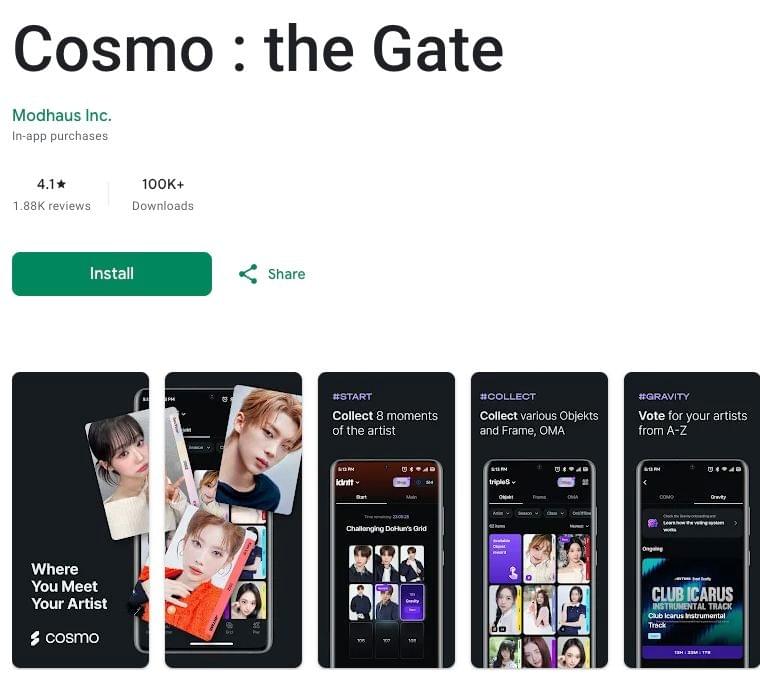
Official Google Play listing for Cosmo: the Gate, published by Modhaus Inc. Source. Captured November 19, 2026. Click image to enlarge.
Identify the two kinds of endings
The IANA record for .fans lists it as generic. The IANA record for .kr lists it as a country-code top-level domain. In this gTLD vs ccTLD example, the last label defines the category. The service name before it, the language of the site and where a team operates are separate details.
A country-code ending can be a recognisable cue for a country or territory. A generic ending can carry a theme that fits a brand or audience. Neither cue gives the reader all the information needed to understand the contents of a page. Work from the message you want the reader to take away, then test whether the complete address and page make that message clear.
Rules are also specific to an ending and the entity responsible for it. A gTLD vs ccTLD discussion cannot answer a particular registration question without checking the policies for the name you want. Look up the relevant policies and the available registration channels before building the name into a launch plan.
Locate the public evidence for Cosmo.fans
The Cosmo app listing identifies Modhaus Inc. as the developer and links to the terms and privacy policy on static.cosmo.fans. The public terms can be read at static.cosmo.fans. The additional label static appears before cosmo.fans. It changes the full hostname while the last label remains .fans. This article uses the public address pattern to examine how an app team can organise information behind one domain.
A reader may see the app title in a store and a longer address when following a link to a document. Preserve the recognisable part of the name across those experiences. If a document uses a different hostname, write an appropriate link label so the reader knows what it contains. The name, the host and the content of the document describe three different parts of that journey.
The use of a subdomain is a separate decision from the gTLD vs ccTLD choice. A team can put public pages at short paths on the main hostname or place a group of documents on a named subdomain. Choose according to how the team owns, updates and links those pages. Ask a reader to open the exact link they will encounter in an app store or help page.

Make the domain choice match the audience question
Start with the most likely reader of the public site. A person following a local campaign may want to identify the relevant market. A person looking up a membership service may want to know whether they have reached the right brand. Another reader may be trying to locate terms that apply to a particular product. Decide which question the address can usefully answer and which needs a visible heading or navigation label.
Use two working drafts in a gTLD vs ccTLD test. Put the full proposed name above the same short description of the page. Ask a reviewer what each address suggests about the operator, market and intended use. Then show that person the page and ask where geography, access or support is actually explained. Do not treat a guess elicited by the domain as proof of what a real visitor can do.
If a project serves several markets, write down which pages will be common and which will need a local owner. More than one address may be possible, but every published destination needs a maintainer and a way for visitors to find the relevant information. Test a few representative links instead of deciding only from a list of possible domain extensions.
Document the link before the launch
Make one row for each planned public link. Put the user-facing label, full hostname, destination path and responsible owner in the row. Record which product or local page points to that URL. This gives the team a way to notice when a store listing or social profile still sends people to an older document.
A gTLD vs ccTLD decision also benefits from an owner for the registration and configuration. Identify who can manage the domain, change public destinations and verify access after a deployment. Record where the team will check naming policies and registration availability. Ask the owner to confirm the fully qualified name before it appears on promotional materials.
The Cosmo.fans terms illustrate why the exact link matters. A visitor seeking a public document needs the published hostname and path. A team can describe the shared domain family when explaining the address, but should give the actual destination when asking the visitor to read a specific page. Test that URL from a phone and check the title and visible language before distributing it.
Review what the address can and cannot show
Treat the gTLD vs ccTLD choice as one element of the presentation. Both the address and page should carry a name the audience can recognise. Use the page itself to explain the service, geography, eligibility and contact route when those details affect the reader. Then make sure the links to those facts work from the source that advertises them.
For an international project, ask people in two relevant audiences to read the address independently. Record which audience cues they recognise and which terms need contextual explanation. A practical test can reveal that a name sounds familiar in one location but needs a better heading elsewhere. Correct the visible information in the places where a visitor will see it.
Put the decision into a publishable link matrix
Keep a small matrix for the gTLD vs ccTLD options you considered. Give each candidate a row with the intended visitor group, the spelling used in public material and the destination that explains the offer. Add a field for links that need market-specific treatment. A reader entering through an app store should be able to reach the appropriate information without having to decide which region or brand owns the page.
When the gTLD vs ccTLD review is complete, test one public link from every planned source. Record the visible hostname and destination title before treating the work as done. This is the practical connection between a naming choice and the information visitors read.

Questions about gTLD vs ccTLD choices
Is the whole Cosmo terms hostname a top-level domain?
The top-level domain is the last label, .fans. In static.cosmo.fans, static is a subdomain label, and cosmo.fans is the domain beneath .fans. Read the complete hostname when testing the document link. Read the ending when checking which registry rules apply to a proposed new name.
Does a country-code ending decide the language of a website?
A country-code ending can give the address a geographic cue. The operator still decides which content and languages to publish, subject to the relevant rules. Give visitors a visible way to select the information intended for them if several groups use the same service.
Where do we check the rules for a .fans address?
Read the .fans registry policies, then check the proposed name with a registrar. Verify the exact spelling, ending and intended use before communicating that the address will be part of a launch. Share the confirmed name and the first links with the teams who will maintain them.
Bring the gTLD vs ccTLD question back to the intended visitor. Decide what the complete name should suggest, keep the public page links precise and give each one an owner. The Cosmo.fans case shows how those choices meet at a destination a reader can check.